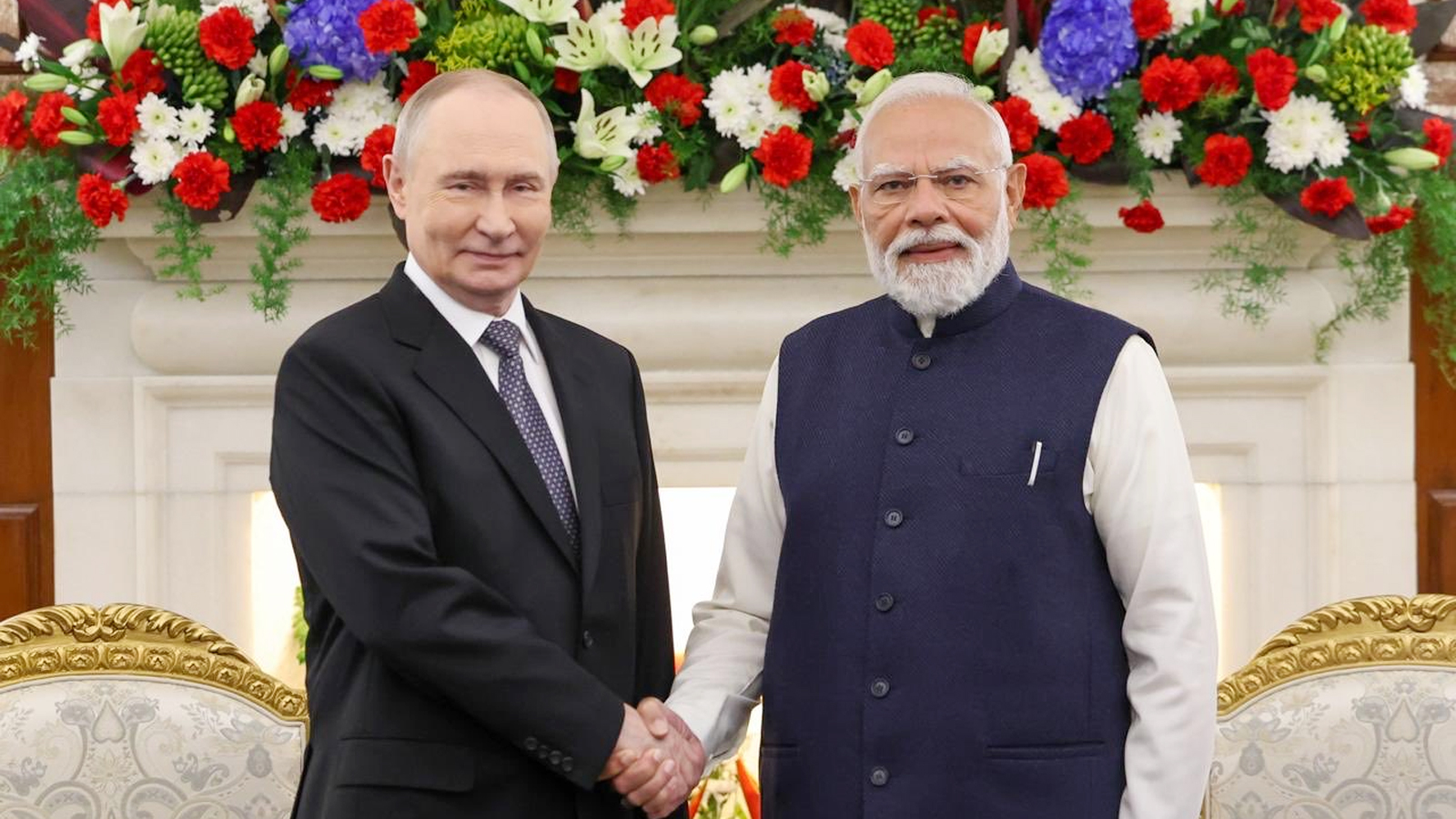
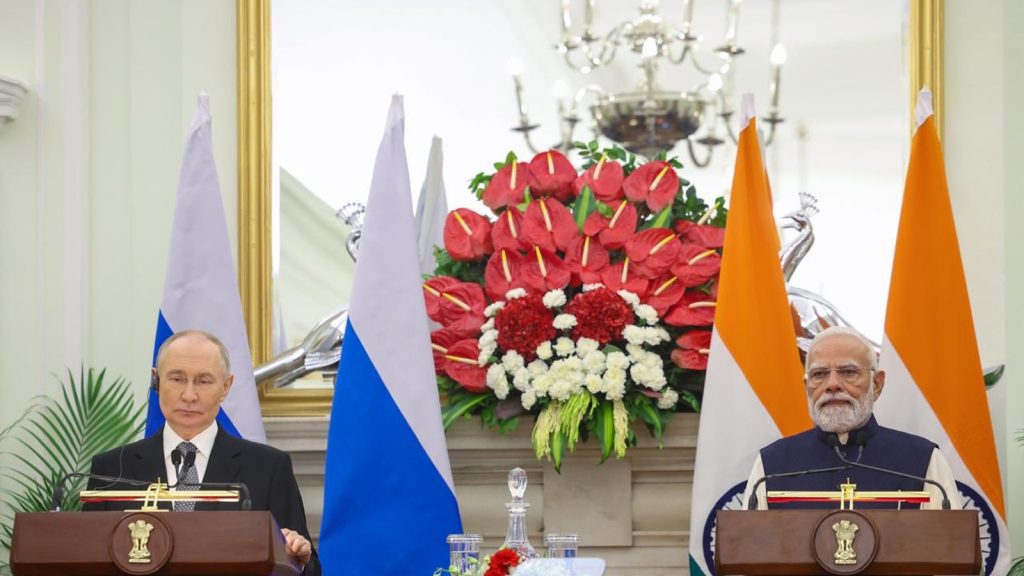
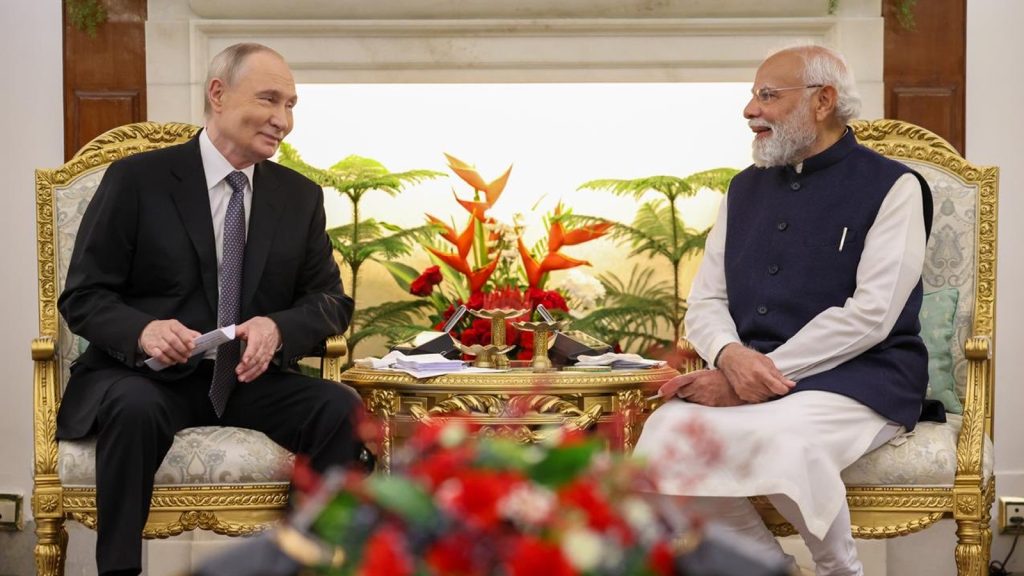
Prime Minister Narendra Modi, in a joint statement with Russian President Vladimir Putin, praised his visionary leadership for strengthening India-Russia relations. PM Modi said that the India-Russia relationship had remained stable through global challenges and that mutual trust had helped both countries strengthen long-standing cooperation. He thanked President Putin for his role in developing the partnership over the past two decades.
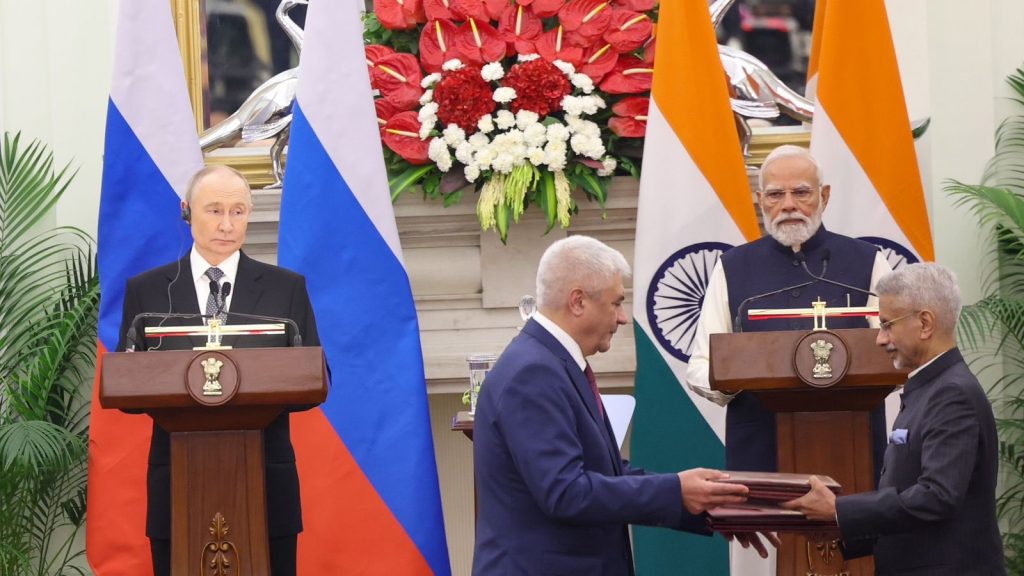
He made the remarks on Friday after the 23rd India-Russia Annual Summit at Hyderabad House in New Delhi, where both leaders reviewed the state of bilateral ties and outlined plans for expanded cooperation across key sectors. The meeting took place against the backdrop of 25 years of the India-Russia Strategic Partnership and 15 years of the “Special and Privileged Strategic Partnership.”
Both leaders agreed on a new Economic Cooperation Programme until 2030, aimed at diversifying and expanding bilateral trade and investment. PM Modi said that the programme would support balanced and sustainable economic engagement and create new opportunities for co-production, co-innovation, and exports. He and President Putin will also participate in the India-Russia Business Forum to further engage the private sector.
PM Modi said that both sides were working toward an early conclusion of the Free Trade Agreement with the Eurasian Economic Union. He highlighted cooperation in agriculture and fertilisers, noting joint efforts now underway in urea production.
Connectivity projects remained a major focus, with the two leaders agreeing to push ahead with the International North-South Transport Corridor, the Northern Sea Route, and the Chennai-Vladivostok corridor. PM Modi welcomed Russia’s support in training Indian seafarers for polar waters, saying it would increase collaboration in the Arctic region and create job opportunities.
The Prime Minister also underlined the potential of shipbuilding cooperation to support the Make in India programme, strengthen local manufacturing, and enhance regional connectivity.
Energy security formed another key area of discussion. PM Modi described civil nuclear cooperation as a long-standing pillar of the partnership and said both countries would continue working together on clean energy.
On Critical Minerals, PM Modi said, “Our cooperation is important for ensuring its secure and diversified supply chains worldwide. This will provide solid support to our partnership in clean energy, high-tech manufacturing, and new age industries.”
PM Modi highlighted the cultural and people-to-people dimension of the partnership, noting strong public goodwill between the two countries. Two new Indian consulates have recently opened in Russia, and India soon to introduce a free 30-day e-tourist visa and group tourist visa for Russian citizens. Agreements on manpower mobility, vocational education, and skills training were also signed.
PM Modi said, “This year in October, millions of devotees received the blessings of the sacred relics of Lord Buddha at the International Buddhist Forum in “Kalmykia”.
PM Modi said that he also discussed regional and global issues with Putin. “Regarding Ukraine, India has advocated for peace from the beginning. We welcome all efforts being made for a peaceful and permanent solution to this issue. India has always been ready to contribute and will continue to be so,” said PM Modi.
The Prime Minister said that India and Russia had long cooperated against terrorism and referred to recent attacks in Pahalgam and at Crocus City Hall, noting that India considers terrorism a threat to humanity that requires unified global action.
He added that the two countries work closely at the UN, G20, BRICS, SCO and other international forums and would continue coordination.
PM Modi expressed confidence that India-Russia ties would remain strong and help both countries address future global challenges.