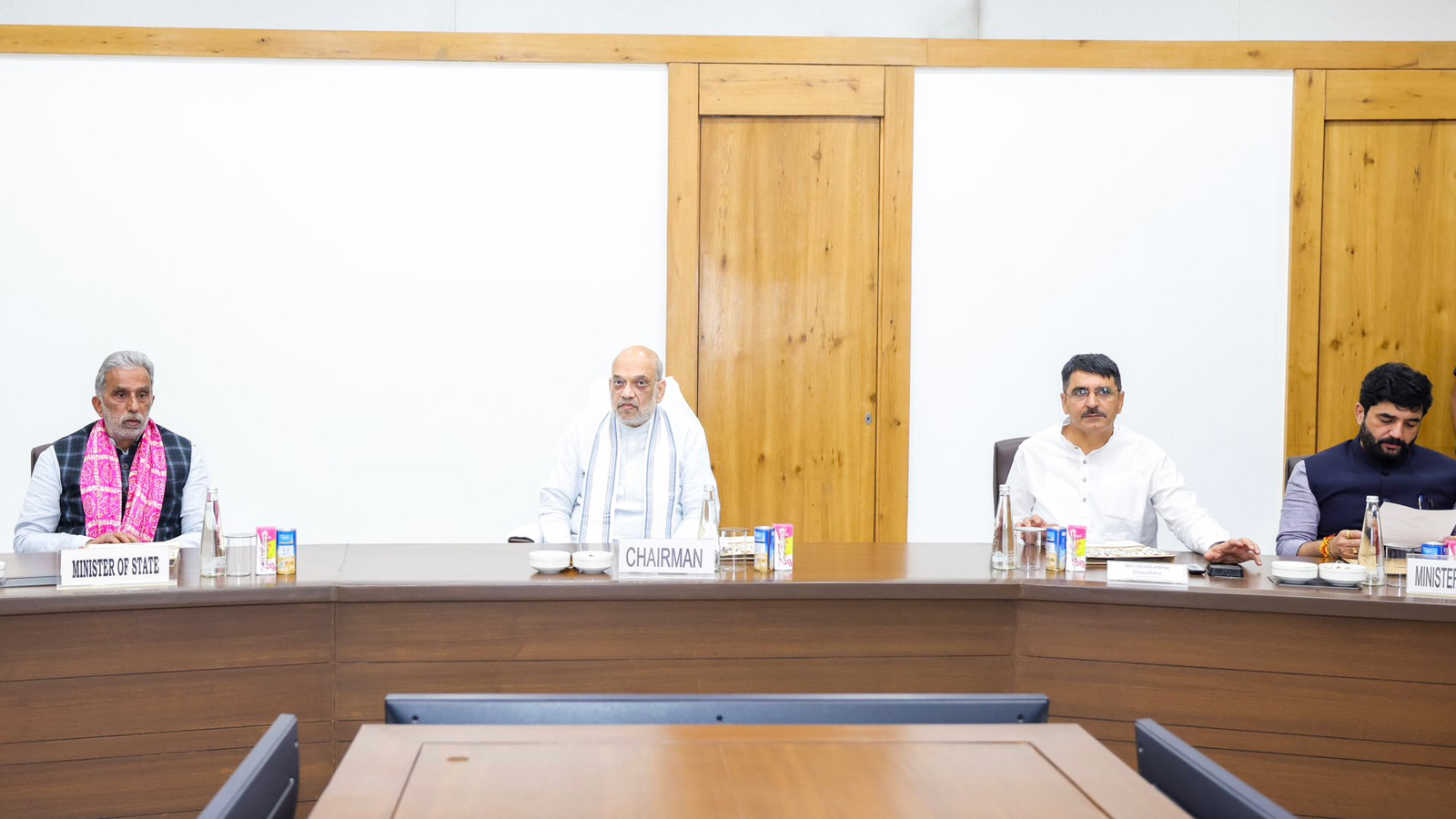
Union Home and Cooperation Minister Amit Shah on Saturday chaired a meeting of the Parliamentary Consultative Committee of the Ministry of Cooperation at Banas Dairy in Gujarat’s Vav–Tharad district. The meeting, attended by Union Ministers of State for Cooperation Krishan Pal Gurjar and Murlidhar Mohol, Members of Parliament, Cooperation Secretary Ashish Kumar Bhutani and senior officials, focused on the future strategy for India’s dairy cooperative sector and the planned White Revolution 2.0.
A detailed presentation was made before the committee, outlining the sector’s growth potential and the role of dairy cooperatives in improving farmer incomes and promoting sustainable practices.
Speaking at the meeting, Shah said cooperation remains central to India’s rural economy, women’s empowerment and self-reliance in milk production. He said that dairy cooperatives have become a major force for farmer welfare under Prime Minister Narendra Modi’s vision of “Sahakar Se Samriddhi.”
Shah said dairy cooperatives are among the most effective means to raise incomes of women and strengthen household-level economic stability. He proposed new measures to expand the cooperative network, including linking village-level cooperative societies with insurance cooperatives to simplify access to insurance services in rural areas. He added that dairy cooperatives will also facilitate two-wheeler and four-wheeler insurance, improving coverage in villages. Shah encouraged cooperative institutions to invest in each other to build capital strength within the cooperative ecosystem.
The minister said three Multi-State Cooperative Societies have been formed at the national level for the dairy sector. Through these institutions, NDDB and the Department of Animal Husbandry and Dairying have initiated White Revolution 2.0, aimed at setting up a cooperative society in every panchayat and establishing a dairy in every district with adequate milk production.
Shah also highlighted the role of the newly established Tribhuvan Cooperative University in Anand, which will partner with dairy technology institutes to launch B.Sc. and M.Sc. programmes in Dairy Technology and Management. Graduates from these programmes will help implement the Banas Dairy model across districts in the country.
Pointing to the example of Banas Dairy, Shah said that four advanced soil testing laboratories will be created in every district. These labs will support farmers by providing scientific soil assessments. He said farmers must be guided on the appropriate use of fertilizers such as urea, DAP and micronutrients, since excessive chemical use affects soil health and reduces productivity.
The meeting concluded with a discussion on strengthening cooperative institutions to support farmers and improve India’s dairy production system under the next phase of the White Revolution.