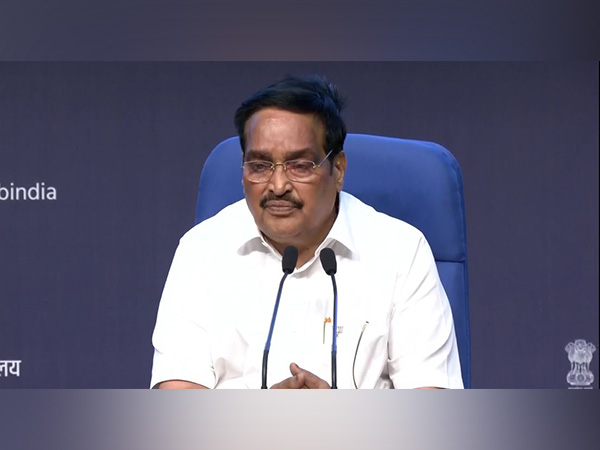
The Union government has underscored that large-scale desilting of rivers is not a technically viable long-term solution for flood control and has instead focused on reducing silt generation through scientific and environmentally sensitive approaches, the Rajya Sabha was informed on Monday.
In a written reply, Minister of Jal Shakti C R Patil said the Ministry has issued a National Framework on Sediment Management (NFSM) in October 2022 to guide comprehensive and holistic management of sediment in rivers, streams and reservoirs across the country. The framework prioritises measures to curb silt generation at the source rather than relying on repeated desilting operations.
The NFSM serves as a guiding document for States, Union Territories and central ministries to formulate sediment management strategies while taking into account environmental and ecological considerations. It also consolidates existing guidelines and notifications issued by various central agencies on the subject.
The minister said that desilting of rivers can only marginally reduce flood intensity and that too for a short duration. However, selective dredging in specific locations such as tidal stretches, river confluences and narrow constrictions may be undertaken based on local conditions, provided such interventions are supported by proper scientific studies.
Flood management and anti-erosion works are primarily planned and executed by State governments based on their priorities, he said, adding that the Centre supports these efforts through technical guidance and financial assistance in identified critical areas.
Patil informed the House that the Centre is implementing the Flood Management and Border Areas Programme (FMBAP) to support river management, flood control, anti-erosion, drainage development and anti-sea erosion works. Since the inception of the scheme, Central assistance amounting to Rs 8,737.66 crore has been released to States and Union Territories, including Rs 67.51 crore to Punjab.