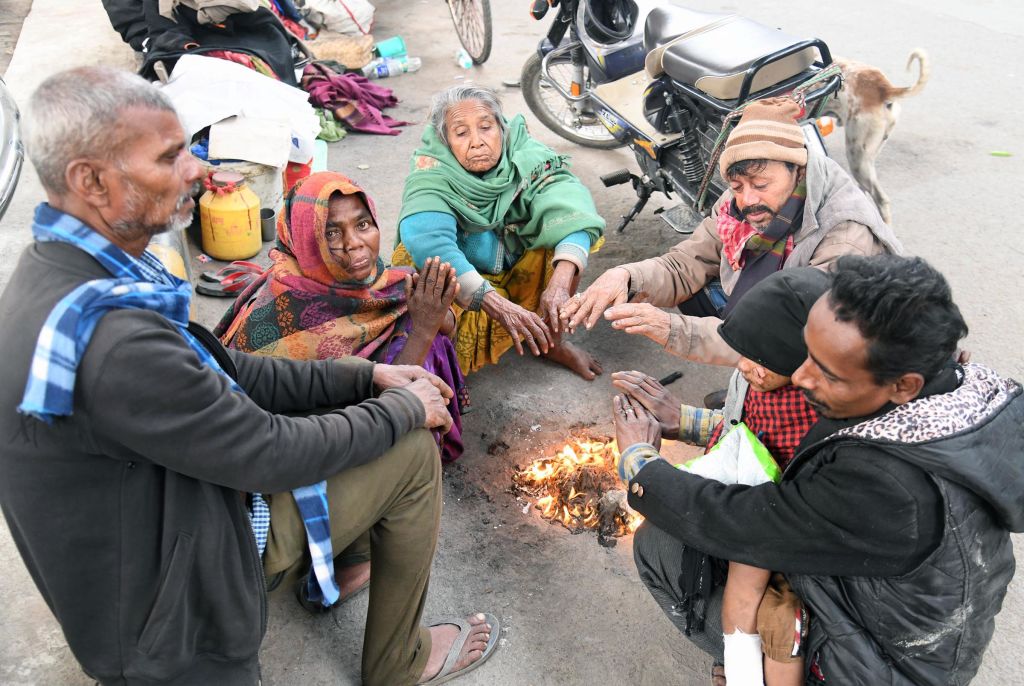
A cold wave sweeping down from the north intensified winter conditions across large parts of Rajasthan and Madhya Pradesh on Friday, pushing minimum temperatures sharply lower and prompting weather alerts for the coming days.
In Rajasthan, Fatehpur in Sikar district recorded the state’s lowest minimum temperature at 2.3 degrees Celsius. Sikar followed at 3°C, Nagaur at 3.3°C and Lunkaransar at 4.1°C. Jaipur slid below 10°C for the first time this season, settling at 9.2°C.
Frost was reported in agricultural belts including mustard-growing areas near Alwar, raising concerns over crop damage. Sirohi saw the lowest daytime maximum at 22°C, while Alwar, Pilani, Sikar and Churu also remained below 25°C. Warmer conditions persisted in western Rajasthan, with Barmer at 30.2°C, Jaisalmer at 28.4°C and Jodhpur at 28.3°C.
The Jaipur Meteorological Centre issued a cold wave alert for the next week, forecasting night-time temperatures between 3°C and 5°C in parts of the Shekhawati belt.
In Madhya Pradesh, minimum temperatures dipped further as 19 cities recorded sub-10°C readings. Rewa was the coldest at 5.8°C, lower even than hill station Pachmarhi. Cold wave or severe cold wave conditions were reported in Bhopal, Rajgarh, Sehore, Shajapur, Indore and Seoni.
Bhopal’s minimum was 8.2°C, while Indore logged 11°C and Jabalpur 9.9°C. Rajgarh-Kalyanpur reported 6°C and Shivpuri 7°C. Daytime temperatures remained below normal in many parts, with Pachmarhi and Narsinghpur at 23.2°C and Betul at 23.7°C.
The weather office in Bhopal expects temperatures to fall further on December 7–8 due to western disturbances bringing snowfall over the Himalayas. Officials noted that November had already delivered unusually prolonged cold, with Bhopal experiencing its longest cold wave in 84 years and Indore its coldest night in 25 years.
Neighbouring Chhattisgarh also reported a sharp decline. Bastar fell to 3.9°C and Surguja to 4.6°C as the Raipur Meteorological Centre warned of a continuing downward trend.
Authorities have advised residents to limit exposure during night and early morning hours as northern and central India head into a colder phase of the winter season.
—IANS