The government is strengthening efforts to preserve and promote India’s rich intangible cultural heritage through documentation, training, youth engagement and global recognition initiatives, Union Minister for Culture and Tourism Gajendra Singh Shekhawat informed the Rajya Sabha on Thursday.
In a written reply, the Minister said the National Inventory of Intangible Cultural Heritage (ICH), which includes eligible cultural elements received from States and Union Territories, is being centrally maintained by the Sangeet Natak Akademi under the Ministry of Culture. The inventory is updated regularly based on documentation submitted by States, Union Territories and other stakeholders, including traditions of marginalised, tribal and indigenous communities, in line with prescribed guidelines.
The Minister said that under the Guru Shishya Parampara Scheme of the Zonal Cultural Centres (ZCCs), disciples are trained by veteran artists in a wide range of art forms, including rare and vanishing traditions. Under the scheme, monthly remuneration is provided at the rate of ₹7,500 for gurus, ₹3,750 for accompanists and ₹1,500 for each pupil, for a period ranging from six months to a maximum of one year for a single art form. The names of gurus are recommended by State Cultural Affairs Departments.
Zonal Cultural Centres, he said, are also creating platforms for inter-generational knowledge transfer by organising performances for emerging artists, promoting participation of students and youth groups, and engaging educational institutions and local communities. These initiatives have helped revitalise endangered art forms by increasing youth involvement, strengthening community pride and generating sustained public interest in traditional cultural expressions.
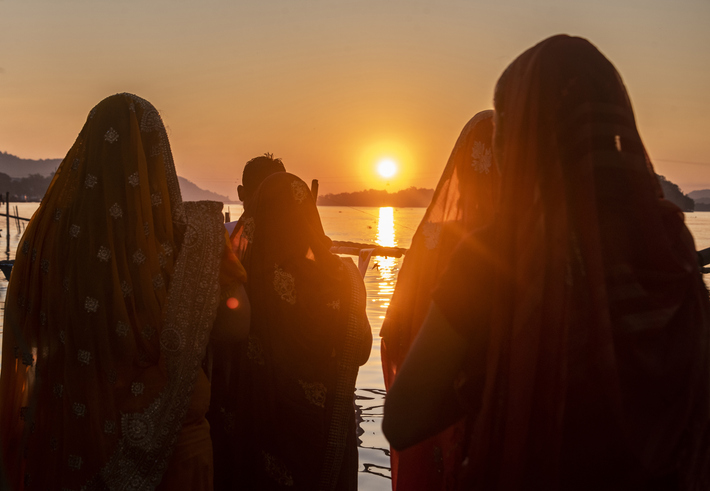
The Minister informed the House that the nomination dossier for Chhath Mahaparv has been prepared by the Sangeet Natak Akademi, the nodal agency for Intangible Cultural Heritage, with active involvement of regional bodies and other stakeholders. The dossier has been submitted to UNESCO for inclusion in the Representative List of the Intangible Cultural Heritage of Humanity for the 2026–27 cycle.
In addition, all Zonal Cultural Centres are implementing youth-oriented programmes such as Rashtriya Sanskriti Mahotsavs, cultural festivals and inter-state exchange programmes to expose young people to India’s diverse traditional practices. Workshops, training camps and craft demonstrations are also being organised to provide hands-on skills in folk dance, music, theatre and crafts.
The Minister added that ZCCs are digitally documenting their programmes, activities and performing arts, including recording endangered folk art forms and publishing books, reports and materials related to folklore and oral history.