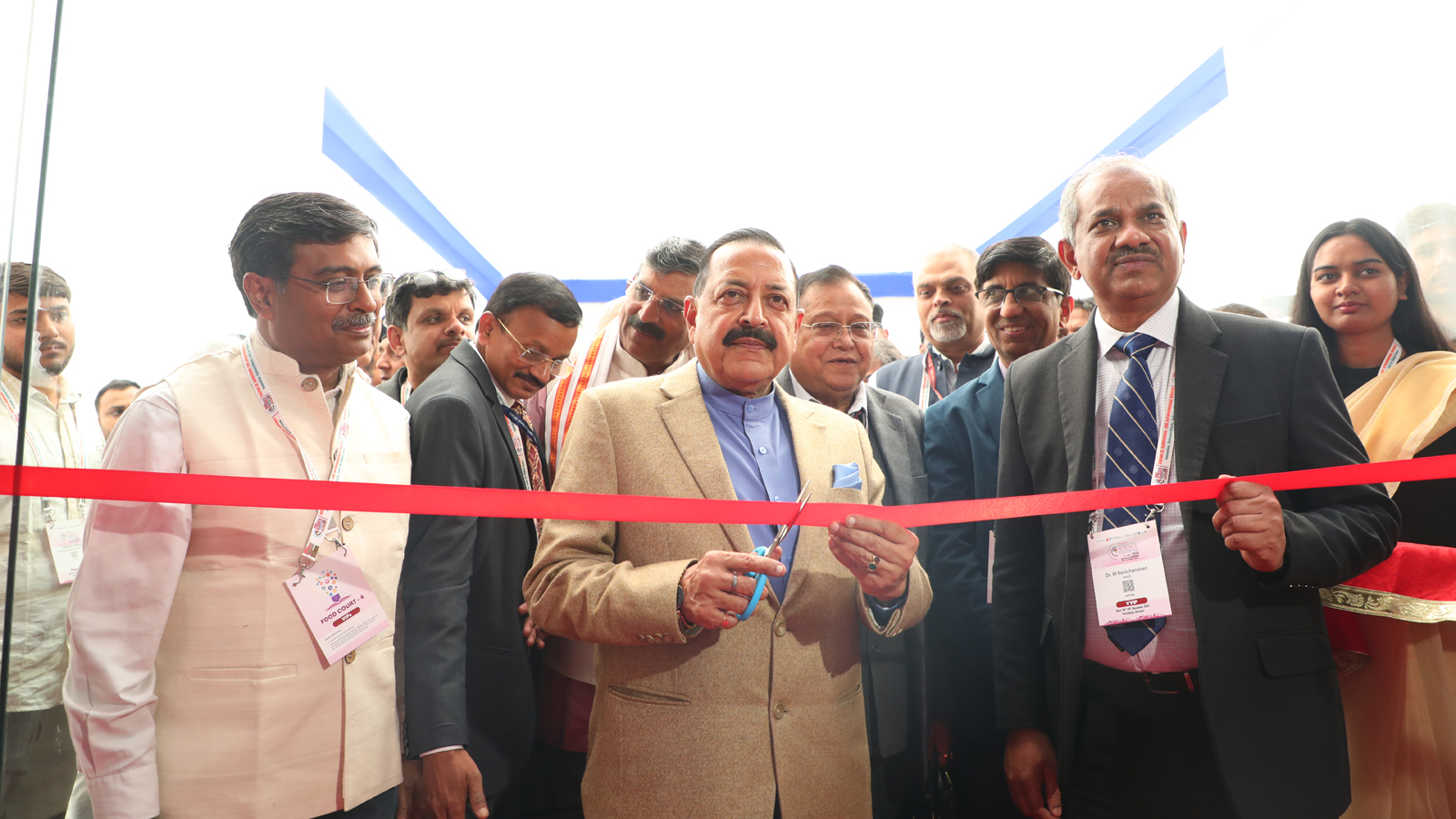
Union Minister for Science and Technology Dr Jitendra Singh inaugurated the 11th edition of the India International Science Festival (IISF) in Panchkula on Saturday, positioning the four-day event as a national platform built on “Celebration, Communication and Career.”
Speaking at the inaugural session, Singh said the festival was designed to take science beyond laboratories and into the public domain, enabling citizens – particularly students and young researchers – to meaningfully engage with scientific achievements and emerging technologies.
Singh noted that IISF was conceived as an open, public-facing festival rather than a conventional scientific conference. It aims to bring scientists, institutions and the beneficiaries of scientific research onto a common platform, reflecting the government’s push for greater coordination among science-related ministries.
He emphasized that IISF celebrates India’s scientific progress, communicates knowledge to a wider audience and serves as a launchpad for young people exploring careers across research, startups and industry.
Positioning the festival within the national developmental framework, the Minister said science and technology are at the core of India’s economic and social transformation. In the past decade, he said, the country has adopted a mission-driven approach backed by reforms, improved scientific infrastructure and talent development initiatives.
Singh highlighted the expanding role of science in governance – from advanced weather forecasting and early warning systems to enhanced polar research and digital technologies.
Reflecting on the 2025 festival theme – “Vigyan se Samruddhi: Towards an Atmanirbhar Bharat” – Singh said India’s push for self-reliance in science is no longer aspirational but well underway.
He pointed to indigenous efforts such as the development of a multipurpose all-weather research vessel to be commissioned in 2028 and progress in the human submersible programme. Indian scientists, he said, are also contributing critical climate data used globally.
The Minister cited India’s rising global standing in research and innovation, growing startup ecosystem and higher patent filings. Achievements such as Chandrayaan-3, the development of indigenous Covid-19 vaccines and advancements in biotechnology underscore the impact of research on the public, he added.
A significant portion of IISF’s programming targets school and college students, offering exposure to career opportunities in science beyond government jobs. Sessions this year cover quantum technologies, biotechnology, the blue economy, deep-tech entrepreneurship and other frontier areas.
Singh also called for deeper industry involvement in India’s research ecosystem, noting that innovation requires the combined strength of policy reform, investment and enterprise. He said recent policy decisions enabling greater private participation in sectors like space, health tech and advanced manufacturing aim to build a more vibrant innovation landscape.
As part of the inauguration, Singh opened the Science-Technology-Defence-Space Exhibition and the “Science on a Sphere” installation – interactive displays showcasing scientific capabilities. He also interacted live with researchers at Bharati, India’s Antarctic research station, reviewing ongoing polar research.
With exhibitions, lectures, demonstrations and interactive sessions scheduled through December 9, IISF 2025 aims to deepen public engagement in science while advancing India’s long-term goals for innovation, research and human resource development.