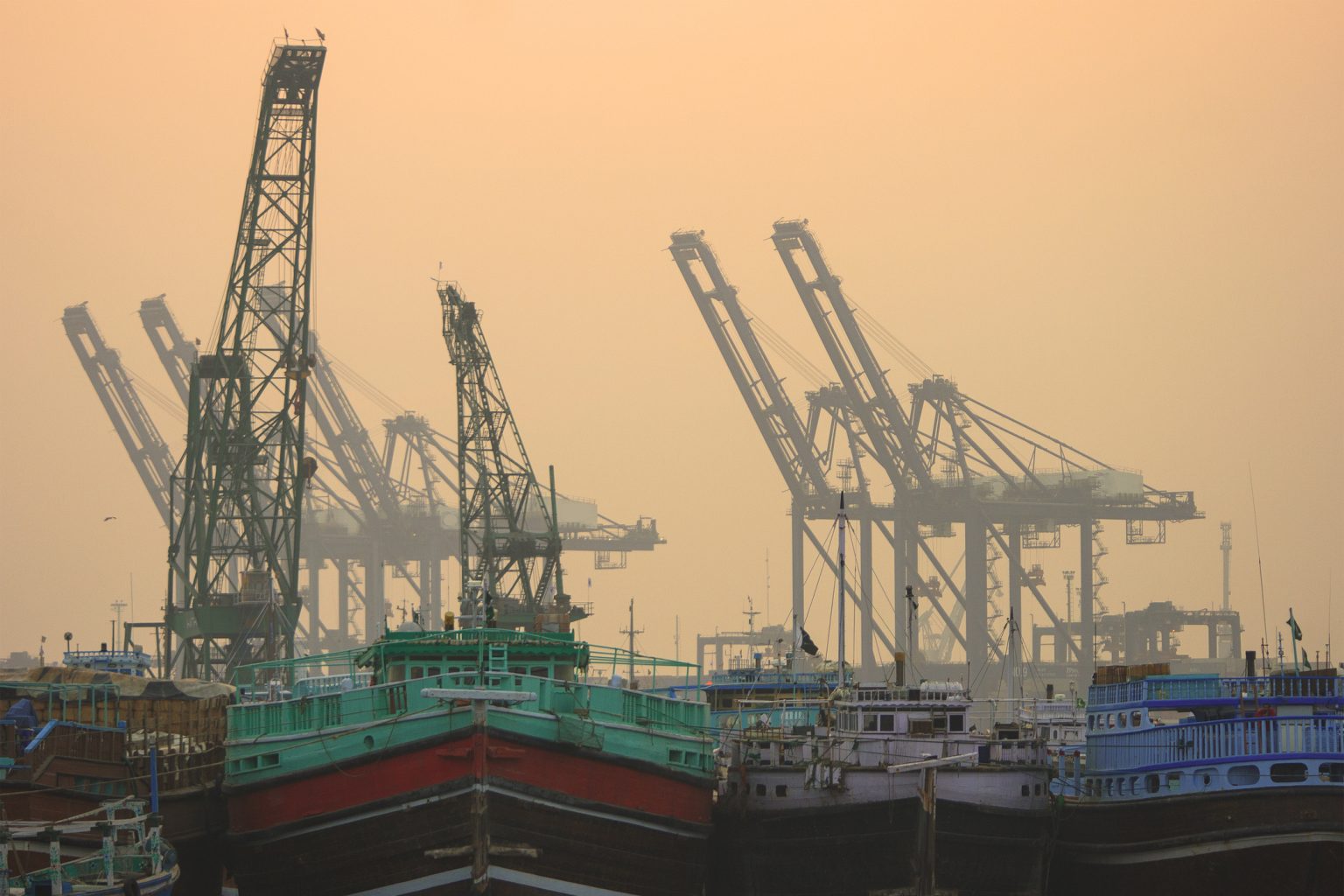
India is accelerating a comprehensive transition towards a green and sustainable maritime ecosystem, aligning the rapid expansion of its ports and shipping sector with climate commitments, energy-transition goals, and international maritime standards, according to official data released on Monday.
Ports handle nearly 95 per cent of India’s external trade by volume and have expanded significantly over the past decade. India’s major ports managed 855 million tonnes of cargo in FY 2024–25, up from 581 million tonnes in FY 2014–15, marking a decadal growth of 47.16 per cent. While this expansion underpins the vision of Atmanirbhar Bharat and strengthens India’s trade and economic position, it also requires careful management of operational impacts, including resource use and maintaining the balance of coastal ecosystems.
Recognising these challenges, India’s maritime strategy has been aligned with its Intended Nationally Determined Contributions (INDCs) and global climate targets. At the international level, the International Maritime Organization (IMO), aligned with nine UN Sustainable Development Goals, has set a target of reducing carbon dioxide emissions from the shipping sector by 40 per cent by 2030.
Stronger policy and legislative foundation
India’s green maritime push is anchored in a strengthened policy and legislative framework. The outdated Indian Ports Act, 1908, has been repealed and replaced by the Indian Ports Act, 2025, which institutionalises cleaner, greener, and more sustainable port operations. The new legislation mandates adherence to global environmental norms, strengthens pollution control and disaster preparedness, and aligns port operations with international conventions, including MARPOL and the Ballast Water Management Convention.
The Maritime India Vision (MIV) 2030, launched in 2021, serves as the strategic blueprint for this transformation. It outlines 150 initiatives aimed at building a safe, sustainable, and green maritime ecosystem, with a focus on renewable energy adoption, emission reduction, water optimisation, solid waste management, zero-accident safety programmes, and centralised monitoring systems.
Complementing this medium-term roadmap is the Maritime Amrit Kaal Vision 2047, a long-term strategy that projects investments of nearly ₹80 lakh crore across ports, shipping, inland waterways, shipbuilding, and green shipping initiatives. The vision identifies over 300 actionable initiatives and seeks to position India among the world’s leading maritime and shipbuilding powers by the centenary of Independence.
Harit Sagar Green Port Guidelines
Operationalising these ambitions are the Harit Sagar Green Ports Guidelines, issued in 2023. The guidelines align with the objectives of MIV 2030 and India’s COP26 commitments to reduce emission intensity by 45 per cent by 2030 and achieve net-zero emissions by 2070.
Under the guidelines, ports are required to reduce carbon emissions per tonne of cargo by 30 per cent by 2030 and 70 per cent by 2047. Renewable energy usage must exceed 60 per cent by 2030 and 90 per cent by 2047, while electrification of port equipment and vehicles must cross 50 per cent by 2030 and 90 per cent by 2047. Green cover is mandated to expand by over 20 per cent by 2030 and more than 33 per cent by 2047. Ports are also required to provide shore-to-ship power supply in phases, ensure 100 per cent reuse of wastewater, and reduce freshwater consumption by over 20 per cent by 2030.
New Mangalore Port has already achieved 100 per cent solar power integration, emerging as a national benchmark for renewable energy adoption in the port sector.
Scaling up renewable energy at ports
India’s ports are rapidly expanding renewable energy capacity. Deendayal Port (Kandla) will add around 20 MW through solar and wind projects by 2025, while Visakhapatnam Port has installed 10 MW of solar power in 2023. New Mangalore Port operates 5.2 MW of solar energy (2023), and V.O. Chidambaranar Port (Tuticorin) is implementing a 9 MW mix of solar, wind, rooftop solar systems, along with a 1 MW ground-based solar facility under construction, scheduled for 2025. Cochin Port has installed 100 kWp and 150 kWp grid-connected solar plants, a 1.5 MWp floating solar system, and operates nine solar prosumers as of 2024. Chennai Port plans to install 2 MWp rooftop solar PV units by 2025, while Paradip Port Authority is commissioning a 10 MW solar plant supported by an investment of ₹18,600 crore. Mormugao Port Authority generates 3 MW of in-house solar power, meeting 100 per cent of its consumption, while Mumbai Port has installed 1,500 KVA of rooftop solar capacity during 2024–25. Jawaharlal Nehru Port Authority has a combined rooftop and ground-mounted solar capacity of 4.10 MW (2023), Haldia Port operates a 2 MW AC solar PV plant (2025), and Kamarajar Port has installed 320 KW of renewable energy capacity. Mormugao Port has also become India’s first port to introduce Green Ship Incentives through the Environmental Ship Index. Its ‘Harit Shrey’ programme, launched in October 2023, offers discounts on port charges based on ships’ environmental performance, making it one of only three ports in Asia, alongside ports in Japan and Oman, to implement such incentives.
Improving air quality and cutting emissions
To curb emissions further, India aims to electrify over 50 per cent of port equipment by 2030, starting with ship-to-shore cranes, reach stackers, and forklifts. LNG bunkering is also being expanded as a cleaner fuel alternative, offering up to 80 per cent lower emissions than diesel.
Mumbai Port is installing shore-to-ship power supply at five locations, while Deendayal Port Authority has deployed electric wheel loaders. Paradip Port has strengthened environmental management through extensive dust-suppression systems, mechanical sweepers, Tier-1 oil-spill response facilities, and LED lighting. It has also carried out large-scale plantation drives, including 11.5 lakh plants by 2023–24, and an additional one lakh saplings at a cost of ₹8.42 crore.
Water, waste and dredging reforms
Ports are improving water efficiency through sewage and wastewater treatment plants, recycling oily waste, satellite-based oil-spill monitoring, and using atomisers and mist cannons to significantly reduce water consumption. Green cover expansion, including mangroves and mudflats, is supported through CSR initiatives.
Solid waste management is being strengthened in line with the National Action Plan for Green Shipping and the Swachh Bharat Mission, with ports upgrading cleanliness standards, infrastructure maintenance, and waste segregation systems. Sustainable dredging practices are also being promoted, with ports encouraged to reuse at least 30 per cent of dredged material for land reclamation, construction, beach nourishment, and habitat creation. Successful models are already in place at Mundra, Jaigarh, Visakhapatnam, and Paradip ports.
Safety, health and digital monitoring
Zero Accident Safety Programmes are being implemented across ports, focusing on risk assessment, equipment safety, hazardous material management, and worker training. V.O. Chidambaranar Port Authority has operated as a “Zero Fatal Accident Zone” during 2019, 2020, and 2021.
Occupational health measures have also been strengthened. India’s seafarer workforce has grown to 3.08 lakh as of December 2024, a 263 per cent increase since FY 2014–15. Mumbai Port Trust operates a 200-bed hospital and is developing a 600-bed super-specialty hospital under a PPP model at a cost of ₹639 crore. A real-time centralised monitoring system is being developed to digitally track health, safety, and environmental indicators across ports through a national dashboard.
Major government initiatives and investments
Key green initiatives include the Sagarmala Programme, under which 840 projects worth ₹5.8 lakh crore are targeted for completion by 2035. Of these, 272 projects worth ₹1.41 lakh crore have been completed, while 217 projects worth ₹1.65 lakh crore are currently under implementation.
The Centre has approved the ₹76,220 crore Vadhavan greenfield port project in Maharashtra, being developed through a PPP model by Jawaharlal Nehru Port Authority and the Maharashtra Maritime Board. The Green Tug Transition Programme seeks to replace conventional harbour tugs with green hybrid propulsion systems using fuels such as methanol, ammonia, and hydrogen, while the Harit Nauka initiative aims for a complete transition to green inland waterway vessels by 2047.
Under the National Green Hydrogen Mission, launched in 2023, India plans to produce 5 million tonnes of green hydrogen annually by 2030. Kandla, Paradip, and Tuticorin ports are identified as green hydrogen hubs, and the Shipping Corporation of India will retrofit two vessels to operate on green methanol by 2027.
Domestic and global partnerships
In September 2025, 27 MoUs worth over ₹66,000 crore were signed at Bhavnagar under the “Samudra Se Samriddhi” initiative, covering green ports, shipbuilding, inland waterways, maritime finance, and logistics. India has also strengthened international cooperation through green maritime partnerships with Denmark, Norway, Russia, Malta, Singapore, and the Netherlands, focusing on green shipping corridors, low-emission technologies, maritime digitisation, and sustainable port development.
With far-reaching legislative reforms, large-scale investments, rapid technology adoption, and expanding global partnerships, India is positioning itself as a leading green maritime power. As the country advances towards 2047, its maritime sector is being reshaped to support economic growth while safeguarding marine ecosystems and meeting global climate commitments.