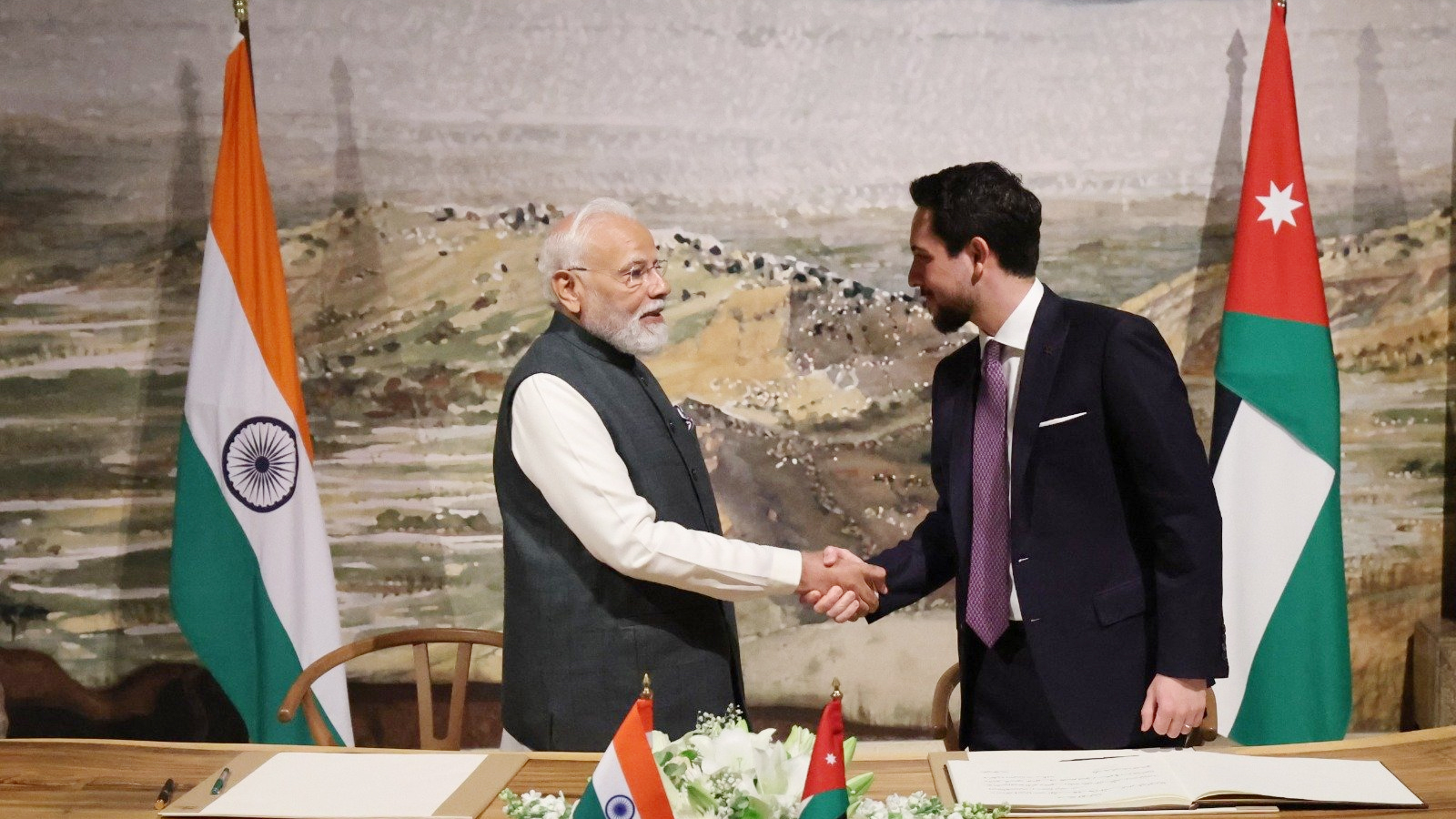

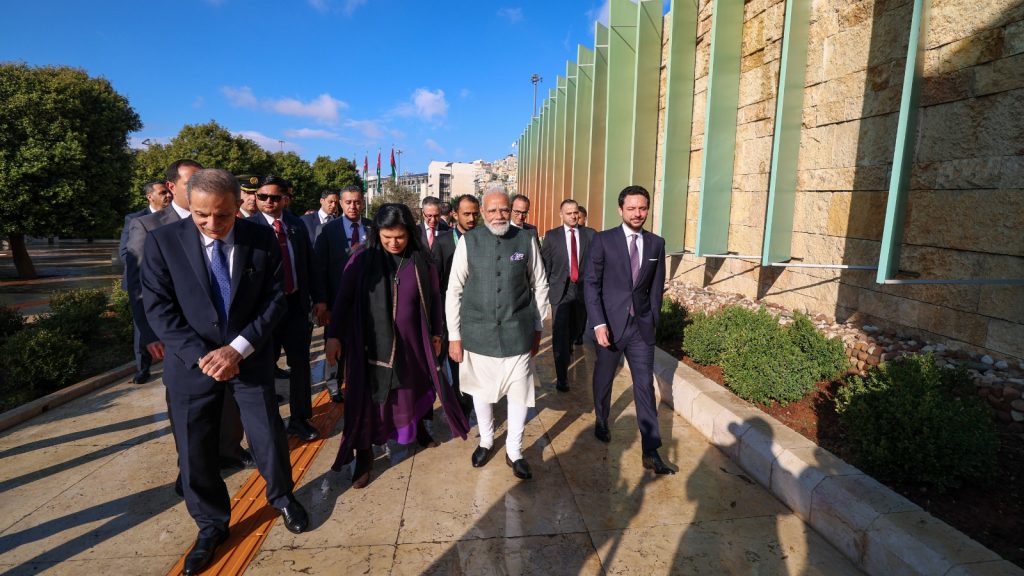
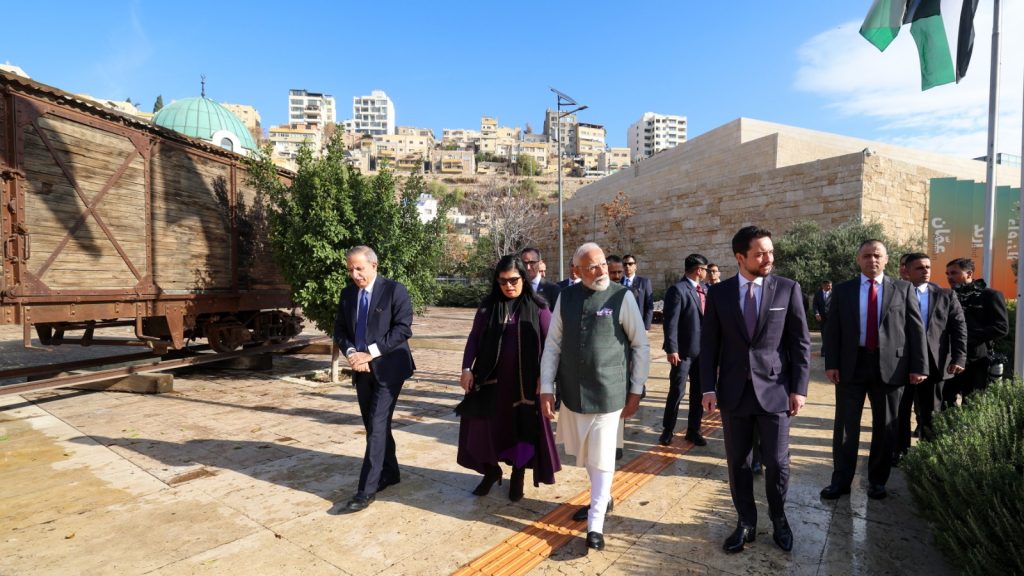
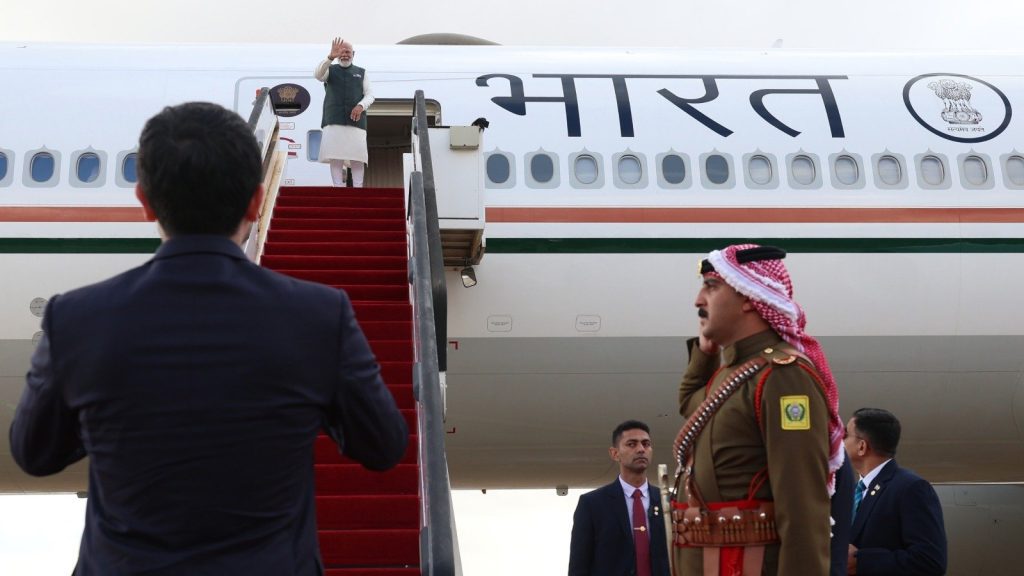
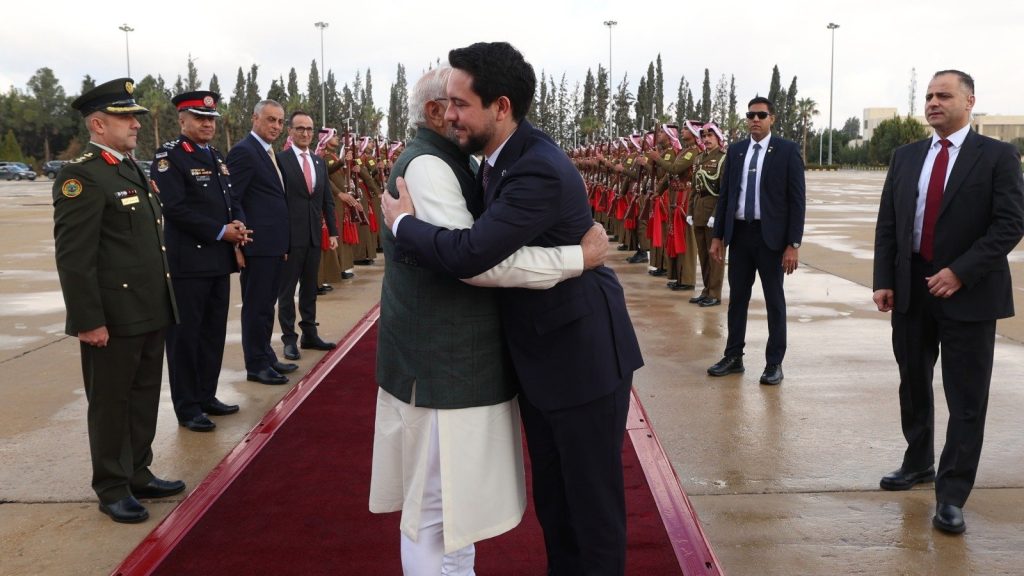
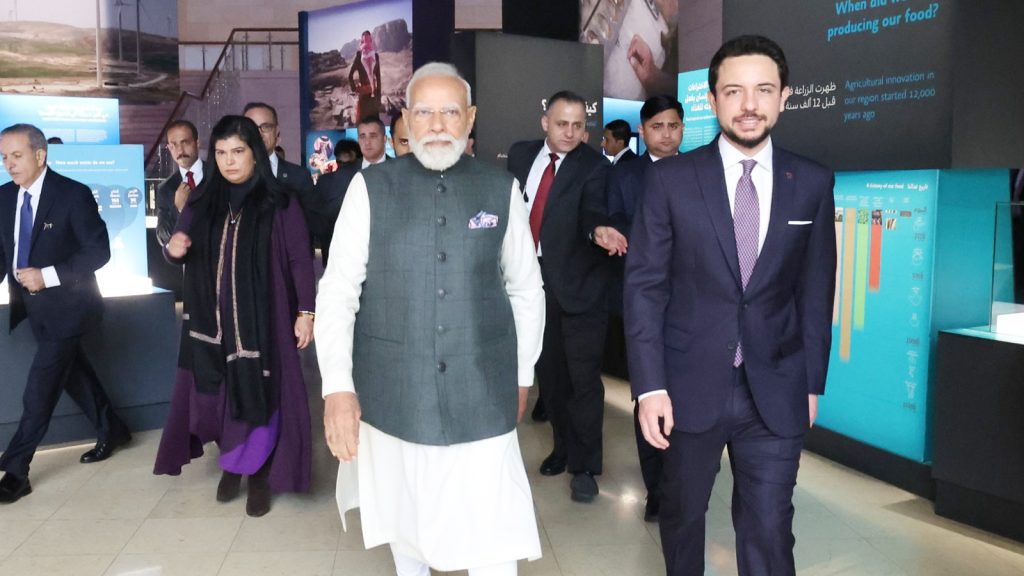
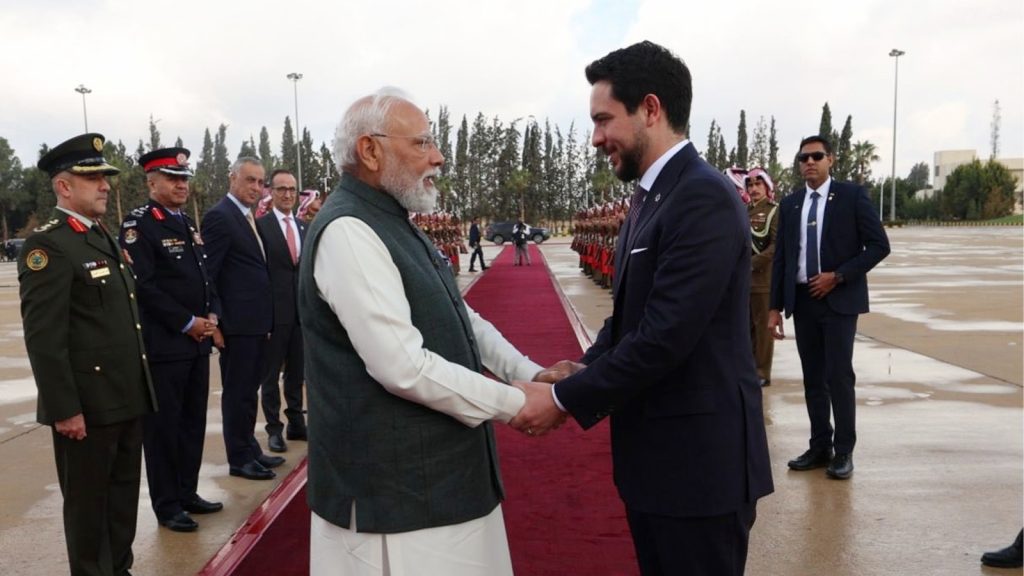
Prime Minister Narendra Modi’s visit to the Hashemite Kingdom of Jordan during December 15-16 marked a significant milestone in India-Jordan relations, as the two countries celebrated the 75th anniversary of the establishment of diplomatic ties. The visit, undertaken at the invitation of King Abdullah II ibn Al Hussein, reaffirmed the commitment of both sides to deepen cooperation across political, economic, technological and cultural domains.
During bilateral and expanded talks held in Amman, the two leaders reviewed the full spectrum of India-Jordan relations and expressed satisfaction with the steady growth of ties based on mutual trust and goodwill. They recalled their earlier interactions in New York, Riyadh, Dubai and Italy, and agreed to sustain high-level engagements and strengthen regular dialogue mechanisms to further consolidate the partnership.
On political relations, both sides underlined the importance of continued consultations and joint working groups in diverse sectors. They welcomed the outcomes of the fourth round of political consultations held in Amman earlier this year and agreed to hold the next round in New Delhi.
Economic cooperation featured prominently in the discussions. Bilateral trade, valued at USD 2.3 billion in 2024, has made India Jordan’s third-largest trading partner. The leaders agreed on the need to diversify the trade basket and decided to convene the 11th Trade and Economic Joint Committee in the first half of 2026. They also welcomed the India-Jordan Business Forum held on the sidelines of the visit, where business leaders explored opportunities to expand trade and investment.
Recognising Jordan’s strategic location and logistics capabilities, the two sides stressed on the importance of strengthening transport and logistics connectivity, including regional integration of Jordan’s transit infrastructure, in order to boost private-sector collaboration and elevate shared economic interests. Cooperation in customs was also highlighted as a key facilitator of smoother trade flows.
In the areas of technology and education, India and Jordan agreed to enhance collaboration in digital transformation, capacity building and governance. Both sides welcomed the signing of a letter of intent to share India’s extensive experience in Digital Public Infrastructure (DPI) and agreed to work towards a safe, secure and inclusive digital ecosystem. They also discussed expanding the India-Jordan Centre of Excellence in Information Technology at Al Hussein Technical University in Amman. India reaffirmed its commitment to capacity building through the ITEC programme, with Jordan welcoming the increase in training slots from 35 to 50.
Healthcare emerged as another important pillar, with both leaders agreeing to strengthen cooperation through sharing expertise, promoting telemedicine and training health professionals. In agriculture, the two sides reviewed ongoing collaboration in fertilisers, particularly phosphates, and agreed to expand cooperation through technology exchange to enhance productivity and food security.
Water and green development were other key focus areas of the visit. The leaders welcomed the signing of an MoU on water resources management, covering areas such as water-saving technologies, aquifer management and climate adaptation. They also welcomed an MoU on renewable energy, which provides for technical cooperation, training, joint research and exchange of expertise in new and renewable energy.
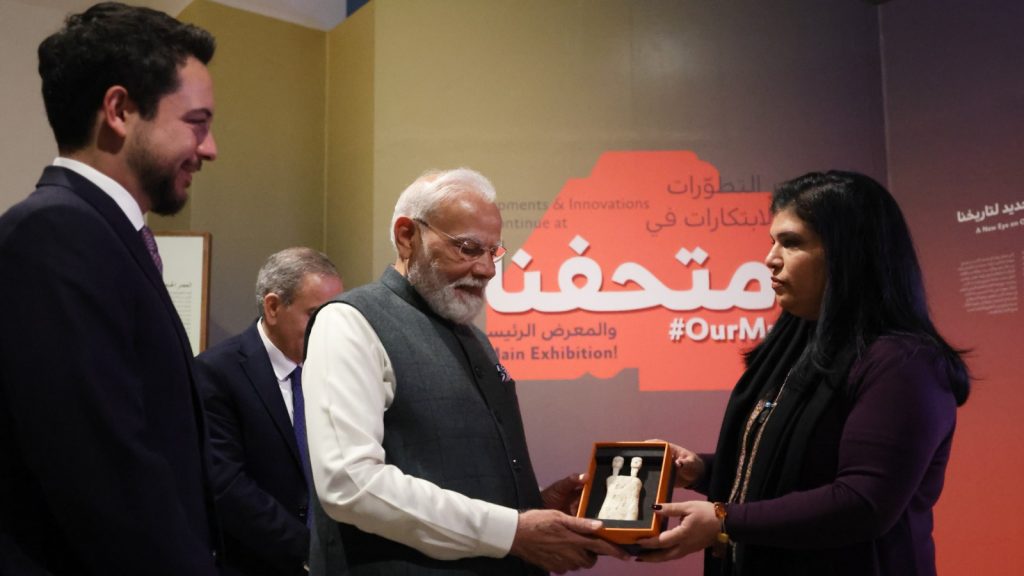
Cultural ties were further strengthened with the signing of a Cultural Exchange Programme for 2025-2029 and a twinning agreement between Petra and the Ellora Caves site, aimed at archaeological cooperation and promoting people-to-people relations. Both sides also agreed to explore ways to enhance direct connectivity to boost tourism, trade and exchanges.
At the multilateral level, King Abdullah II praised India’s leadership in initiatives such as the International Solar Alliance, the Coalition for Disaster Resilient Infrastructure and the Global Biofuels Alliance. India welcomed Jordan’s interest in joining these platforms, highlighting biofuels as a sustainable option for achieving climate and development goals.
At the conclusion of the visit, PM Modi thanked King Abdullah II for the warm hospitality and extended his best wishes to the people of Jordan. The King, in turn, conveyed his good wishes for the continued progress and prosperity of India, underscoring the shared commitment to advancing the longstanding partnership between the two nations.