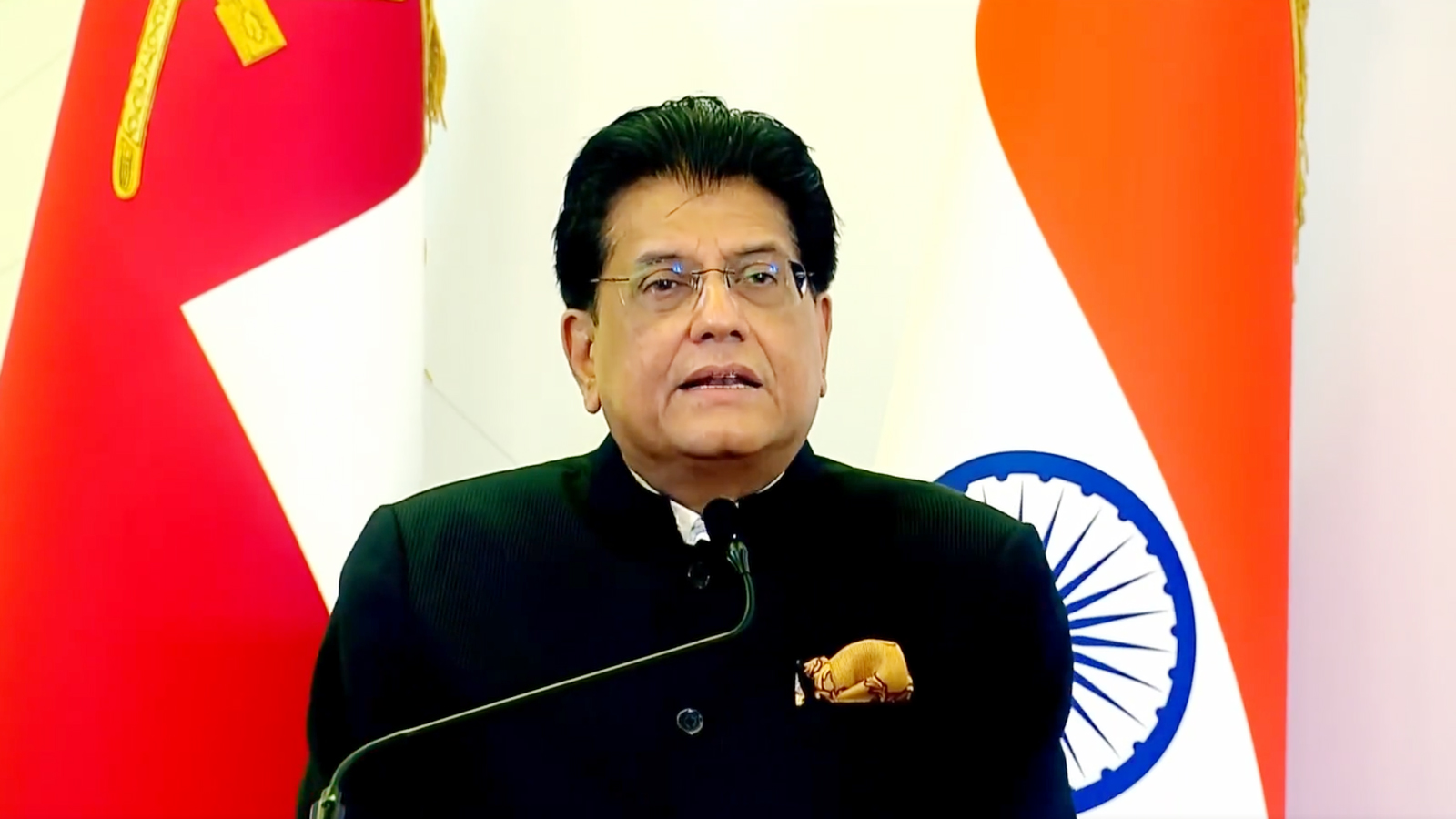
India and Oman on Thursday signed a Comprehensive Economic Partnership Agreement (CEPA), marking a milestone in bilateral ties and opening a new chapter of trade, investment and people-to-people cooperation between the two countries. The agreement was signed in the presence of Prime Minister Narendra Modi and Sultan Haitham bin Tarik.
The pact was inked by Union Commerce and Industry Minister Piyush Goyal and Oman’s Minister of Commerce, Industry and Investment Promotion Qais bin Mohammed Al Yousef, reflecting the shared vision of both nations to deepen economic integration and unlock new growth opportunities.
Described as a significant step in India’s engagement with the Gulf region, the CEPA provides unprecedented market access for Indian goods and services. Under the agreement, Oman has offered zero-duty access on 98.08 per cent of its tariff lines, covering 99.38 per cent of India’s exports by value. Immediate tariff elimination will apply to nearly 98 per cent of these lines, benefiting key labour-intensive sectors such as textiles, leather, footwear, gems and jewellery, engineering goods, plastics, furniture, agricultural products, pharmaceuticals, medical devices and automobiles. The move is expected to boost exports, generate employment and support artisans, MSMEs and women-led enterprises.
India, in turn, has offered tariff liberalisation on about 78 per cent of its tariff lines, covering nearly 95 per cent of imports from Oman by value, while protecting sensitive sectors such as agriculture, dairy, tea, coffee, precious metals and select labour-intensive products through exclusions and tariff-rate quotas.
The agreement also marks a breakthrough in services trade. For the first time, Oman has made ambitious commitments across 127 services sub-sectors, including computer-related services, business and professional services, audio-visual services, research and development, education and health. These commitments are expected to unlock high-value opportunities for Indian service providers and drive skilled job creation.
A key highlight of the CEPA is enhanced mobility for Indian professionals. Oman has, for the first time, offered comprehensive Mode 4 commitments, significantly expanding temporary entry and stay provisions for intra-corporate transferees, contractual service suppliers, business visitors and independent professionals. Entry and stay conditions have also been liberalised for professionals in accountancy, taxation, architecture, and medical and allied sectors.
Under the General Agreement on Trade in Services (GATS), international trade in services is categorised into four distinct “modes of supply.” Movement of Natural Persons (Mode 4) pertains to the supply of services through the temporary movement of individuals from one World Trade Organization (WTO) member country to another. It covers both employees of service-providing firms and self-employed professionals who travel abroad to deliver services in the host country.
The agreement allows 100 per cent foreign direct investment by Indian companies in major services sectors in Oman, enabling Indian firms to establish and expand their commercial presence in the Gulf nation. Both sides have also agreed to explore future negotiations on social security coordination once Oman’s contributory social security system is implemented.
In a first-of-its-kind provision, Oman has made comprehensive commitments on traditional medicine across all modes of supply, opening significant opportunities for India’s AYUSH and wellness sectors and promoting medical value travel and cooperation in traditional healthcare systems.
Additional provisions aim to address non-tariff barriers, including faster marketing authorisations for pharmaceutical products approved by global regulators, mutual recognition of Halal certification, acceptance of India’s organic certification and enhanced cooperation on standards and conformity assessment.
The India-Oman CEPA is the second free trade agreement signed by India in the last six months, following the pact with the United Kingdom, and aligns with New Delhi’s broader strategy of forging trade agreements with complementary economies.
Oman is a key strategic partner for India and a gateway to the wider Middle East and Africa. Bilateral trade currently exceeds USD 10 billion, while nearly seven lakh Indian nationals live in Oman. Indian businesses have a strong presence, with over 6,000 establishments operating across sectors, and annual remittances of around USD 2 billion highlighting the depth of economic ties.
Terming the agreement ambitious and balanced, Goyal said the CEPA strengthens India’s historic ties with Oman and significantly enhances opportunities for Indian exporters and professionals while safeguarding national interests. He added that the pact reflects India’s commitment to inclusive growth and long-term economic partnership.
The CEPA is expected to substantially boost bilateral trade, expand exports, strengthen supply chains and generate employment, positioning India and Oman for deeper and more sustained economic engagement in the years ahead.