India is hosting the 20th session of the UNESCO Intergovernmental Committee for the Safeguarding of the Intangible Cultural Heritage (ICH) from December 8 to 13, 2025, at the historic Red Fort in New Delhi. This marks the first time India is convening the session, which is being chaired by Vishal V. Sharma, India’s Permanent Delegate to UNESCO. The event coincides with the twentieth anniversary of India’s ratification of the 2003 UNESCO Convention for the Safeguarding of the Intangible Cultural Heritage.
The session focuses on protecting living cultural traditions recognized by communities as part of their identity, including practices, knowledge, expressions, objects, and spaces passed down through generations. Adopted on October 17, 2003, during UNESCO’s 32nd General Conference in Paris, the Convention responded to global concerns over cultural traditions, performing arts, rituals, craftsmanship, and knowledge systems being threatened by globalization, social change, and limited resources. It emphasizes the role of communities, indigenous groups, and individual practitioners in safeguarding heritage, while promoting global cooperation and awareness among younger generations.
The Intergovernmental Committee advances the objectives of the 2003 Convention and ensures their effective implementation across member states. Its work includes promoting and monitoring Convention objectives, providing guidance on best practices, recommending safeguarding measures, mobilizing resources for the Intangible Cultural Heritage Fund, drafting operational directives, examining state reports, evaluating nominations for UNESCO’s ICH lists, and granting international assistance.
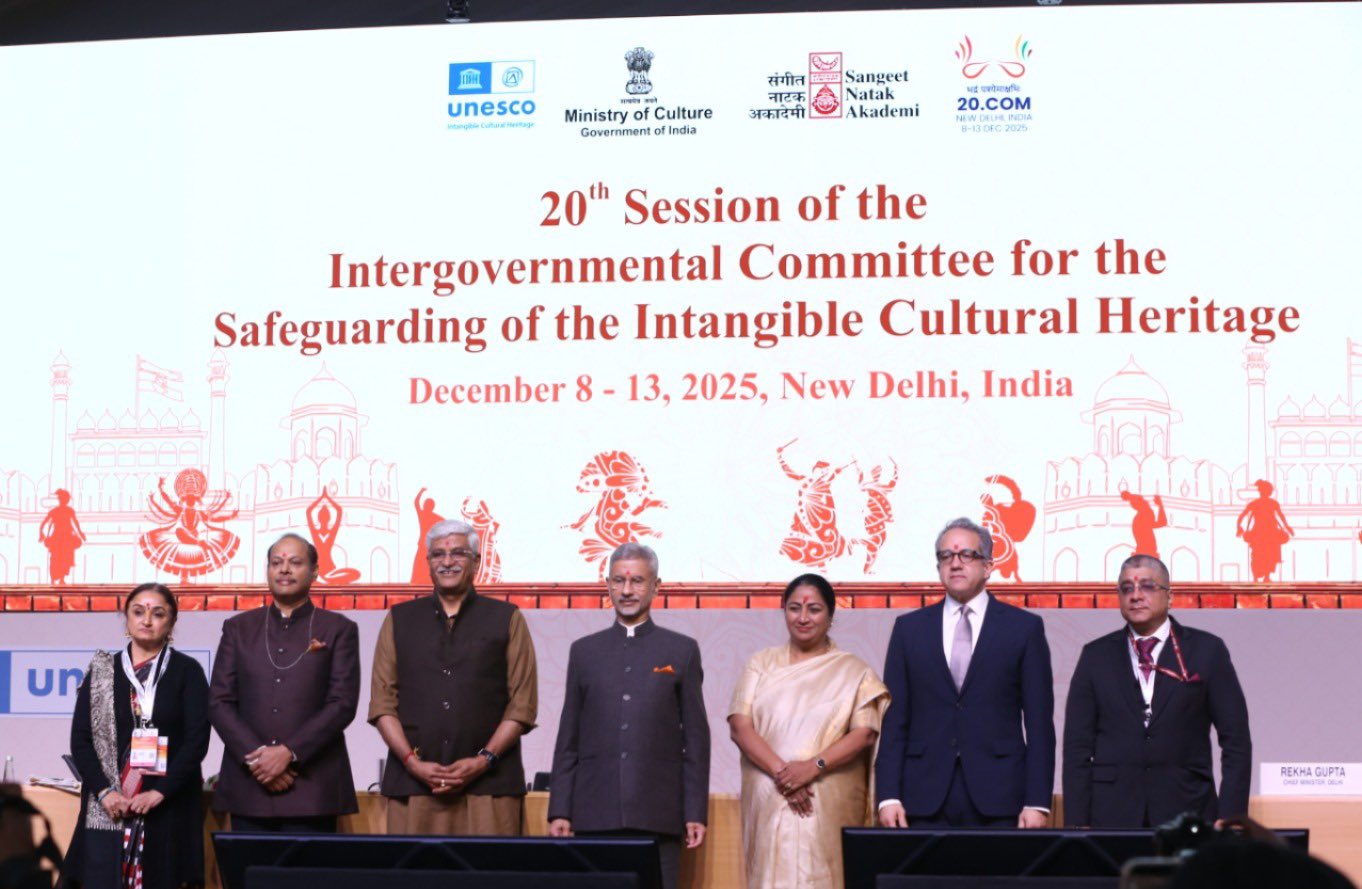
External Affairs Minister S. Jaishankar formally opened the session, describing traditions, languages, music, craftsmanship, and other intangible heritage as the most “democratic expression of culture,” “owned by all and guarded by many.” Addressing delegates from multiple countries, he stressed the need to protect cultural inheritance, strengthen it, and ensure its transmission to future generations in the shared pursuit of peace and prosperity.
Union Minister Gajendra Singh Shekhawat, UNESCO Director-General Khaled El-Enany, Delhi Chief Minister Rekha Gupta, and India’s Ambassador and Permanent Delegate to UNESCO, Vishal V. Sharma, attended the inaugural ceremony. The Red Fort, built by Mughal emperor Shah Jahan and recognized as a UNESCO World Heritage Site, provides a historic backdrop for the session, symbolizing the convergence of India’s tangible and intangible heritage.
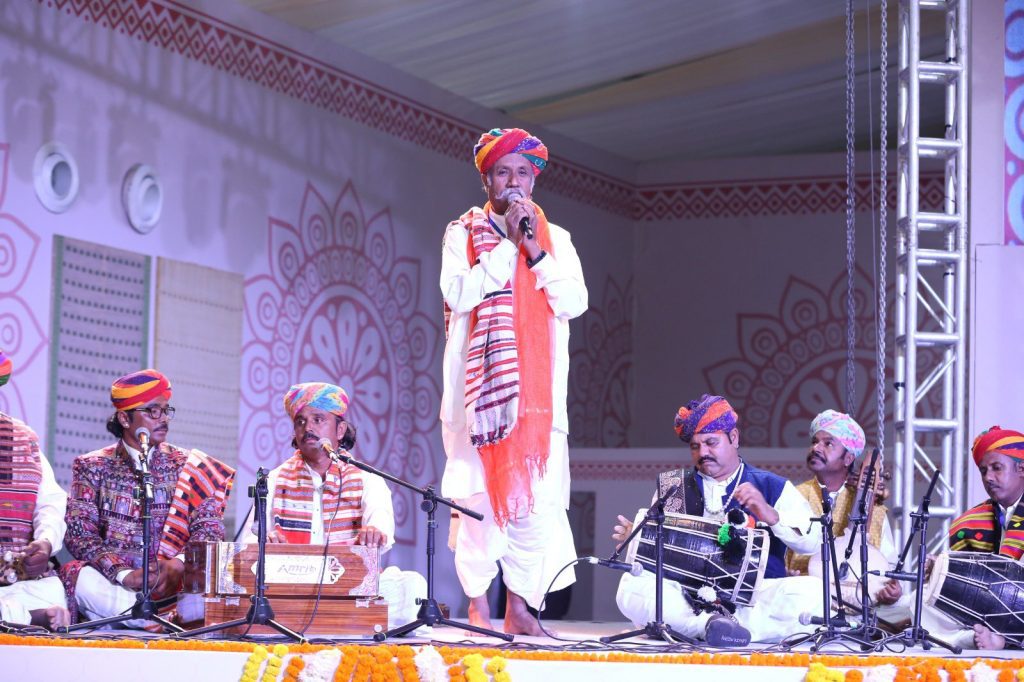
India is presenting thematic exhibits and cultural performances for the visiting delegates, showcasing the country’s diverse heritage. The session highlights India’s national ICH safeguarding model, which combines institutional support, community participation, documentation, and national inventory efforts as an example of good practice. It also encourages international cooperation through joint nominations, safeguarding initiatives, capacity building, and technical exchanges.
The session aims to bring global visibility to India’s intangible heritage, including lesser-known traditions, local crafts, and regional festivals, while motivating further domestic efforts such as documentation, inventorying, nomination dossiers, and community engagement, particularly among youth. It provides a platform for cultural diplomacy to project India’s soft power, cultural richness, diversity, and leadership in heritage preservation.
India’s intangible cultural heritage is emphasized as both a national and global asset, fostering social cohesion, pluralism, and identity, while supporting livelihoods, crafts, education, and cultural transmission. The Ministry of Culture, through its Scheme for Safeguarding Intangible Heritage, and the Sangeet Natak Akademi are coordinating activities including documentation, inventorying, training, performances, exhibitions, and preparation of UNESCO nomination dossiers.
To date, 15 Indian elements have been inscribed on UNESCO’s Representative List of the Intangible Cultural Heritage of Humanity, ranging from performing arts like Kutiyattam and Chhau, to rituals such as Vedic and Buddhist chanting, Ramlila, Ramman, Sankirtana, the Kalbelia dance, Kumbh Mela, Yoga, Durga Puja, Garba, and traditional craftsmanship such as the Thatheras of Jandiala Guru. This session is also reviewing India’s recent nominations for Chhath Mahaparva and Diwali.
The ongoing session reflects India’s commitment to safeguarding its living cultural traditions, promoting community participation, documentation, training, and international cooperation, while positioning the country as a leader in global heritage preservation.