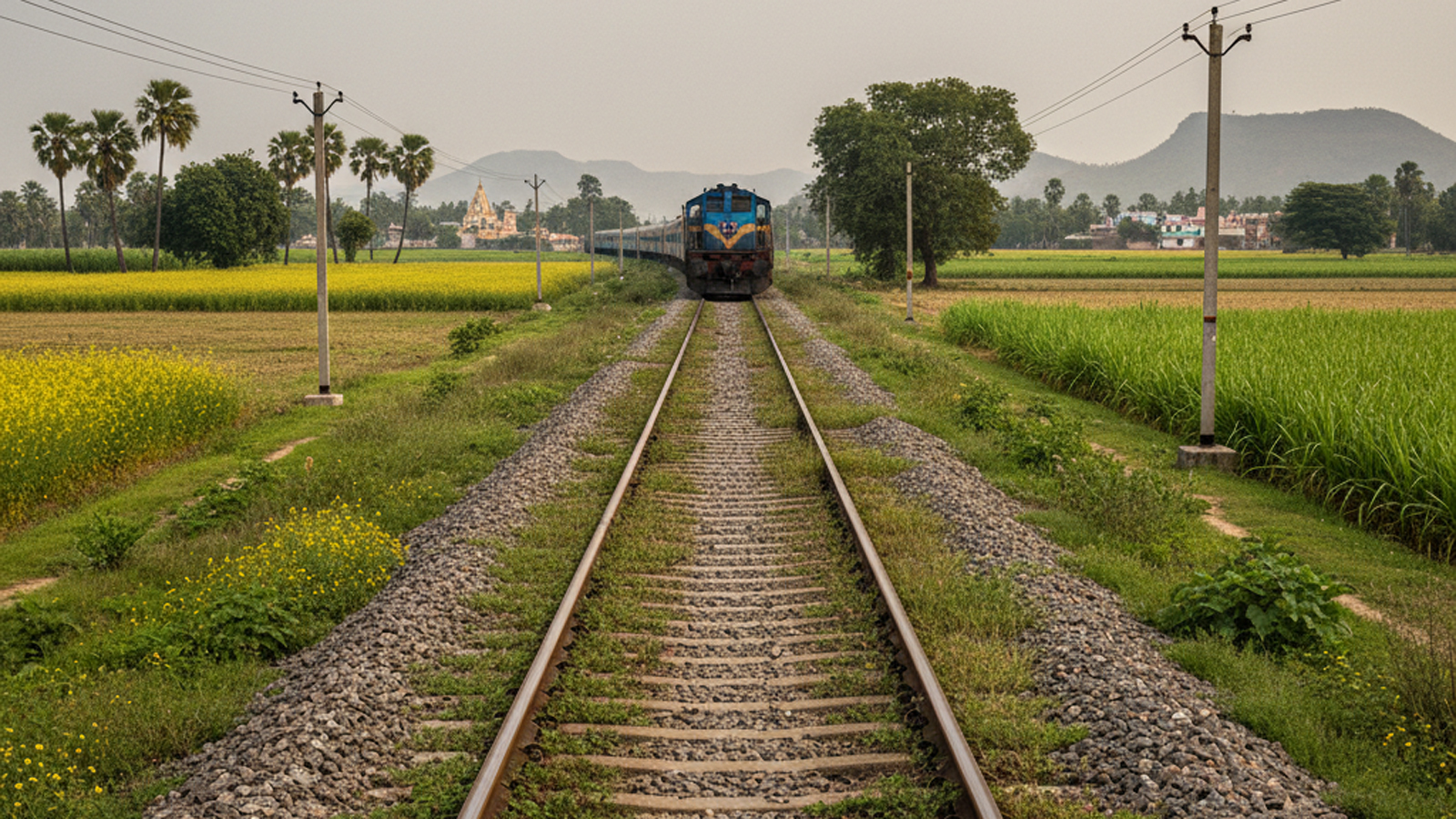
Indian Railways has significantly expanded its renewable energy footprint, commissioning 812 MW of solar power and 93 MW of wind power for traction use as part of its push toward becoming a net-zero carbon emitter by 2030. The latest progress was shared in a written reply to the Lok Sabha by Railways Minister Ashwini Vaishnaw on Thursday.
According to the Ministry, the Railways has also tied up 1,600 MW of round-the-clock hybrid renewable energy. Of this, 100 MW from the Solar Energy Corporation of India (SECI) has already begun supplying power for traction, while an additional 1,500 MW hybrid package – comprising solar, wind and storage – is in the pipeline.
The shift to renewables accompanies the broader electrification of the network. The Railways has electrified 99.2% of its broad gauge routes, completing 46,900 km of electrification between 2014 and 2025 – more than double the 21,801 km completed in the six decades before 2014. Electrification of the remaining network is underway.
Alongside cleaner power sources, Indian Railways is upgrading its rolling stock. New three-phase IGBT locomotives with regenerative braking capabilities are being manufactured and deployed, improving energy efficiency by recovering power during braking. Coal-fired steam engines are now used only on heritage mountain railways, seasonal services and chartered trains.
The Railways is also working on a pilot hydrogen-powered train, designed by the Research, Design & Standards Organisation (RDSO), to evaluate hydrogen as a clean alternative for rail transport.
In 2023–24, the Railways spent ₹29,614 crore on traction across all forms of traction power. The Ministry emphasised that renewable integration, strategic power procurement and technological upgrades are central to its plan to reduce emissions and modernise the national transport network.