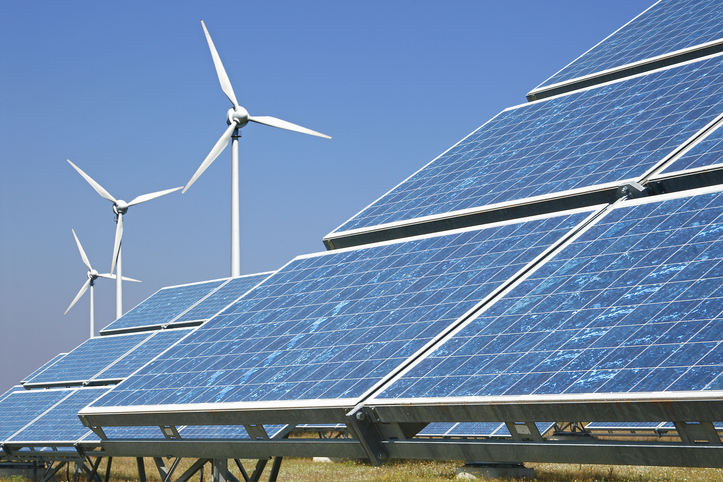
India’s total installed power generation capacity has climbed to 5,05,023 MW, with non-fossil fuel sources now accounting for a larger share than fossil-fuel based capacity. According to data released by the Ministry of Power, non-fossil capacity stands at 2,59,423 MW, representing 51.37 percent of the country’s total, while fossil-fuel sources amount to 2,45,600 MW, or 48.6 percent. Renewable energy alone contributes 2,50,643 MW, reflecting the country’s accelerating energy transition.
The ministry said India’s progress puts it firmly on track to meet its target of 500 GW of non-fossil energy capacity by 2030. A series of policy reforms and infrastructure initiatives — including waivers on Inter-State Transmission System (ISTS) charges, streamlined bidding guidelines and the rollout of major renewable energy schemes — have contributed significantly to this shift.
The government has waived ISTS charges for solar and wind projects commissioned before June 2025, for green hydrogen projects until 2030 and for offshore wind installations up to 2032. Annual renewable energy bidding targets of 50 GW have been announced till FY 2027–28, alongside continued provision for 100 percent FDI in the sector. Large-scale programmes such as PM-KUSUM, PM Surya Ghar Muft Bijli Yojana, the National Green Hydrogen Mission, the Green Energy Corridor and offshore wind viability gap funding are among the major initiatives driving growth. The government has also notified Renewable Consumption Obligations, making renewable usage binding for designated consumers under the Energy Conservation Act.
Alongside its renewable push, India is expanding its nuclear energy ecosystem to bolster long-term energy security. The government has set an ambitious target of 100 GW nuclear power capacity by 2047. A ₹20,000 crore Nuclear Energy Mission has been launched to develop at least five indigenous Small Modular Reactors by 2033. Amendments to the Atomic Energy Act and the Civil Liability for Nuclear Damage Act have been initiated to facilitate greater private sector participation. Bharat Small Reactors based on PHWR technology are being upgraded for industrial deployment, and recent uranium discoveries are expected to extend the life of key mines by several decades. To accelerate nuclear capacity addition, NPCIL and NTPC have formed a joint venture, ASHVINI, to build new plants.
The government is simultaneously working to strengthen grid stability as renewable penetration rises. A Battery Energy Storage System with a capacity of 13.22 GWh is under implementation through a viability gap funding scheme. An additional 30 GWh BESS programme was approved earlier this year with support from the Power System Development Fund. Ten pumped storage projects with a cumulative capacity of 11,870 MW are also under construction across the country.
India has issued a national strategy for offshore wind energy, backed by viability gap funding for an initial one-gigawatt capacity. Under the National Green Hydrogen Mission, the country aims to produce at least five million tonnes of green hydrogen annually by 2030, supported by approximately 125 GW of renewable energy capacity.
According to the ministry’s data, India’s current installed capacity includes 2,18,258 MW of coal-based power, 20,132 MW of gas-based power and smaller shares from lignite and diesel. On the non-fossil side, renewable sources contribute 2,50,643 MW, comprising 1,29,924 MW of solar power, 53,600 MW of wind power, 50,348 MW of hydro including pumped storage and additional capacity from biomass, small hydro and waste-to-energy projects. The country’s nuclear capacity stands at 8,780 MW.
Minister of State for Power Shripad Yesso Naik provided these details in a written reply in the Rajya Sabha.