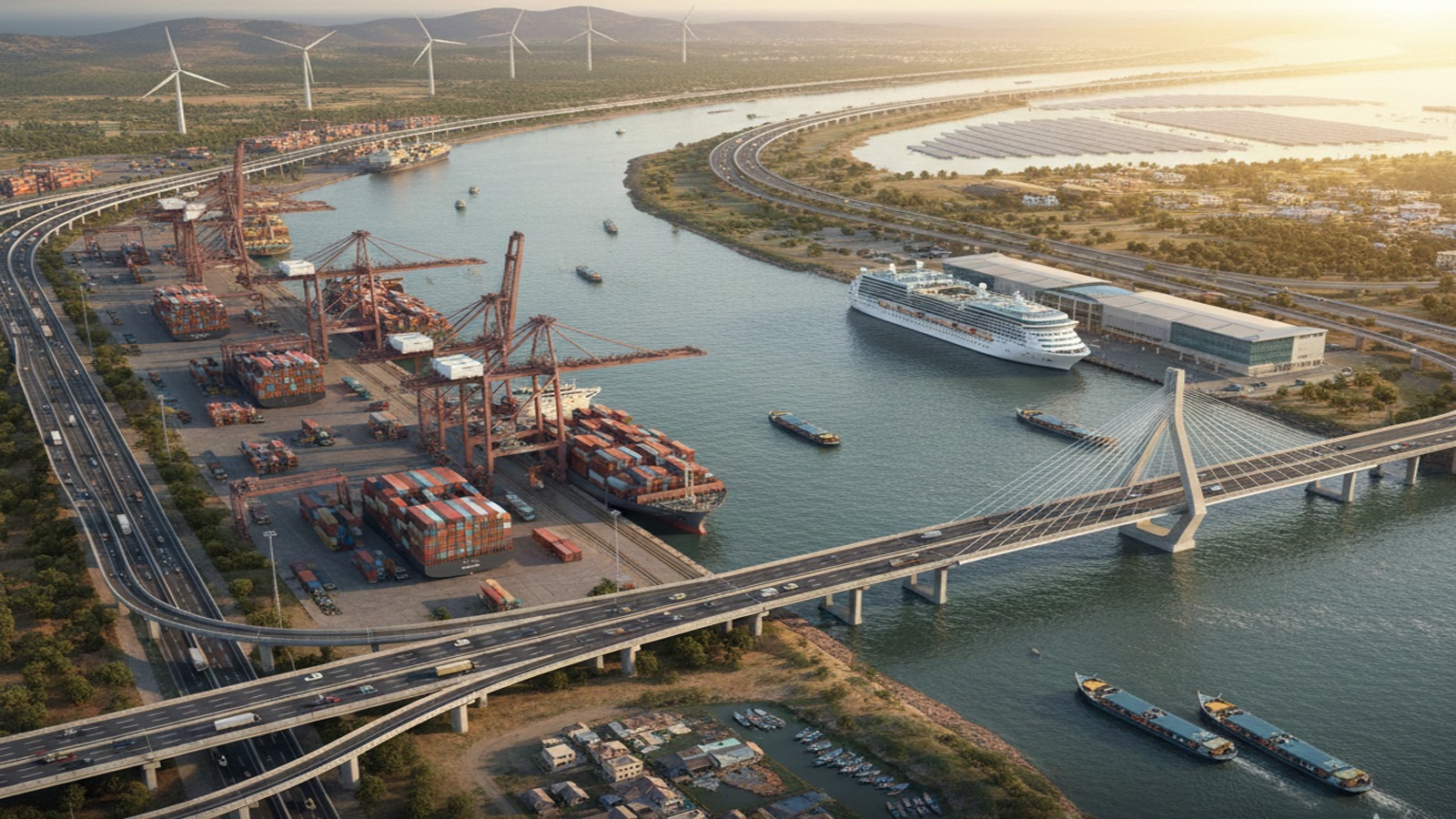
From limited capacity to strategic infrastructure
For decades after Independence, India’s ports and maritime infrastructure expanded at a measured, often constrained pace. Limited capacity, ageing cargo-handling systems, and weak links with road and rail networks meant that most ports operated as isolated cargo points rather than engines of trade and industry. India remained heavily dependent on foreign transhipment hubs, while naval infrastructure grew steadily but without a single, unified maritime vision guiding long-term planning.
Over the past decade, this approach has undergone a decisive shift. Maritime infrastructure has been repositioned as a strategic national asset central to economic growth, logistics efficiency, coastal development, and national security. Ports, shipping networks, and naval facilities are now being planned as interconnected components of a broader maritime ecosystem, aligned with industrial corridors, global trade routes, and India’s expanding strategic footprint in the Indian Ocean.
Where India’s ports are located
As per PIB, India today has 12 major ports administered by the Centre and 200+ non-major ports under state governments, spread across the eastern and western coasts and island territories. Key ports such as Deendayal (Kandla), Jawaharlal Nehru Port (JNPA), Paradip, Visakhapatnam, Chennai, Cochin, and Mumbai continue to anchor cargo movement, while newer facilities are expanding capacity and reach.
The Vizhinjam International Deepwater Multipurpose Seaport in Kerala, inaugurated in 2025, marks a strategic shift towards developing deep-water transhipment hubs within India, reducing reliance on foreign ports for container handling.
What has changed in scale and purpose?
According to PIB data, cargo handled at major ports has crossed 850 million tonnes annually, reflecting steady growth across containers, petroleum products, fertilisers, and bulk cargo. Port modernisation has focused on mechanised handling, deeper drafts, faster evacuation, and digital systems.
Ports are no longer viewed only as trade points. Under port-led development initiatives, land is being allocated for logistics parks, petrochemical units, steel processing, fertiliser plants, and warehousing, directly linking maritime infrastructure to industrial expansion.
Use beyond commerce: the security dimension
Maritime infrastructure has also gained strategic significance. PIB releases a note that ports and coastal facilities now support dual-use logistics, enabling smoother movement for both commercial shipping and defence operations.
India’s naval infrastructure supports a fleet of over 150 ships, including aircraft carriers, destroyers, frigates, submarines, and patrol vessels, operating across the Indian Ocean Region. Port upgrades and coastal facilities enhance maintenance, refuelling, and rapid deployment capabilities, strengthening maritime security and disaster response.
India’s shipping strength
As per official government data cited in PIB, India has a merchant shipping fleet of around 1,500 vessels, serving coastal trade, international cargo movement, and offshore services. Policy measures have focused on improving ship registration, encouraging Indian tonnage, and strengthening coastal shipping to reduce logistics costs.
The push towards inland waterways and coastal shipping has eased pressure on road and rail networks, particularly for bulk commodities such as coal, cement, and food grains.
What this has enabled
Improved port efficiency has reduced turnaround time, increased cargo evacuation speed, and lowered logistics costs. Digitised port operations, standardised tariffs, and improved hinterland connectivity have made exports and imports more predictable. Strategic port development has also strengthened India’s naval reach and maritime preparedness.