India’s nuclear power generation touched a new record in FY 2024-25, with NPCIL producing 56,681 million units of electricity. According to the Department of Atomic Energy (DAE), this is the highest annual output achieved so far and marks the first time NPCIL has crossed the 50 billion-unit mark in a financial year. The department said the generation helped avoid nearly 49 million tonnes of carbon dioxide emissions.
DAE said it continued work across key areas, including nuclear power production, capacity building, development of research reactors, and use of radiation technologies in health care, agriculture, and industry. The department also contributed to national security and strategic programmes.
New Projects and Reactor Milestones
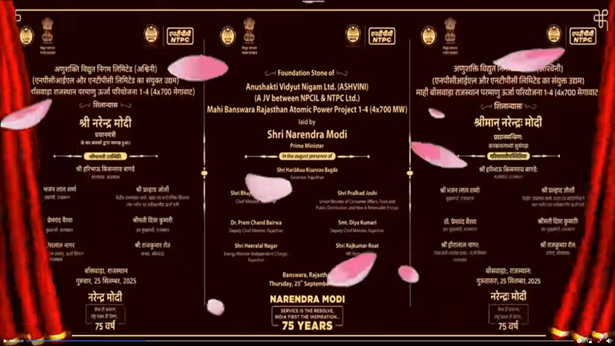
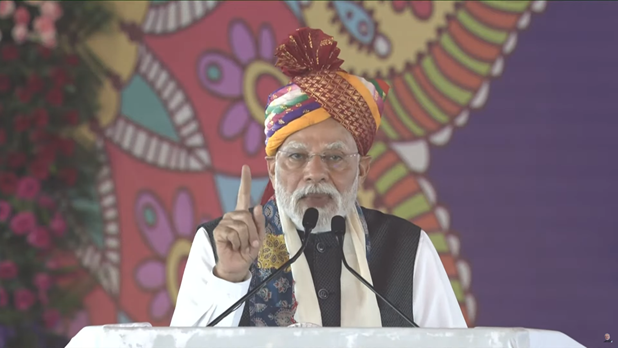
Prime Minister Narendra Modi laid the foundation stone for the four-unit Mahi Banswara Nuclear Power Project in Rajasthan on 25 September 2025. The 700 MW reactors will be implemented by the NPCIL-NTPC joint venture, ASHVINI.
Unit 7 of the Rawatbhata Atomic Power Project was connected to the Northern Grid and began commercial operations. The first two 700 MWe reactors at Kakrapar in Gujarat received regulatory clearance for full operation. NPCIL also recorded multiple long-duration operation runs, including Tarapur-3 and Kudankulam-2 exceeding one year of continuous operation.
The Atomic Energy Commission approved pre-project activities for ten additional 700 MWe PHWRs, beyond the 22.5 GW nuclear capacity planned by 2032.
Expansion of Cancer Care Services
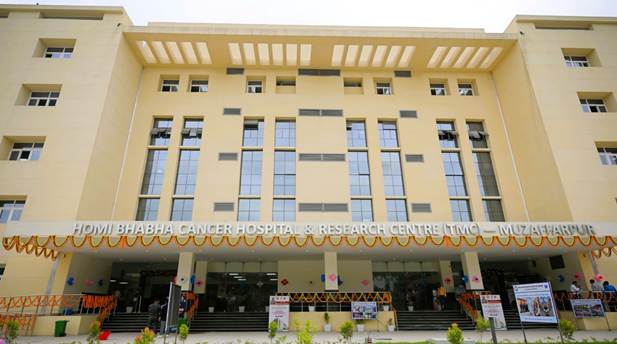
DAE said it continued to strengthen its healthcare initiatives. The Prime Minister inaugurated the 150-bed Homi Bhabha Cancer Hospital and Research Centre in Muzaffarpur, Bihar. Tata Memorial Centre registered 1.3 lakh patients during the year, while about five lakh women were screened for oral, breast and cervical cancers across centres in Varanasi, Sangrur, Mullanpur and Guwahati.
The 30 MeV medical cyclotron in Kolkata continued production of diagnostic radiopharmaceuticals, delivering 371 Ci-equivalent doses to hospitals. New therapies, including 177Lu-DOTA-FAPI-2286, and advanced diagnostic interventions were introduced into routine clinical use.
DAE’s facilities also expanded sterilisation services. The electron-beam centre in Indore completed sterilisation of 1.53 crore medical devices, which are now supplied to over 35 countries. A new high-intensity gamma irradiator, ISOMED 2.0, was commissioned to support healthcare product sterilisation.
Advances in High-Technology and Strategic Sectors
The year saw progress in advanced materials and national security technologies. BARC released India’s first Certified Reference Material for rare earth element analysis, named Ferrocarbonatite (BARC B1401). This is the fourth such CRM available globally.
NFC developed high-purity niobium materials essential for accelerator programmes, and commissioned a niobium thermit production facility with the Department of Space. ECIL developed and integrated systems for the Akash-Prime air defence platform and components for the Agni and Astra missile systems. A Command-and-Control system for an anti-ship missile platform was also supplied for export.
The Heavy Water Board achieved 99.8% enrichment of Boron-11, suitable for semiconductor applications. Researchers at IMSc developed a new foetal weight prediction model using routine ultrasound measurements. The first experimental run of India’s dark matter search project, InDEx, began at the Jaduguda Underground Science Laboratory.
Agriculture, Food Processing and Technology Transfer
DAE developed two new crop varieties: TBM-9, an early-maturing banana, and RTS-43, a high-yield sorghum. Six earlier BARC-developed oilseed varieties were expanded to new states. Seventeen new MoUs were signed for gamma radiation processing facilities, taking the total number of operational units in the country to 40.
ARPF crossed sterilisation of over one crore medical devices using its indigenous 10 MeV electron beam accelerator.
National and International Recognition
Indian students mentored by TIFR won medals across major international Olympiads in chemistry, physics, biology, mathematics and astronomy. At the Astronomy and Astrophysics Olympiad hosted in India, the team won four gold medals and one silver.
IREL and ECIL received SCOPE Eminence Awards from the President of India. DAE was honoured with the Rajbhasha Kirti Puraskar for the second year in a row.
Homi Bhabha National Institute secured high positions in the NIRF 2025 rankings, including seventh place in the Research Institution category. The Nature Index ranked HBNI first in India for publications in the physical sciences. Tata Memorial Hospital was recognised by the IAEA as a “Rays of Hope” Anchor Centre.