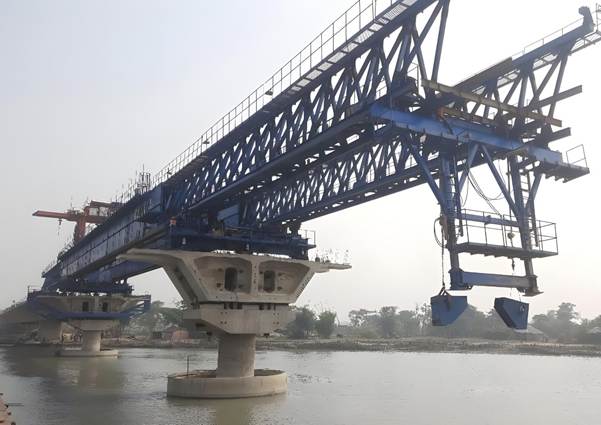
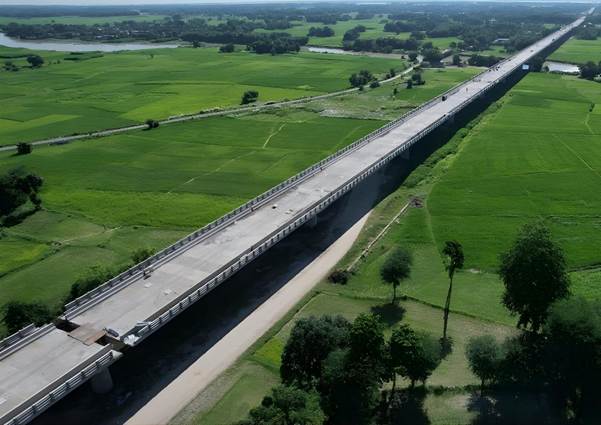
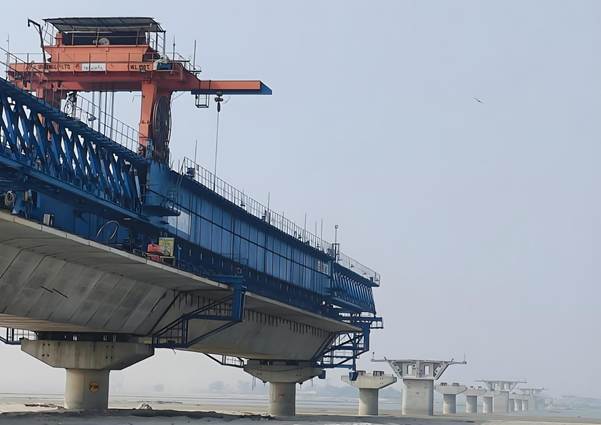
A long-awaited bridge over the Ganga, connecting NH-133B in Jharkhand with NH-131A in Bihar, is set to transform daily life and economic activity in the region. For decades, residents of Sahibganj and nearby districts in Jharkhand have depended on costly and unpredictable boat services to cross the river, often facing delays that affected everything from medical emergencies to trade.
The new 8-km bridge, being built at a cost of ₹1,977.66 crore, is expected to be completed in the financial year 2026–27. Once operational, it will provide an all-weather, direct route between Jharkhand and Bihar, significantly reducing travel time.
“For us, ₹100 for a boat is a big amount,” said Ramkesh, a resident of Mahadev Ganj, recalling long waits for ferries and the difficulties of reaching Manihari or Katihar. “With this bridge, our river problem will finally end, and once Katihar is easier to reach, many essentials will become affordable.”
The structure is expected to speed up the movement of freight—particularly minerals from Jharkhand’s resource-rich belt—helping cut fuel and logistics costs. Local traders believe this will bring down prices and make supply chains more efficient.
Residents also say the bridge will ease daily hardships. “Sometimes even weddings could not be attended on time,” said Sushil, who remembered having to take long detours when steamers were unavailable. “We will save time and money. Life will be more peaceful.”
Improved access to emergency services is another major benefit. Abdul, a shopkeeper, said late-night medical emergencies were especially distressing when boats were unavailable. “With a permanent road, ambulances can reach faster. During floods too, this bridge will help us stay connected.”
The bridge is expected to strengthen regional connectivity by linking the Santhal Pargana division with Bihar, West Bengal and the northeastern states, while also improving trade routes to Nepal, Bhutan and Bangladesh. This could open new markets and attract investment into the region.
“Trucks carrying stone, sand and other materials will save on diesel and time,” Abdul said. “People will also be able to work across districts and return the same day.”
For many watching the ongoing construction along the riverbank, the bridge represents more than infrastructure. It marks a path towards economic opportunities, better mobility and a more secure future.
What was once a difficult river crossing is poised to become a lifeline of connectivity for thousands living in and around Sahibganj.