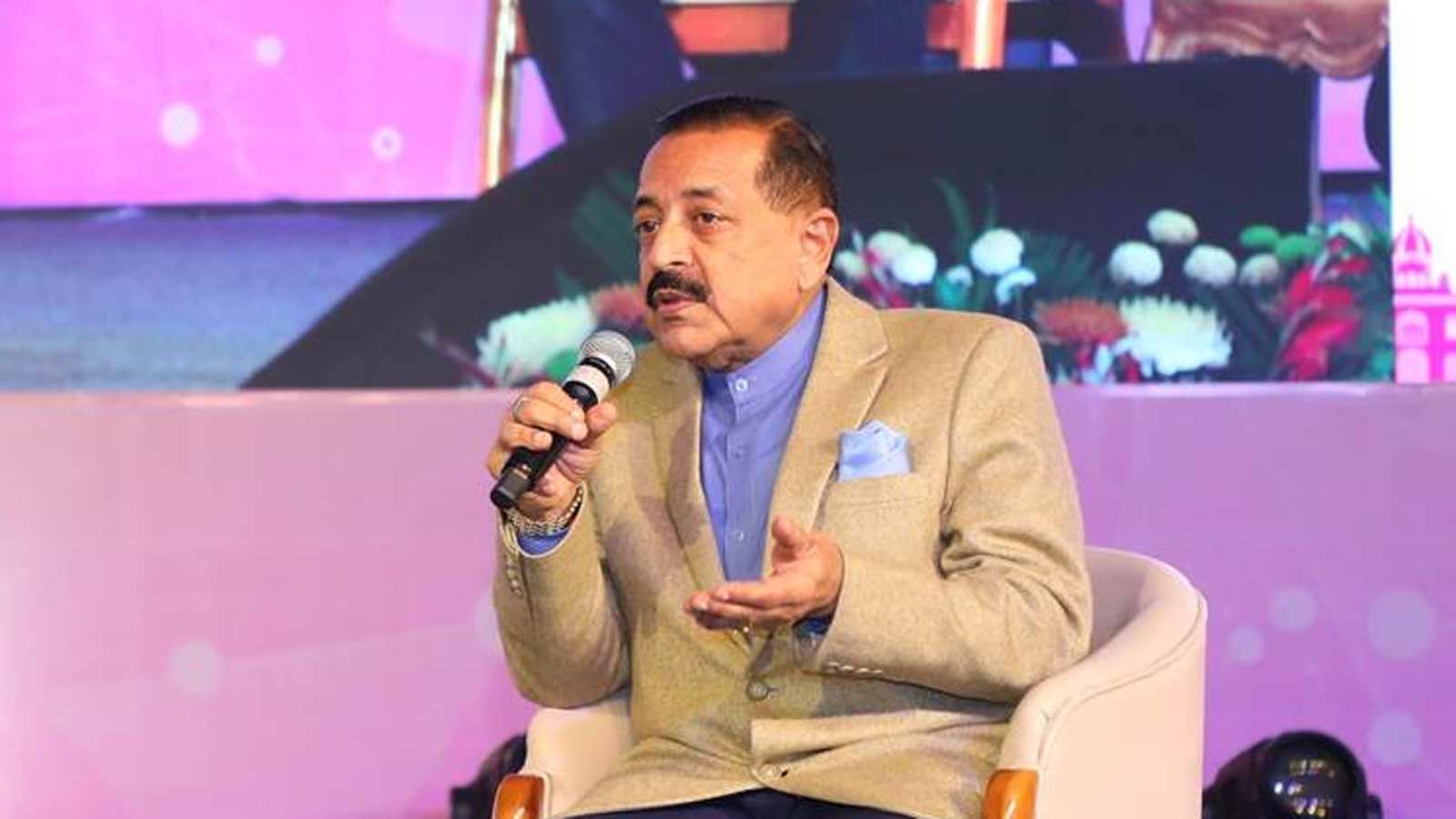
Union Minister of State for Science and Technology Dr. Jitendra Singh on Sunday said that India is moving from a traditional economy to an innovation-driven one, and is increasingly shaping global technology trends. He was speaking at sessions of the India International Science Festival (IISF) in Panchkula.
Singh said startups will play a major role in driving India’s future growth, but stressed that mentorship and early guidance are as important as funding. Interacting with young entrepreneurs and students, he said the country needs a stronger culture of risk-taking in research and development.
The Minister highlighted that government-backed platforms such as BIRAC, national missions and sector-specific programmes now provide structured support linking startups with funding, industry partners and mentors. He said this ecosystem aims to help new ideas move to the market faster.
Singh said opportunities in science and technology have become more accessible, with talent from smaller towns increasingly entering entrepreneurship and research. He noted that progress in healthcare technologies, biotechnology and digital solutions is now driven significantly by Indian innovations.
The Minister also addressed regulatory concerns raised by participants, saying the government is reducing compliance burdens through deregulation, de-licensing and decriminalisation to allow innovators to focus on research and product development.
At another session, Singh spoke about the government’s new national R&D fund, which he described as a major step to support high-risk, high-impact deep-tech innovation. The fund will back research and industry participation in strategic sectors such as space and nuclear energy, which were previously closed to private players.
He highlighted the rapid expansion of India’s space sector, from a few players to nearly 400 startups, following reforms introduced in recent years. Space technologies, he said, are now being applied in agriculture, healthcare, water management and disaster response. Similar changes, he added, are visible in the nuclear sector, where innovations are contributing to cancer care and water purification.
Singh said India’s global image has changed, with Indian professionals receiving greater recognition abroad. He pointed to growing international interest in India’s public service systems, including digital grievance mechanisms and senior citizen services.
He attributed this shift to changes in governance over the past decade, which he said have increased accountability and improved delivery of welfare schemes without discrimination. The Minister also said the digital expansion across India has enabled students and professionals from rural and smaller cities to compete on equal footing.
Discussing the need to measure innovation through sustainability, Singh said ideas must translate into viable enterprises with strong market links. He cited examples of agricultural startups, including lavender-based ventures in Jammu and Kashmir, as models of meaningful and financially viable innovation.
Looking ahead, the Minister said India’s talent pool across generations is its biggest strength. He said India is expected to achieve major milestones in the space sector, including the possibility of an Indian astronaut reaching the Moon in the next 15 to 20 years. He added that artificial intelligence will significantly influence daily life, provided it is adopted responsibly.
Singh said platforms like IISF are meant to bring scientists, policymakers and young innovators together and to build confidence in India’s scientific capabilities. He said the next decade will be defined by those who combine scientific thinking with national goals.