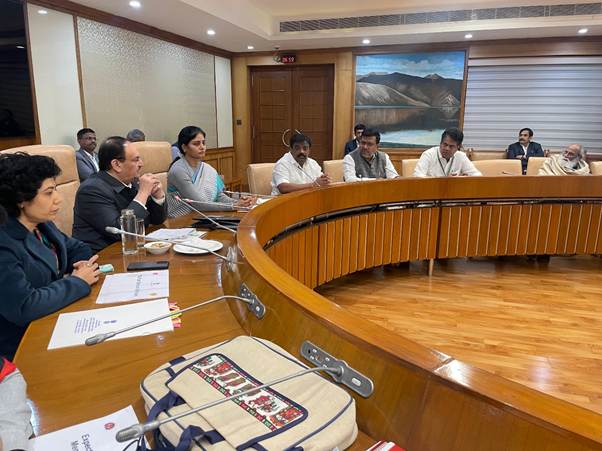
Union Health Minister J. P. Nadda on Tuesday met Members of Parliament from Tamil Nadu to review and strengthen the state’s role in India’s tuberculosis elimination programme, stressing early detection, community participation and last-mile delivery as key to achieving a TB-free India.
The interaction, held at the Extended Parliament House Annexe on the sidelines of the Winter Session of Parliament, was part of the Centre’s initiative ‘Parliamentarians Championing a TB-Mukt Bharat’. Similar meetings have been held with MPs from Uttar Pradesh, Bihar, Rajasthan, Maharashtra and Gujarat. Union Minister of State for Health Anupriya Patel was also present.
Nadda said tuberculosis remains one of the country’s most pressing public health challenges but pointed to significant progress over the past decade. TB incidence in India has declined by 21 per cent — from 237 to 187 cases per lakh population between 2015 and 2024 — nearly double the global average decline. TB-related deaths have fallen by about 25 per cent, while treatment coverage has crossed 92 per cent, placing India ahead of several global benchmarks.
Nadda attributed these gains to a strategy focused on early case detection, expanded use of NAAT testing among vulnerable populations and in congregate settings, and sustained community participation under the TB-Mukt Bharat Abhiyan. Higher case notification, he said, reflected improved reach of the programme rather than a worsening of the disease burden.
The Health Minister also highlighted technological and programmatic innovations, including the nationwide rollout of AI-enabled handheld X-ray devices and an expanded NAAT network of over 9,300 machines across all blocks. He said shorter treatment regimens such as BPaL-M have reduced the duration of therapy for drug-resistant TB to six months, compared to 9–12 months earlier.
On patient support, Nadda said nutritional assistance under the Nikshay Poshan Yojana has been doubled to Rs 1,000 per month, with more than Rs 4,400 crore transferred directly to over 1.3 crore TB patients since 2018.
The Minister praised Tamil Nadu’s sustained efforts in TB control but said challenges remain among urban slum populations, migrant and tribal communities, and unorganised industrial workers. Rising diabetes prevalence, tobacco use and alcoholism were flagged as factors increasing vulnerability to TB.
Nadda urged MPs to play a more active role at the constituency level by prioritising TB in DISHA meetings, supporting proactive screening drives, reviewing programmes with district administrations and mobilising local resources, including Nikshay Mitras. He also called for better use of volunteers under MY Bharat for awareness generation and patient support.
Members of Parliament from Tamil Nadu welcomed the interaction and said they would work closely with health authorities and local communities to strengthen early detection, treatment adherence and social support for TB patients.