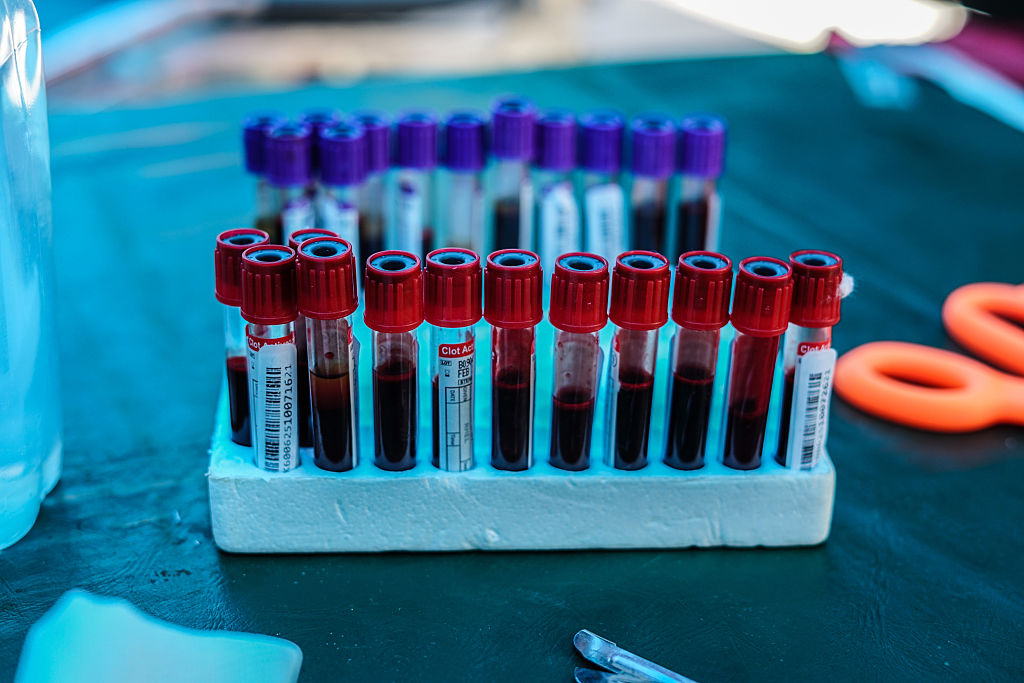
A team of UK researchers has developed a pioneering blood test that could enable doctors to detect and monitor lung cancer in real time, helping reduce diagnostic delays and improve patient outcomes.
Using Fourier Transform Infrared (FT-IR) microspectroscopy, the team detected a single lung cancer cell in a patient’s blood.
The technique combines advanced infrared scanning technology with computer analysis, focusing on the unique chemical fingerprint of cancer cells, researchers from University Hospitals of North Midlands NHS Trust (UHNM), Keele University and Loughborough University said.
“This approach has the potential to help patients receive earlier diagnoses, personalised treatments and fewer invasive procedures, and it could eventually be applied to many types of cancer beyond lung cancer,” said lead author Professor Josep Sulé-Suso, Associate Specialist in Oncology at UHNM.
Circulating tumour cells (CTCs) are cancer cells that can break away from a tumour and travel in the bloodstream. They can provide vital clues about how the disease is progressing and how well treatment is working. CTCs are also responsible for the spread of cancer, known as metastasis.
Current methods for detecting CTCs can be complicated, expensive and time-consuming, and they can sometimes miss cancer cells altogether, as the cells often change their characteristics while circulating in the blood.
The research team’s method detects CTCs in a blood sample by shining an infrared beam onto it, similar to the light in a TV remote control but far more powerful.
Different chemicals absorb infrared light in different ways, and CTCs have a distinct absorption pattern, or “chemical fingerprint”.
Computer analysis of the infrared absorption data can quickly identify whether circulating tumour cells are present.
The technique, published in the journal Applied Spectroscopy, is simpler and more affordable than existing approaches and uses standard glass slides already found in pathology laboratories to prepare blood samples for analysis under the infrared instrument, making it easier to adopt in everyday clinical practice.
The team now aims to test the method in larger patient groups, with the goal of developing a rapid, automated blood test that could be integrated into cancer care pathways.
— IANS