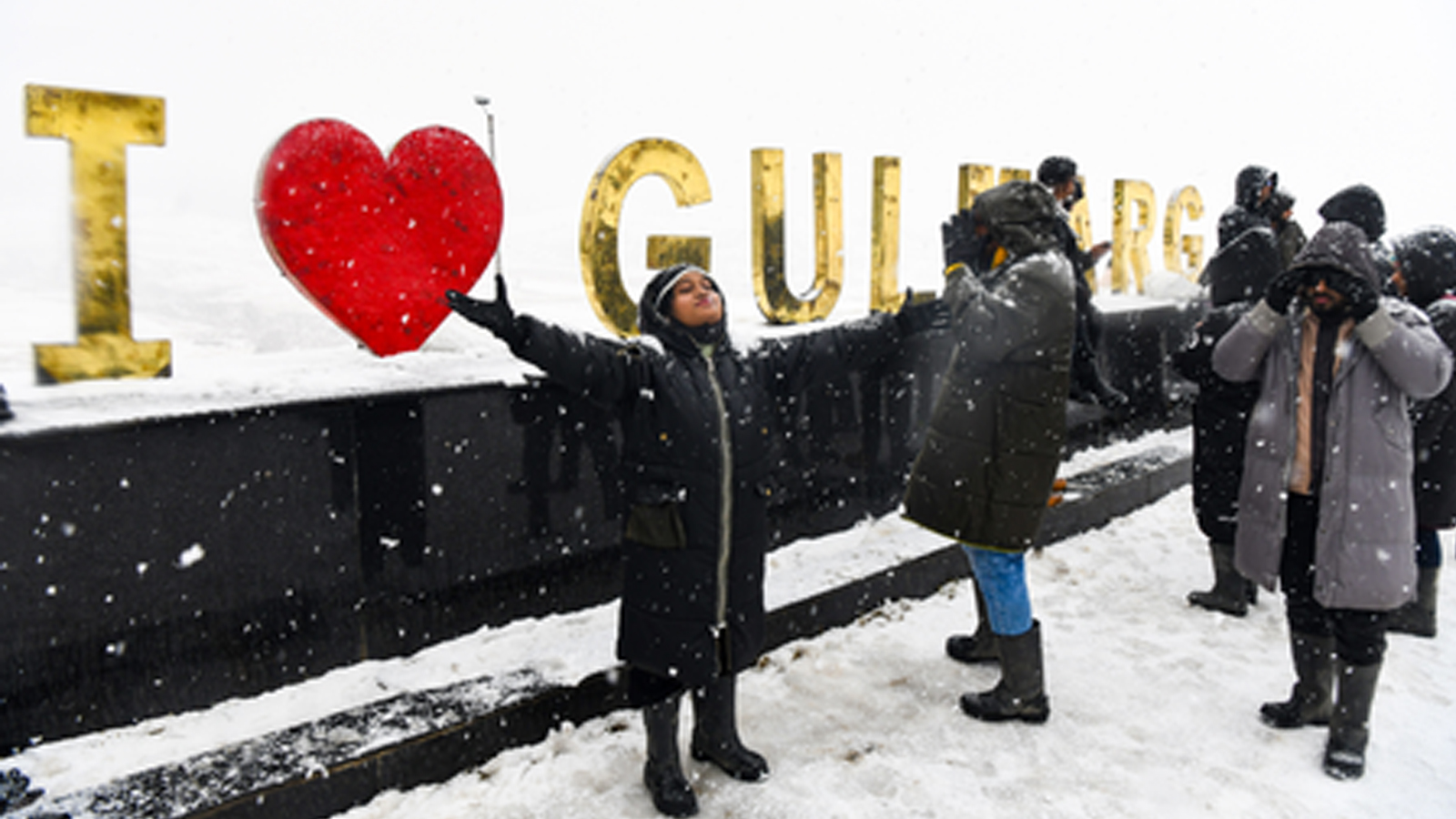
Night temperatures across the Kashmir Valley rose above the freezing point on Monday due to heavy cloud cover, with the ski resort of Gulmarg being the only exception.
According to the Met Department, minimum temperatures remained above zero degrees Celsius across the Valley, barring Gulmarg, which recorded a low of minus 2°C. Srinagar registered a minimum temperature of 3°C, while Pahalgam recorded 0.2°C.
In the Jammu region, Jammu city recorded a minimum of 9.1°C, Katra 9.2°C, Batote 7.3°C, Banihal 4.8°C and Bhaderwah 3.3°C.
The Met Department has forecast generally cloudy weather on Monday and Tuesday. On December 31 and January 1, rain and snowfall are likely at many places, with moderate snowfall expected in the middle and higher reaches of the central and northern parts of the Valley.
Travellers and transporters have been advised to follow advisories issued by the Traffic Department and local administrative authorities.
The plains of the Kashmir Valley are yet to receive the season’s first snowfall, which residents are eagerly awaiting.
The 40-day period of intense winter cold, known locally as Chillai Kalan, began on December 21 and will continue until January 30. Traditionally, most of Kashmir’s snowfall occurs during this phase.
Heavy snowfall during Chillai Kalan plays a crucial role in replenishing perennial water reservoirs in the higher reaches, which sustain rivers, streams, springs and lakes across Jammu and Kashmir during the summer months.
A snowless Chillai Kalan could spell severe water shortages in summer, affecting both drinking water supplies and agricultural irrigation. This is why the season’s first snowfall holds special significance in Kashmir.
The first snowfall is traditionally celebrated as ‘Nau Sheen Mubarak’, with people greeting one another and inviting friends and relatives to celebratory feasts. One of the most popular dishes enjoyed on this occasion is fish cooked with tomatoes, radish slices and lotus stems (nadru), a richly spiced delicacy cherished by locals.
(IANS)