Prime Minister Narendra Modi on Tuesday shared an article by Union Minister for Commerce and Industry Piyush Goyal, highlighting how India’s free trade agreements (FTAs) have evolved beyond tariff reductions to become part of a broader mission to strengthen the economy and improve livelihoods.
Responding to Goyal’s post on X, the Prime Minister said the article explains that India’s FTAs are now instruments of economic transformation and social inclusion. He also noted that the India-New Zealand Free Trade Agreement (FTA) marks a historic milestone as India’s first women-led FTA.
“In this insightful article, Union Minister Shri Piyush Goyal explains that India’s FTAs today go well beyond tariff reductions, forming part of a broader mission to strengthen the economy and improve the lives of millions. He highlights that the India–New Zealand FTA is a historic milestone as it is India’s first women-led FTA. Almost the entire negotiating team comprised women,” PM Modi said.
Earlier, Goyal described the India-New Zealand FTA as a “win-win deal”, stating that it represents a significant leap in PM Modi’s trade diplomacy. He said the agreement would create new opportunities for small businesses, students, women, farmers and youth, while expanding India’s access to global markets.
“The India-New Zealand FTA becomes the seventh trade deal concluded under Prime Minister Narendra Modi’s leadership, underscoring a consistent effort to expand global trade partnerships that complement India’s growth story,” Goyal said.
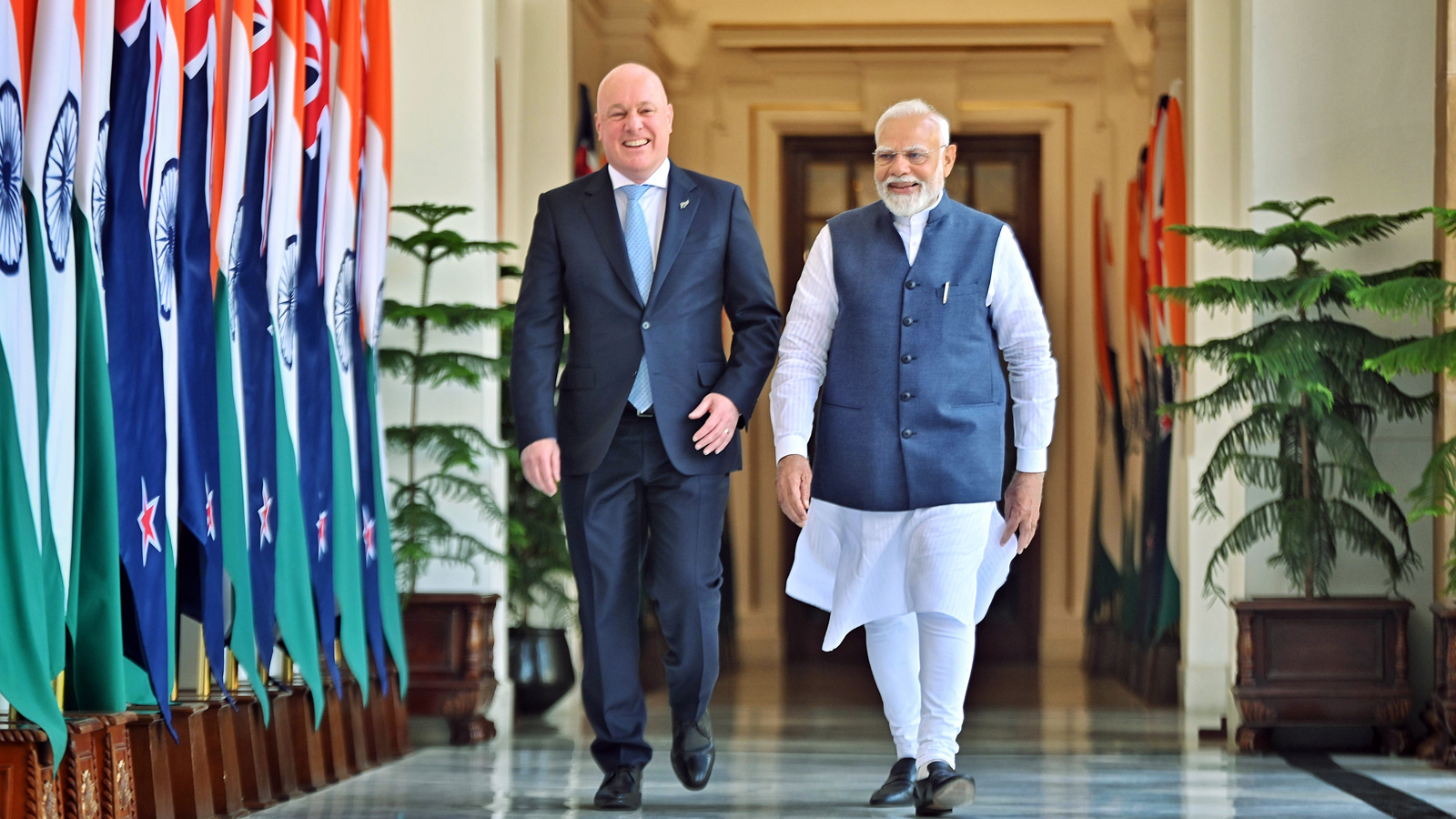
In his article, Goyal said the agreement, jointly announced by PM Modi and New Zealand Prime Minister Christopher Luxon, is the seventh FTA negotiated by the Modi government and the third major trade pact concluded in 2025, following agreements with the United Kingdom and Oman. He noted that all these FTAs have been signed with developed economies, reflecting India’s growing credibility in global trade negotiations.
According to Goyal, New Zealand will provide zero-duty access to 100 per cent of Indian exports, benefiting labour-intensive sectors such as textiles, leather, apparel, footwear, marine products, gems and jewellery, handicrafts and engineering goods. He said the agreement would directly support employment generation, particularly for MSMEs, artisans, women entrepreneurs and youth.
India has also secured market access in 118 services sectors, including IT, telecommunications, construction, financial services, travel and tourism. Goyal said this would open new growth avenues for Indian professionals and service providers.
The agreement also improves mobility provisions for Indian professionals and students. STEM graduates will be allowed to work for up to three years after graduation, while doctoral scholars can work for four years. A structured working-holiday visa framework and a new temporary employment entry visa have also been included.
On agriculture, Goyal said the FTA reflects the government’s commitment to safeguarding farmers’ interests. The agreement establishes an Agricultural Productivity Partnership covering apples, kiwi and honey, and provides GI-level protection for Indian Basmati rice. Sensitive sectors such as rice, dairy, wheat and soya remain fully protected, with no market access concessions that could harm domestic producers.
Highlighting investment commitments, Goyal said New Zealand has pledged foreign direct investment of USD 20 billion in India over the next 15 years. This, he noted, represents a significant expansion compared to New Zealand’s cumulative investment of about ₹643 crore over the past 25 years, and will support sectors such as agriculture, dairy, MSMEs, education, sports and youth development.
The minister also underlined the symbolic significance of the agreement, calling it India’s first women-led FTA. He said nearly the entire Indian negotiating team, including the chief negotiator and sector leads, comprised women, reflecting the growing leadership role of women in India’s development agenda.
Goyal said the India-New Zealand FTA exemplifies India’s trade strategy of partnering with developed economies while protecting sensitive domestic sectors. “Trade agreements under the Modi government are not transactional; they are designed to deliver inclusive, human-centric growth,” he said.
According to Goyal, India now negotiates trade agreements from a position of confidence, ensuring balanced outcomes that strengthen economic growth while safeguarding national interests.