







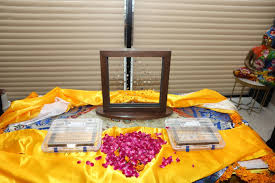
Prime Minister Narendra Modi will inaugurate a landmark cultural exposition titled “Lotus Light: Relics of the Awakened One” on January 3, 2026, at the Rai Pithora Cultural Complex in New Delhi, the Ministry of Culture said on Wednesday.
Organised by the Ministry of Culture, the exposition will showcase the revered Sacred Piprahwa Relics along with associated antiquities, highlighting India’s deep civilisational ties with the teachings of Lord Buddha and its commitment to preserving spiritual and cultural heritage.
The relics on display include repatriated sacred artefacts of immense historical, archaeological and spiritual significance, revered by Buddhist communities worldwide. The exhibition marks an important moment in India’s cultural and diplomatic engagement, reflecting efforts to safeguard and present the country’s ancient heritage.
Discovered in the late 19th century, the Piprahwa Relics are widely believed to be associated with the mortal remains of Gautama Buddha, enshrined by the Shakya clan. Their repatriation and public exhibition underscore India’s emphasis on promoting the universal values of peace, compassion and enlightenment embodied in Buddhist philosophy.
The relics were originally excavated in 1898 from the Piprahwa Stupa in present-day Siddharthnagar district of Uttar Pradesh. The site is widely believed to be part of ancient Kapilavastu, the homeland of Lord Buddha.
The archaeological find included bone fragments, crystal reliquaries, gold ornaments, and other ritual offerings. A Brahmi inscription on one of the caskets linked the remains directly to Lord Buddha, attributing the deposit to the Sakya clan—Buddha’s own kinsmen.
While most of the relics were entrusted to the Indian Museum in Kolkata in 1899, a portion was retained by the family of British colonial officer William Claxton Peppe, who led the original excavation. These relics remained in private hands for over a century before returning to India.
The exposition will feature curated displays of the sacred relics and related antiquities, interpretive narratives outlining their historical and spiritual context, and presentations highlighting India’s role as the cradle of Buddhism. The exhibition has been designed to engage scholars, devotees and the general public alike.


