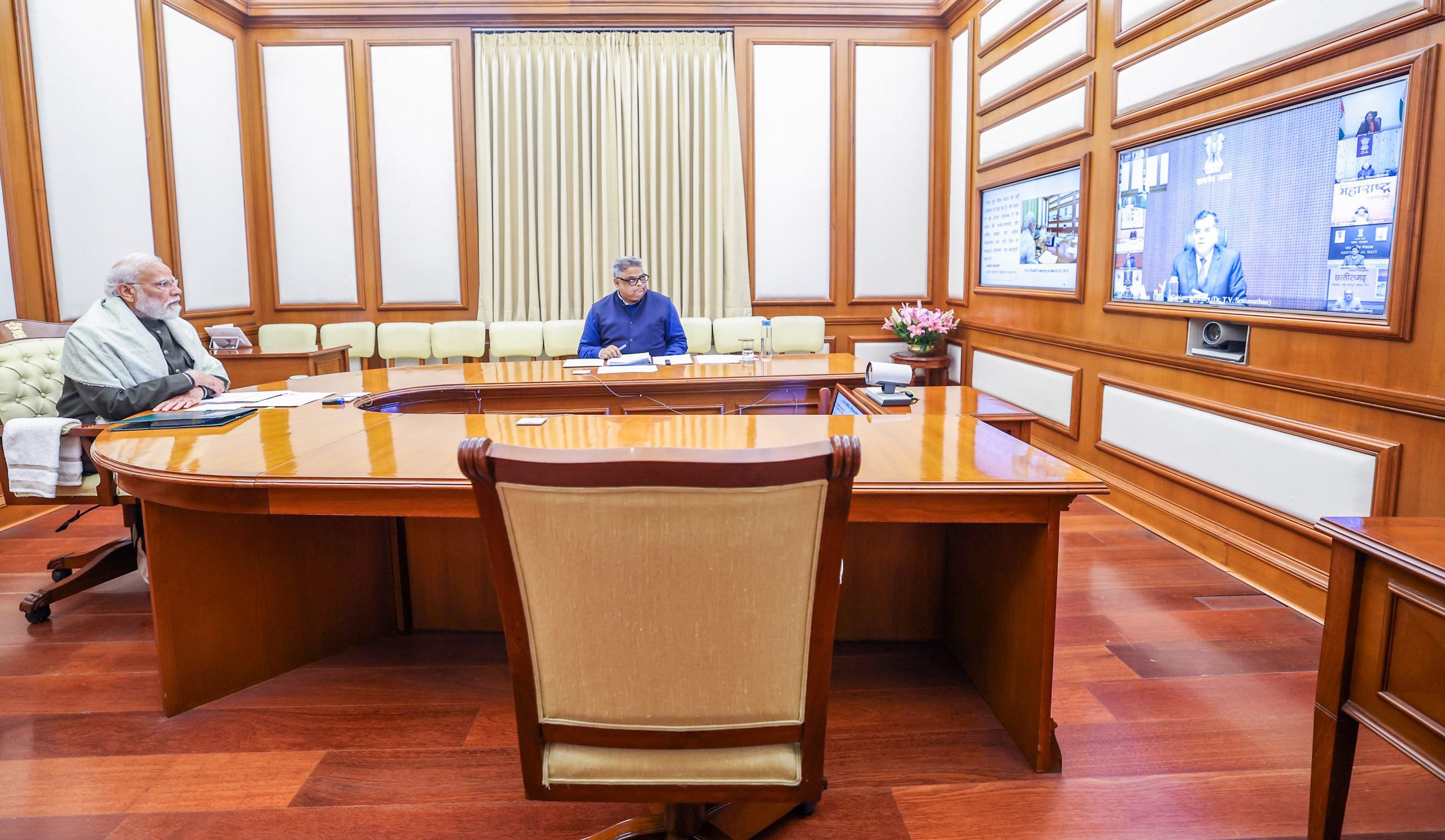
Prime Minister Narendra Modi on Wednesday chaired the 50th meeting of PRAGATI, marking a decade of the ICT-enabled platform that has played a central role in accelerating infrastructure and governance outcomes across the country.
PRAGATI — Pro-Active Governance and Timely Implementation — has helped fast-track projects worth over ₹85 lakh crore over the last ten years, the Prime Minister said, underlining its growing relevance in sustaining reform momentum and ensuring timely delivery.
During the 50th meeting, the Prime Minister reviewed five major infrastructure projects across road, railways, power, water resources and coal sectors. The projects, spread across five states, involve a cumulative investment of over ₹40,000 crore.
Reviewing the implementation of the PM SHRI scheme, the Prime Minister stressed that PM SHRI schools must emerge as benchmarks for holistic and future-ready education. He said implementation should be outcome-oriented rather than infrastructure-focused and directed Chief Secretaries to closely monitor the scheme. Senior government officers were also encouraged to undertake field visits to assess school performance.
Describing the milestone as a reflection of a transformed governance culture, the Prime Minister said that timely decision-making, effective coordination and fixed accountability naturally enhance the speed and impact of government functioning, directly benefiting citizens.
Recalling the origins of PRAGATI, the Prime Minister said the platform drew inspiration from the SWAGAT system he had launched as Gujarat Chief Minister to address public grievances through technology-driven, time-bound resolution. This approach was later expanded at the national level through PRAGATI to integrate project monitoring, programme implementation and grievance redressal.
Since 2014, a total of 377 projects have been reviewed under PRAGATI, with 2,958 out of 3,162 identified issues — nearly 94 per cent — resolved, leading to reduced delays, lower cost overruns and improved coordination.
The Prime Minister noted that several long-pending projects, stalled for decades, were unlocked through sustained monitoring under PRAGATI. These include the Bogibeel rail-cum-road bridge in Assam, the Jammu-Udhampur-Srinagar-Baramulla rail link, the Navi Mumbai International Airport, expansion of the Bhilai Steel Plant, and the Gadarwara and LARA super thermal power projects.
Highlighting PRAGATI’s role in breaking silo-based functioning, the Prime Minister said the platform exemplifies cooperative federalism by bringing the Centre, states, ministries and departments together on a single problem-solving forum. He noted that around 500 Union Secretaries and State Chief Secretaries have participated in PRAGATI meetings since its inception.
Outlining the roadmap for the next phase, the Prime Minister reiterated the mantra of “Reform to simplify, Perform to deliver, Transform to impact.” He said reforms must focus on simplifying systems, performance must balance time, cost and quality, and transformation should be measured by tangible improvements in citizens’ ease of living.
Linking PRAGATI with the goal of Viksit Bharat @ 2047, the Prime Minister said the platform is a powerful accelerator for achieving the national target. He encouraged states to institutionalise PRAGATI-like mechanisms, particularly for the social sector, at the level of Chief Secretary.