Indian Railways announced on Wednesday that it has rationalised passenger fares effective July 1, 2025 after a five-year gap, while freight rates remain frozen since 2018 despite rising input costs. At the same time, the rail network is moving forward with large-scale station redevelopment — over 1,300 stations have been selected under the Amrit Bharat Station Scheme for upgrade, signalling a push to improve both affordability and passenger experience.
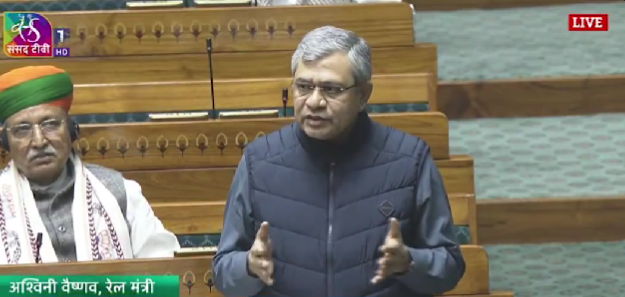
In a written reply to the Parliament, Railway Minister Ashwini Vaishnaw said the recent fare revision keeps travel affordable for millions: for general-class passengers travelling up to 500 km, there is no increase; for longer distances and higher classes, fare hikes range from only half a paisa to two paise per kilometre. Season tickets and suburban travel fares remain unchanged. For freight users, rates have been held steady since 2018. IR continues to extend subsidies worth ₹60,000 crore to keep passenger transport affordable — a rare example among neighbouring countries, according to the ministry.
On the freight front, the effort appears to be paying off: Indian Railways reported loading of 1,617 million tonnes in 2024–25, establishing itself as the world’s second-largest freight-carrying railway. The ministry pointed to major infrastructure improvements — such as new lines, gauge conversions, track doubling, freight corridor developments and electrification — as drivers of this growth.
Parallel to fare and freight reforms, Indian Railways is aggressively upgrading its station infrastructure under the Amrit Bharat Station Scheme. So far, 1,337 stations have been identified for redevelopment. Work has already been completed on 155 stations, while the rest are being modernised without disrupting rail traffic.
The revamp aims to enhance passenger experience with better access to stations, improved station buildings, shelters and platform coverings, upgraded waiting halls, toilets and sitting areas, modern amenities like lifts and escalators, facilities for differently-abled passengers, improved information systems, multimodal connectivity, and even kiosks for local goods through the “One Station One Product” initiative. Some stations are also being considered for development under Public Private Partnership (PPP) mode.
The station modernisation plan is funded under the Plan Head-53 “Customer Amenities”. For 2025–26, an allocation of ₹12,118 crore has been made; by October 2025, expenditure of ₹7,253 crore has already been incurred.