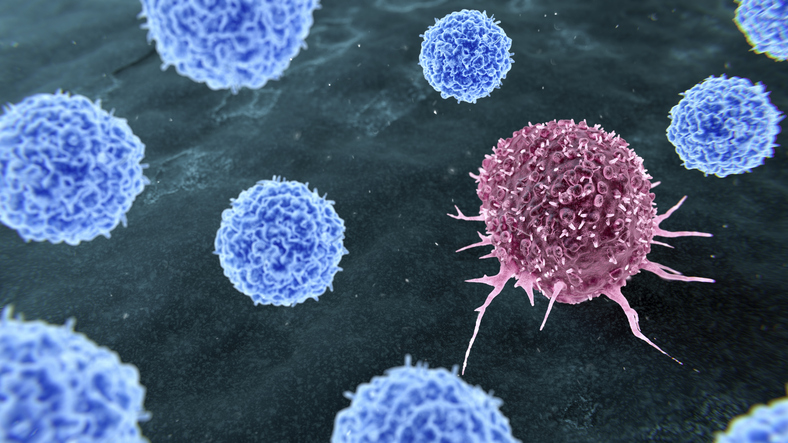
When we talk about cancer in India now, we’re no longer speaking about a rare event. ICMR’s National Cancer Registry Programme estimates around 14.6 lakh new cancer cases in 2022, and reminds us that roughly one in nine Indians is likely to develop cancer in their lifetime. Lung cancer in men and breast cancer in women now lead the charts. Over the last three decades, cancer incidence per lakh population has gone up by about 26%, while deaths have also risen.
The National Programme for Prevention and Control of Cancer, Diabetes, Cardiovascular Diseases and Stroke (NPCDCS) was India’s main answer to this rising tide. It was launched in 2010 with a clear promise: strengthen infrastructure, promote healthy behaviours, and catch common cancers early through the public system. On paper, there is a coherent vision. In practice, the story is more complicated.
How NPCDCS is supposed to work – especially for cancer
Over time, NPCDCS has evolved into part of the broader NP-NCD framework. The cancer piece rests on a simple idea: bring screening for oral, breast and cervical cancers as close as possible to people’s homes.
Current operational guidelines say that everyone 30 years and above should be screened for five common NCDs – hypertension, diabetes, and cancers of the oral cavity, cervix and breast – largely through Health and Wellness Centres (now Ayushman Arogya Mandirs), PHCs and CHCs. ASHAs use a checklist to identify higher-risk adults, ANMs and Community Health Officers do visual oral examination, clinical breast examination and VIA for cervical lesions, and district NCD clinics or tertiary centres pick up the more complicated work of diagnosis and treatment.
The physical network has grown. Official figures speak of hundreds of district NCD clinics, thousands of CHC NCD clinics, and a cluster of State Cancer Institutes and Tertiary Cancer Centres supported under the programme. States report impressive volumes: for example, Andhra Pradesh recently reported screening 39 lakh people for cancer under the NCD programme, identifying tens of thousands with suspected oral, cervical or breast cancer for further testing.
So, if we look only at inputs and coverage, NPCDCS seems to be doing what it promised. But if you sit with patients in an oncology OPD, you still hear the same line again and again: “Doctor, why was this picked up so late?” That gap between being “screened” and being genuinely protected is where the policy problem lies.
Who we are missing: tobacco, metabolism and HIV
The cancer component of NPCDCS is built around three “common” sites – oral, breast and cervix. That choice is defensible, but the way our risk is changing demands a wider lens.
Tobacco-related cancers beyond the mouth
Tobacco accounts for roughly a quarter of India’s cancer burden. Oral cancer is the most visible part of that story, and NPCDCS rightly prioritises oral screening. But tobacco doesn’t stop at the cheek and tongue. It drives cancers of the lung, larynx, hypopharynx and upper aerodigestive tract, and urinary bladder in men, and increasingly in women as well. Recent registry data show lung cancer among the leading cancer sites in Indian men.
Right now, a heavy smoker in his 50s may get his mouth checked at a camp, but there is no structured pathway for lung cancer screening under NPCDCS. Low-dose CT scanning for high-risk groups is still treated as a luxury conversation, not a serious policy experiment. We are systematically looking at only the tip of the tobacco iceberg.
Metabolic syndrome and “modern” cancers
India is simultaneously living through another epidemic – of diabetes, hypertension, central obesity and dyslipidaemia. Together they form the metabolic syndrome, and it is now frighteningly common. A recent ICMR-supported analysis suggests that about 35% of adult Indian women have metabolic syndrome, and that this group has a much higher risk of ovarian and endometrial cancers – nearly three-fold in some estimates.
NPCDCS already works hard to find and treat people with diabetes and high blood pressure. But it does not systematically translate that effort into targeted cancer prevention. Women with long-standing metabolic problems are not routinely flagged for extra vigilance around breast, uterine or colorectal cancer. The programme finds the metabolic syndrome – and then mostly leaves the cancer risk on the table.
People living with HIV
There is another high-risk group that rarely enters mainstream cancer policy conversations: people living with HIV (PLHIV). The relative risk of several cancers – cervical cancer, non-Hodgkin lymphoma, Kaposi sarcoma, and a cluster of head-and-neck and lung cancers – is significantly higher in PLHIV. Indian hospital studies show oral cavity and upper airway malignancies featuring prominently among cancers in this group.
The National AIDS Control Programme runs a fairly robust chronic-care platform with regular follow-ups and lab monitoring. Yet we do not have a clear, national chapter on cancer screening within NACP that says, for example: every woman on ART must get periodic cervical screening; every PLHIV should have an annual oral and head-and-neck exam; red-flag symptoms for lymphoma and lung cancer must trigger fast-track referral. In policy terms, PLHIV sit at the intersection of HIV and cancer – but each programme quietly assumes the other will take care of them.
NPCDCS, National Cancer Grid and Ayushman Bharat: well-designed pieces that don’t fully click
While NPCDCS looks after prevention and early detection, the National Cancer Grid (NCG) and Ayushman Bharat – PM-JAY are supposed to ensure that once a cancer is found, there is a rational, affordable pathway for treatment.
NCG is a network of cancer centres and research institutes that now cover well over half of India’s cancer workload. Its core contribution has been resource-stratified clinical guidelines – “essential, optimal, optional” – for different cancers, reflecting the realities of Indian hospitals rather than simply copying Western protocols.
In 2019, NCG signed an MoU with the National Health Authority. The idea was simple but powerful: use NCG’s “optimal” recommendations to shape the oncology health benefit packages (HBPs) under Ayushman Bharat. When AB-PMJAY issued its updated Standard Treatment Guidelines and HBP manual around 2021, oncology packages were indeed aligned with NCG guidance.
This alignment has real advantages. It anchors public insurance in evidence-based regimens, prevents random over- or under-treatment, and gives states a national reference point when negotiating with providers. But there are two quiet problems:
First, guideline and package updates are not very transparent. Publicly visible NCG manuals and the main AB-PMJAY oncology HBP documents still cluster around 2019–2021. In a field where global bodies update key guidelines annually, this creates a lag. Clinicians see new evidence and new drugs; benefit packages move much more slowly.
Second, the elegant “optimal-level” design assumes a level of capacity that many district and smaller private hospitals simply don’t have. On paper, a patient is “entitled” to an optimal regimen; in practice, the hospital may not be able to deliver it safely.
NPCDCS sits uneasily in this story. It pushes patients into the system through screening and referral, but the treatment architecture it feeds into (NCG + AB-PMJAY) evolves at its own speed, and often without clear feedback from the primary-care side.
High-cost medicine committees: the invisible gatekeepers
For patients covered under schemes like Railways, CGHS, ESIC, state employee schemes or corporate insurance, another actor quietly shapes their journey: the high-cost medicine committee inside tertiary hospitals.
These committees usually include senior oncologists, pharmacists and hospital administrators (no patient advocacy group representation, sadly). On good days, they perform a necessary function:
They look at requests for expensive drugs – immunotherapy, targeted agents, high-end supportive care – and check whether the use is clinically justified and in line with guidelines.
They try to stretch limited budgets so that drugs with the highest expected benefit and curative potential are prioritised.
They ensure documentation is in place so that Railways, CGHS, ESIC or insurance TPAs will actually reimburse.
From a system point of view, this is a rational response to tight budgets. But from a patient’s chair, it can feel arbitrary. The criteria are rarely written in language patients can understand. Different hospitals make very different decisions on similar cases. Files wait for the next committee date; treatment is sometimes delayed while families run from one office to another collecting signatures and justifications.
Most importantly, the experience and data from these committees almost never flow back to NPCDCS, NCG or Ayushman Bharat in a structured way. If dozens of requests for a particular drug are being turned down every month because the package rate is too low or the indication is too narrow, that is valuable evidence. Today, it largely stays trapped inside hospital files. From a reimbursable patient’s perspective, “their right to get the advanced treatment, even if it impacts the patient marginally better, cannot lie behind the closed door in an opaque manner”. They demand that Patient Support Organizations also be part of the committee, preferably those not working with these tertiary centres in any manner, to avoid bias.
So what needs to change?
The policy problem, stated plainly, is this: India has built the outlines of a national cancer system, but the pieces do not yet work together to deliver timely, risk-based early detection and affordable, appropriate treatment to those who need it most.
A few course-corrections are within reach:
Move from counting screenings to tracking outcomes. NPCDCS reports how many people were screened. It now needs to routinely track how many screen-positive individuals completed diagnosis within a month, how many started treatment, and how the stage at diagnosis is shifting over time in each district.
Make screening risk-stratified. Keep population-level checks for oral, breast and cervical cancer, but add sharper lenses: heavy tobacco users; women with long-standing metabolic syndrome; PLHIV on ART. The data linking these groups to higher cancer risk are already there.
Formalise cancer screening for PLHIV. A short, practical module embedded within NACP – with clear protocols for cervical, oral and lymphoma-related screening – would protect a group that is currently sitting in the blind spot between two programmes.
Create a visible update rhythm for NCG and AB-PMJAY. If resources are tight, the system should say: these site-specific guidelines will be reviewed every x number of years (ideally, should be done annually); these oncology packages will be reconsidered based on new survival or cost-effectiveness data. Patients and civil society do not need perfection; they need predictability and transparency.
Bring hospital-level reality into national policy. High-cost medicine committees are making life-and-death choices every week. A simple, anonymised reporting format – what was requested, what was approved or denied, and why – could give the National Health Authority a much clearer sense of where packages and guidelines are out of sync with reality.
None of this is about inventing a new programme. It is about finetuning what already exists so that it responds to today’s patterns of risk and the real constraints of hospitals and families. NPCDCS, NCG, Ayushman Bharat, and the many reimbursement schemes are all, in their own ways, well-intentioned designs. Patients experience them, however, as a single system – or as a maze.
If we can align these pieces a little better, shift focus from sheer numbers to meaningful early detection, and be honest about who is being left out – smokers without lung checks, women with metabolic syndrome, people living with HIV, and those blocked by opaque hospital committees – then India’s flagship cancer policies will start to feel less like distant documents and more like a safety net that actually holds when it is needed most.