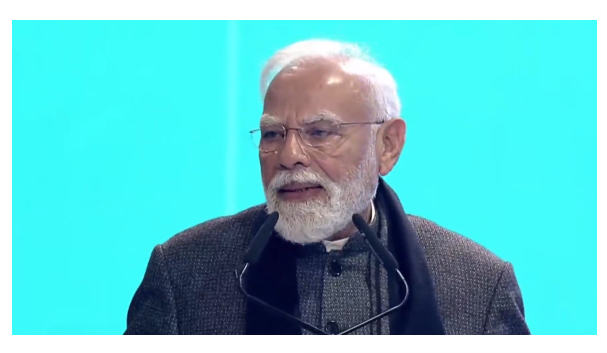
Prime Minister Narendra Modi on Friday said that restoring balance in health and lifestyle has become a global urgency, calling for faster and collective action to address emerging health challenges, as he addressed the closing ceremony of the second WHO Global Summit on Traditional Medicine at Bharat Mandapam in the national capital.
The Prime Minister said the past three days witnessed meaningful deliberations among experts from across the world, with India serving as a strong platform for advancing traditional medicine in collaboration with the World Health Organisation (WHO). He expressed gratitude to WHO, the Ministry of Ayush, and all participating nations for the successful organisation of the summit.
Calling it a matter of pride for the country, PM Modi said the WHO Global Centre for Traditional Medicine in Jamnagar reflects the world’s trust in India’s leadership in this domain. He noted that the centre’s global influence is steadily expanding and that the summit demonstrated a convergence of traditional knowledge with modern practices through new initiatives, joint research efforts, and regulatory cooperation.
Highlighting outcomes of the summit, the Prime Minister said consensus was reached on strengthening research, leveraging digital technology, and developing globally trusted regulatory frameworks for traditional medicine. He noted that the expo showcased AI-based tools, digital health technologies, research innovations, and modern wellness infrastructure, demonstrating a growing synergy between tradition and technology.
Emphasising the global impact of Yoga, PM Modi said it has guided humanity towards health, balance, and harmony. He recalled that through India’s initiative and the support of over 175 countries, the United Nations proclaimed June 21 as International Yoga Day. He congratulated recipients of the Prime Minister’s Awards for Outstanding Contribution to the Promotion and Development of Yoga, calling them symbols of dedication and lifelong commitment.
The Prime Minister also highlighted the launch of the Traditional Medicine Global Library, which will serve as a single global repository of scientific data and policy documents related to traditional medicine. He said the initiative will ensure equal access to credible information for all countries.
Referring to the Delhi Declaration adopted during the summit, PM Modi said discussions among health ministers on standards, safety, and investment have laid down a shared roadmap for future cooperation. He also noted the inauguration of the WHO South-East Asia Regional Office in Delhi, calling it a humble gift from India that will serve as a global hub for research, regulation, and capacity building.
Speaking on the summit’s theme, ‘Restoring Balance: The Science and Practice of Health and Well-being,’ the Prime Minister said Ayurveda defines balance as the essence of health. He observed that lifestyle-related imbalances are at the root of many modern diseases, including diabetes, heart ailments, mental health issues, and cancer, making the restoration of balance a pressing global priority.
PM Modi cautioned that rapid technological changes, including artificial intelligence and robotics, combined with reduced physical activity, may create new health challenges. He stressed that traditional healthcare systems must prepare not only for present needs but also for future responsibilities.
Addressing concerns around safety and evidence, the Prime Minister cited Ashwagandha as an example of India’s evidence-based approach to traditional medicine. He said global discussions during the summit focused on its quality, safety, and usage, reaffirming India’s commitment to integrating time-tested remedies into global public health.
He said traditional medicine is at a decisive turning point, with growing global acceptance beyond wellness and lifestyle applications. Initiatives such as integrative cancer care, clinical studies on chronic diseases, and start-up participation reflect its expanding role in modern healthcare, he added.
Prime Minister Modi concluded by calling upon the global community to advance traditional medicine with trust, responsibility, and scientific rigour, expressing confidence that the collective resolve demonstrated at the summit would guide future progress.