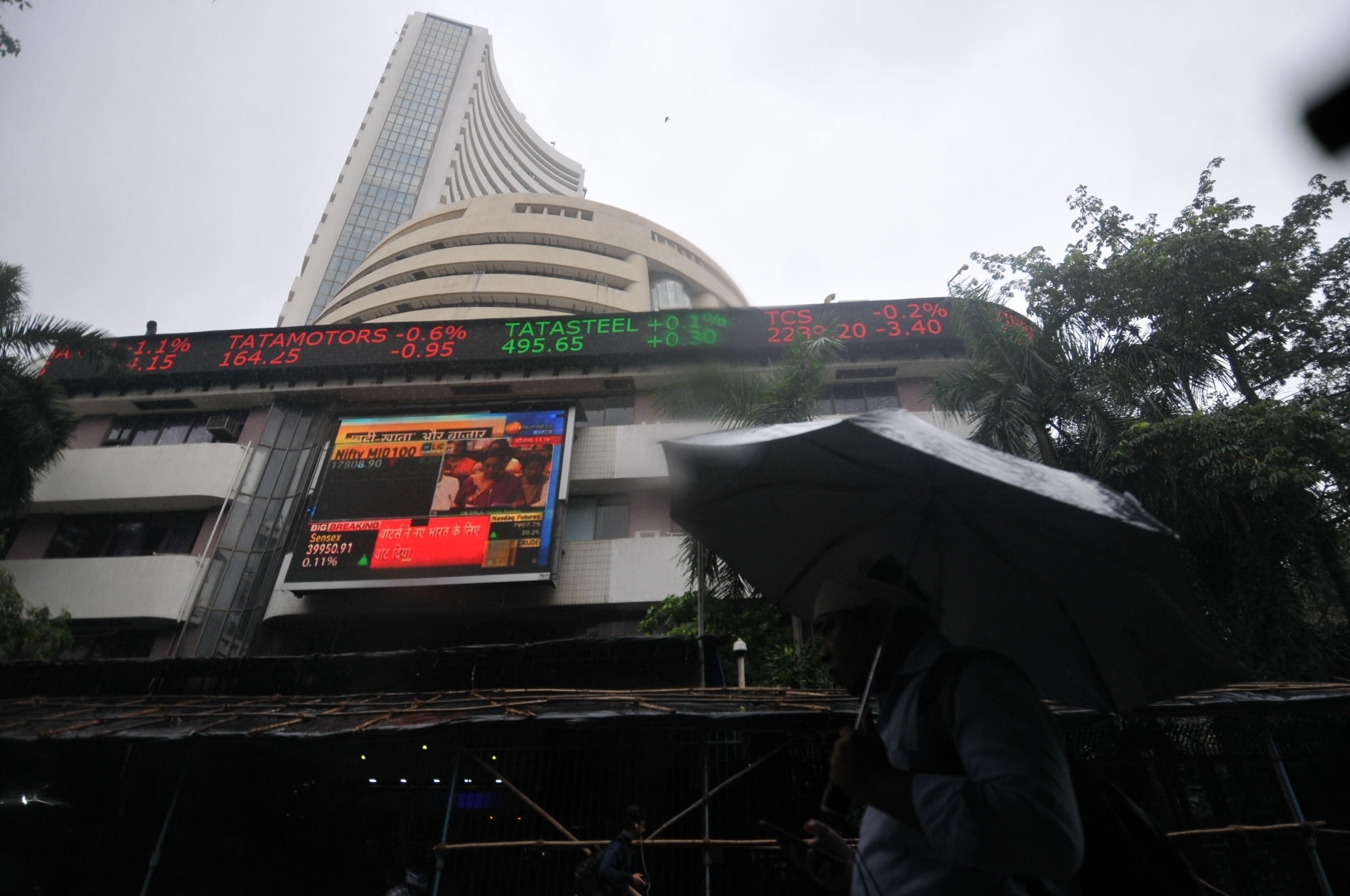
Indian equity markets extended their losing streak for the fourth consecutive session on Monday, weighed down by sustained selling pressure in information technology, realty, pharma and auto stocks.
The benchmark Sensex closed at 84,695.54, down 345.91 points, or 0.41 per cent.
The Nifty also ended lower at 25,942.10, declining 100.20 points, or 0.38 per cent, as weakness persisted across key sectors.
Market analysts said the Nifty slipped below the psychological 26,000 mark as well as its 20-day exponential moving average (EMA), extending losses by nearly 100 points amid heightened volatility ahead of the monthly derivatives expiry.
“The index formed bearish candlestick patterns, indicating near-term selling pressure, though it continues to hover around key short-term moving averages,” analysts noted.
Experts added that a sustained break below the 25,900 level could open the door for further downside towards the 25,800–25,700 zone.
On the Sensex, Power Grid, Trent, HCL Technologies and Bharat Electronics were among the major laggards, dragging the index lower.
However, selective buying was witnessed in a few stocks, with Tata Steel, Asian Paints, Hindustan Unilever, Eternal, NTPC and Axis Bank ending the session in positive territory.
The broader market also remained under pressure. The Nifty Midcap 100 index declined 0.52 per cent, while the Nifty Smallcap 100 fell 0.72 per cent.
Sectorally, IT, realty and auto stocks bore the brunt of the selling. The Nifty IT index slipped 0.75 per cent, while the Realty and Auto indices declined 0.67 per cent and 0.53 per cent, respectively.
In contrast, some defensive pockets showed resilience. The Nifty Media index gained 0.93 per cent, while PSU Bank and FMCG indices edged up 0.05 per cent and 0.11 per cent, respectively.
Analysts said market sentiment remained cautious, with investors continuing to pare positions amid sector-specific selling and the absence of strong positive triggers.
“Strong liquidity support from domestic investors and resilient domestic macroeconomic fundamentals are providing some downside protection, even as global uncertainties related to interest rates and geopolitical tensions continue to curb aggressive risk-taking,” market participants said.
— IANS