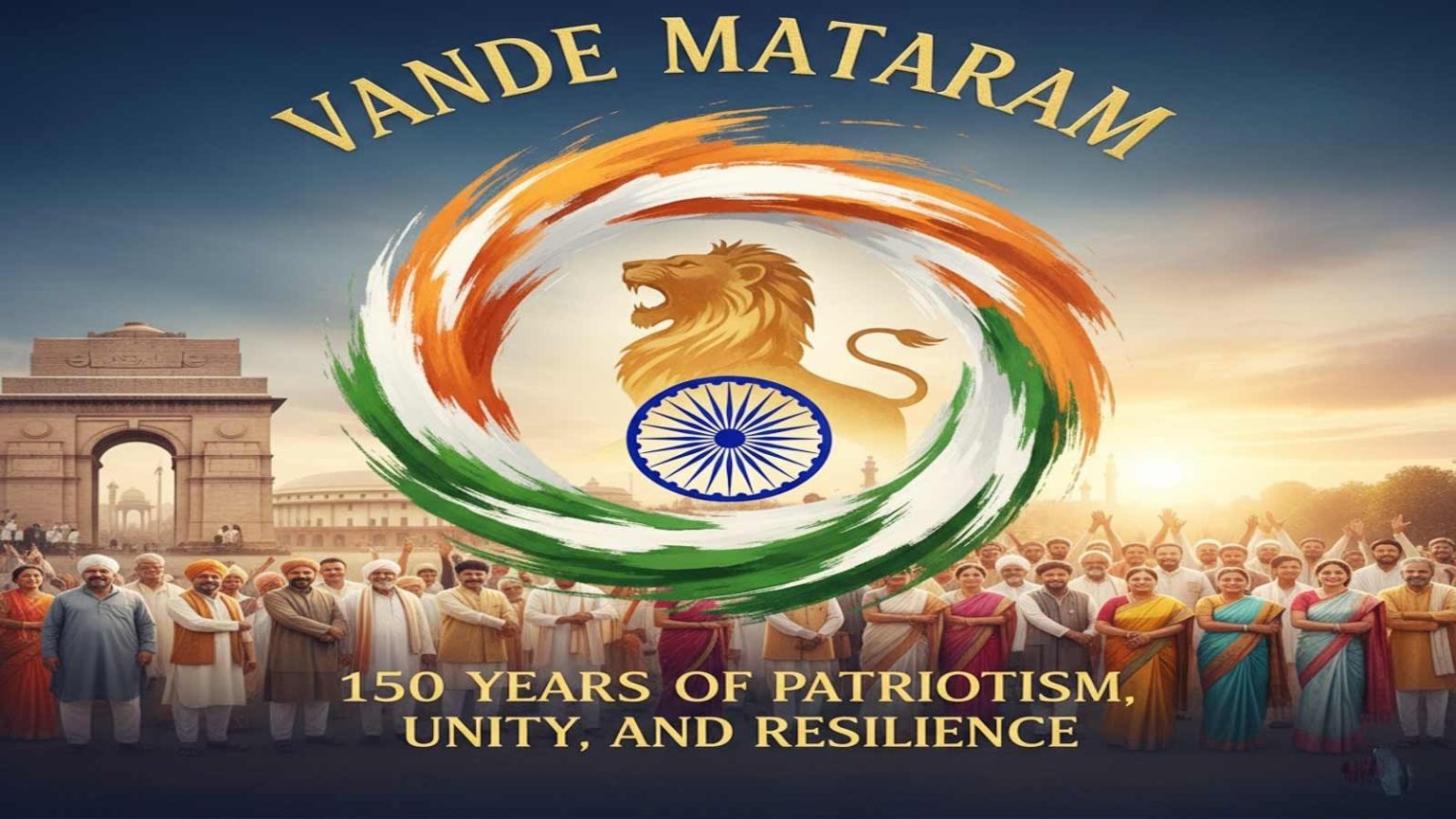
The year 2025 marks a historic cultural milestone for India’s national song, Vande Mataram, as it completes 150 years since its first publication. Composed by Bankim Chandra Chatterjee, the hymn was first published in the literary journal Bangadarshan on November 7, 1875, and was later included in his novel Anandamath in 1882. From a literary creation, Vande Mataram evolved into a powerful emblem of India’s national identity, inspiring generations with its message of devotion, unity, and patriotism.
A Historical Journey
The song was first sung by Rabindranath Tagore at the 1896 Indian National Congress session in Calcutta. Its political significance emerged during the Swadeshi and anti-partition movements in Bengal, with the slogan Vande Mataram first raised publicly on August 7, 1905 by thousands of students in Kolkata. The song’s appeal quickly spread beyond Bengal, becoming a unifying anthem for the burgeoning nationalist movement across India.
Literature Meets Patriotism
The novel Anandamath centers on a group of Sanyasins, known as the Santanas, who dedicate their lives to the motherland. They venerate India as a mother goddess, and Vande Mataram becomes their hymn of devotion—a “religion of patriotism,” as articulated by Bankim Chandra Chatterjee. Shri Aurobindo noted the symbolic power of this vision, portraying the motherland as a figure of strength and resilience rather than mere spiritual abstraction.
A Song of Resistance
By the early 20th century, Vande Mataram had evolved into a rallying cry for Indian nationalism. Societies such as the Bande Mataram Sampradaya promoted the song through public processions, known as Prabhat Pheris, while newspapers like Bande Mataram spread its message of unity, self-reliance, and resistance against colonial rule.
The British administration sought to suppress its influence, imposing fines on students and banning its public recital. However, such restrictions only heightened its symbolic significance as an anthem of defiance and solidarity.
Global Impact
The influence of Vande Mataram extended beyond Indian shores. In 1907, Madam Bhikaji Cama raised the tricolor flag in Berlin inscribed with the words Vande Mataram.
Indian patriots abroad, from Europe to South Africa, embraced the song as a symbol of resistance, chanting it during demonstrations and publishing magazines to promote nationalist ideals. The song inspired countless acts of courage, from protests against British repression to commemorating freedom fighters’ sacrifices.
National Recognition
In 1950, the Constituent Assembly of India officially recognized Vande Mataram as the National Song, honoring it alongside Jana Gana Mana, the National Anthem.
Dr. Rajendra Prasad highlighted its historic role in the freedom movement, emphasizing that it deserved equal respect and reverence. This formal recognition cemented Vande Mataram’s place in India’s cultural and political heritage.