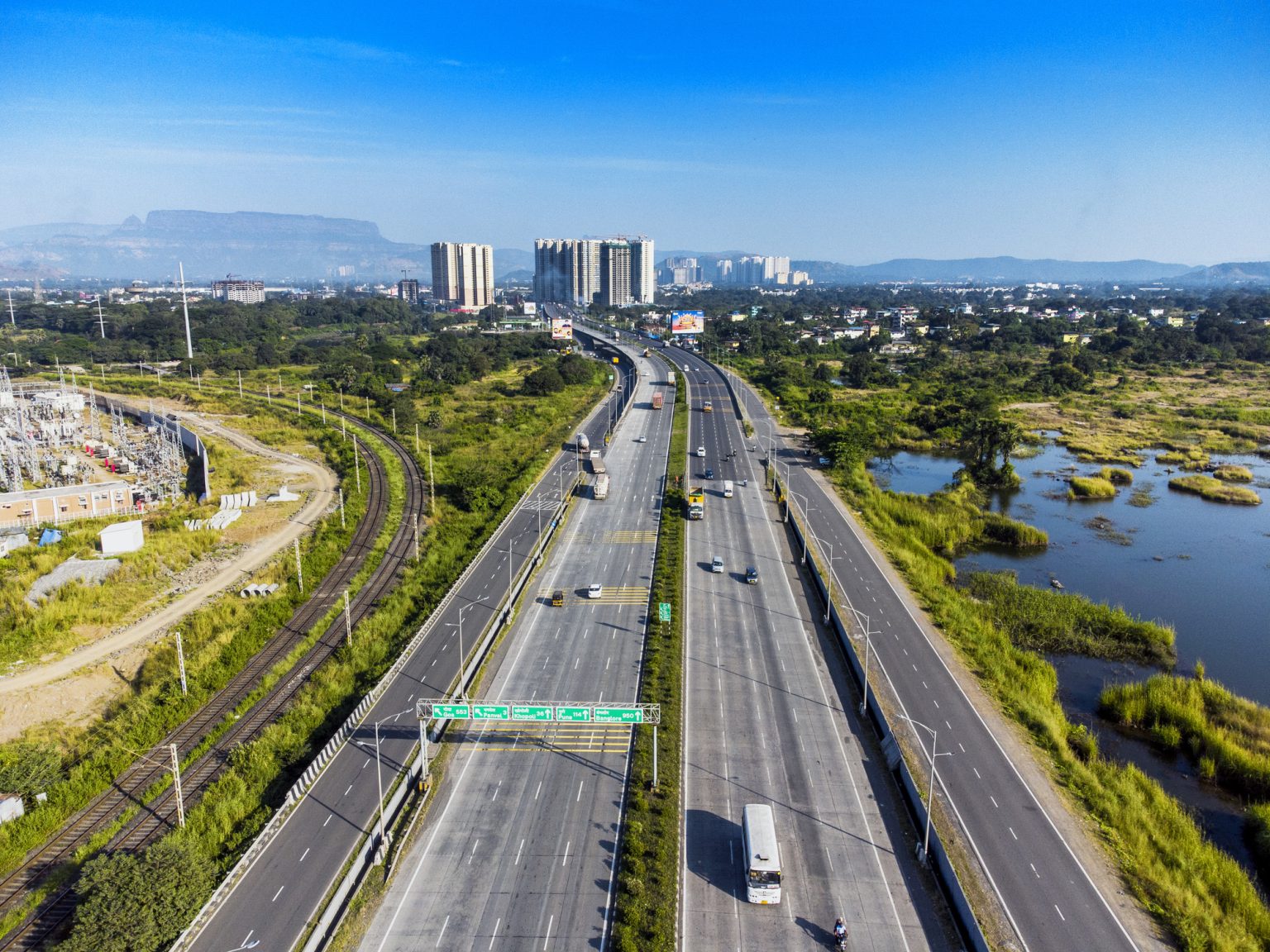
India’s road infrastructure recorded steady expansion in 2025 as efforts to build a higher-capacity national network continued. For much of the past, connectivity relied on rural roads, state highways and two-lane routes that were increasingly under strain from rising traffic volumes. Long-term investment and project execution over the past decade have altered this structure, with 2025 reflecting clearer progress in scale and delivery.
India’s road network now extends beyond 63 lakh kilometres, placing it among the largest globally. Within this, the national highway system has expanded from about 91,287 km in 2013–14 to roughly 146,204 km by March 2025, representing growth of close to 60 per cent. Development during this phase has focused not only on network length but also on high-speed corridors and expressways to support long-distance travel and freight movement.
Projects driving expansion
Large, multi-year highway programmes continued to anchor network growth through 2025. Under Bharatmala Phase-I, more than 26,000 km of projects have been awarded, with construction completed on close to 19,800 km so far. These projects span economic corridors, port and border connectivity routes, and links to industrial regions. Spending under the programme has crossed ₹4.9 lakh crore, underlining the scale of capital deployment during this phase of expansion.
Alongside this, access-controlled greenfield corridors have expanded rapidly. From fewer than 100 km of expressways a decade ago, India now has thousands of kilometres of high-speed corridors connecting major cities and industrial hubs, marking a structural change in long-distance road travel.
Construction pace and execution
Execution speed remained a defining feature of highway development in recent years. Average construction rates have more than doubled since the early 2010s, rising from about 11–12 km per day to over 30 km per day in recent years. Improved tendering, faster clearances, digital monitoring and sustained capital support have contributed to this shift.
States have also stepped up their own highway and expressway projects, complementing national corridors. Priority has increasingly been placed on routes linking ports, airports, logistics parks and industrial clusters to reduce transport time and logistics costs.
Impact on mobility and the economy
The expansion of highways and expressways has translated into practical gains for road users and businesses. Wider roads and access-controlled corridors have reduced travel time, improved fuel efficiency and lowered vehicle operating costs. Safety outcomes have also improved compared to older, narrow highways.
Road transport continues to dominate movement across the country, carrying over 64 per cent of freight and around 90 per cent of passenger traffic. The scale of highway development in recent years has therefore played a direct role in supporting trade, tourism, emergency services and rural-urban connectivity.
Tolling and digital transition
2025 also reflected a transition in how road infrastructure is used and financed. Electronic tolling through FASTag has largely replaced manual collections, easing congestion at toll plazas and improving traffic flow. Digital tolling has strengthened revenue collection and transparency, supporting maintenance and future expansion.
Work toward barrier-free tolling systems gained momentum, with multi-lane free-flow models aimed at allowing vehicles to move through toll points without stopping or slowing down.
Regional reach and connectivity
Highway expansion during the year showed a broader geographic spread. Projects across the Northeastern Region advanced connectivity in difficult terrain, linking remote areas with the national network. At the same time, rural road schemes continued to extend last-mile connectivity, improving access to markets, healthcare and education in smaller towns and villages.
Road ahead
Despite the scale of progress, challenges persisted through 2025. Land acquisition delays, environmental clearances and coordination across agencies continued to affect timelines in some regions. Planning tools that integrate road development with logistics, railways and urban infrastructure are being increasingly used to address these constraints.
As 2025 draws to a close, road and highway development stands as a central pillar of India’s infrastructure push. The shift from fragmented routes to a coordinated, high-capacity network reflects a long-term effort to support economic growth, reduce logistics costs and improve everyday mobility across the country.