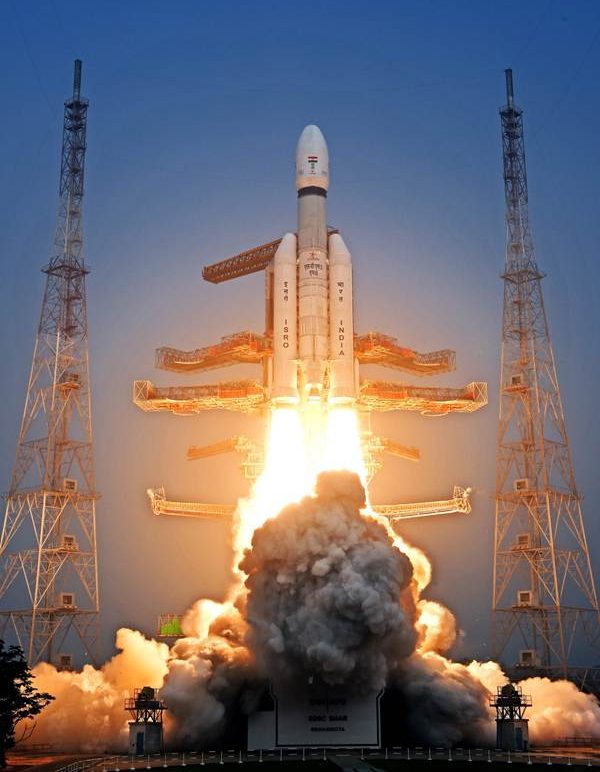
India’s space programme marked a defining phase in 2025, combining major technological demonstrations, deeper global partnerships and a clear push towards long-term goals under Space Vision 2047. The Department of Space’s year-end review shows a year focused not just on launches, but on mastering complex capabilities needed for human spaceflight, future space stations and a competitive commercial ecosystem.
Docking, biology and in-orbit experiments
A key breakthrough came with the SPADEX (Space Docking Experiment) mission, launched aboard PSLV-C60. Two spacecraft successfully docked and undocked in orbit, demonstrated power transfer and carried out circumnavigation experiments—capabilities essential for future space stations and crewed missions. The satellites docked twice in orbit, underscoring the maturity of India’s autonomous rendezvous and docking technologies.
Another first was CROPS-1, India’s initial space biology experiment on the POEM-4 platform. Cowpea seeds germinated and grew to the two-leaf stage in microgravity, providing early insights into plant growth systems critical for long-duration human missions.
POEM-4 itself completed 1,000 orbits, hosting 24 payloads from ISRO and private entities, including experiments in robotics, green propulsion, artificial intelligence and biological sciences, highlighting ISRO’s emphasis on low-cost, shared access to space.
Solar science and Earth observation
ISRO released the first scientific datasets from Aditya-L1, India’s solar observatory positioned at the Sun-Earth L1 point. The data, shared globally, offers insights into the Sun’s photosphere, chromosphere and corona, strengthening India’s profile in solar and space weather research.
On Earth observation, ISRO satellites played a role in agricultural planning by forecasting wheat production at over 122 million tonnes using satellite data and crop growth models. The launch of the ISRO-NASA joint satellite NISAR later in the year further elevated India’s role in global Earth monitoring, with the dual-frequency radar satellite capable of tracking ground deformation, ice movement and natural disasters worldwide.
Launch infrastructure and propulsion advances
The Union Cabinet approved the Third Launch Pad at Sriharikota, aimed at supporting next-generation launch vehicles and human spaceflight missions. Parallelly, construction advanced at the new SSLV Launch Complex in Kulasekarapattinam, designed to handle growing small-satellite launch demand.
ISRO marked its 100th launch from Sriharikota with GSLV-F15, while also achieving milestones in propulsion. These included hot tests of the semi-cryogenic engine power head, a 1,000-hour life test of electric plasma thrusters, and the first in-space restart of the C25 cryogenic stage during the LVM3-M5 mission—enhancing mission flexibility for heavier payloads.
Human spaceflight gathers momentum
Human spaceflight remained central in 2025. ISRO conducted the first integrated air drop test of the Gaganyaan crew module parachute system, a critical safety milestone. In a historic first, Indian astronaut Shubhanshu Shukla flew to the International Space Station aboard the Axiom-04 mission, spending 18 days in orbit conducting microgravity experiments and public outreach, marking India’s entry into ISS-based human research.
Complementing this were space medicine initiatives, analog missions in Ladakh’s Tso Kar Valley, and a new framework agreement with SCTIMST to deepen research in astronaut health and biomedical systems.
Indigenous technology and industry participation
India advanced its push for self-reliance with the delivery of its first fully indigenous 32-bit space-grade microprocessors—VIKRAM3201 and KALPANA3201—developed with SCL Chandigarh. ISRO also signed a technology transfer agreement to commercialise the Small Satellite Launch Vehicle (SSLV), opening the door for industry-led launches.
Private sector participation expanded further with the successful static test of the KALAM-1200 solid rocket motor developed by a startup, tested at ISRO facilities, reflecting the impact of recent space sector reforms.
Global engagement and future vision
India assumed a leadership role in the International Charter on Space and Major Disasters, hosted the Global Space Exploration Conference (GLEX) 2025 in New Delhi, and showcased its achievements at the International Astronautical Congress in Sydney.
Internally, the Department of Space held Chintan Shivir 2025 to refine strategies for implementing Space Vision 2047, which envisions an expanded human presence in space, stronger commercial participation and advanced scientific missions.
From docking experiments and space biology to human spaceflight and global collaboration, 2025 underscored India’s transition from a launch-capable nation to a comprehensive space power—laying the groundwork for ambitious goals in the decades ahead.