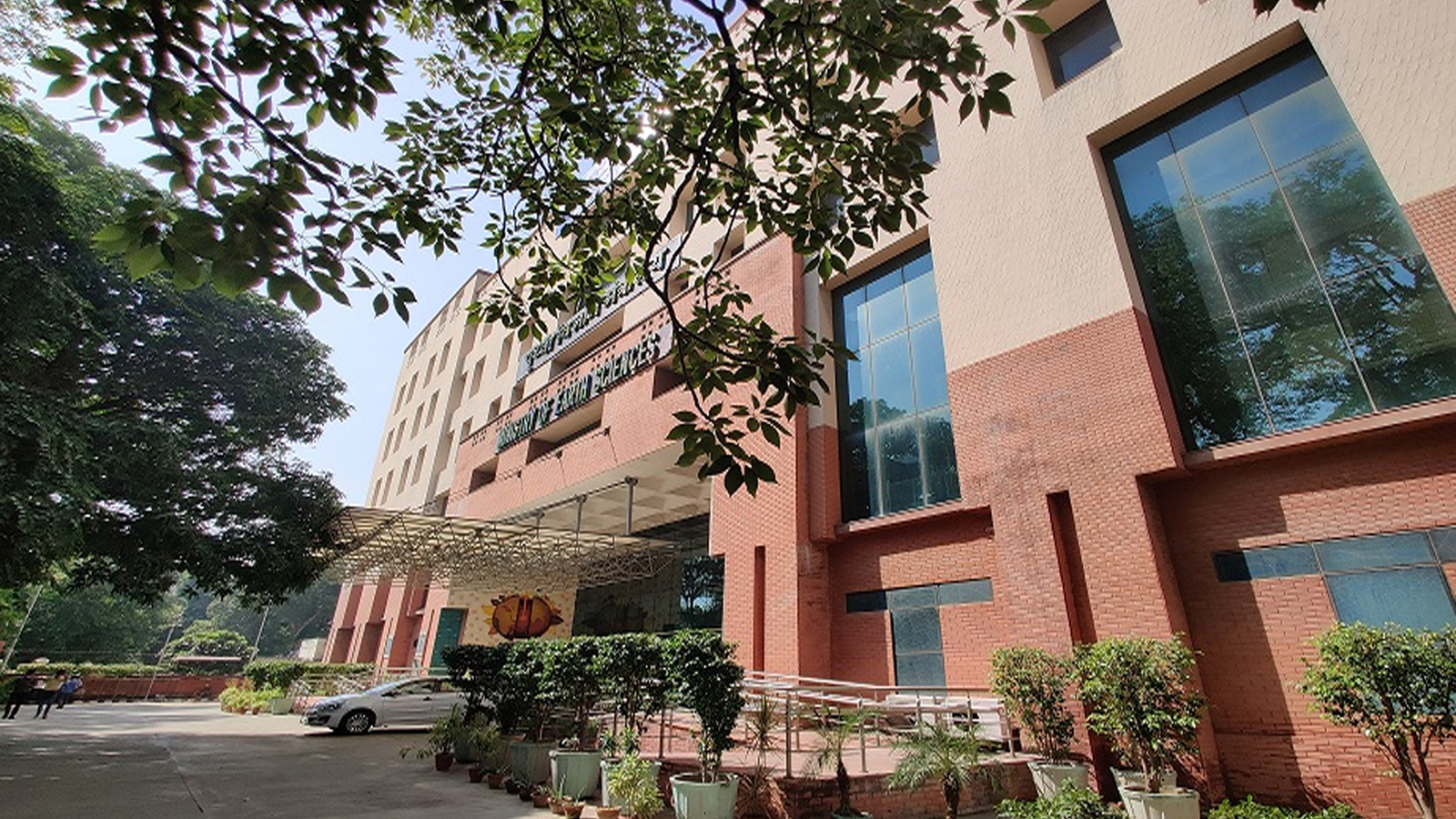
From probing the deepest reaches of the ocean to delivering sharper weather forecasts that safeguard livelihoods, 2025 has emerged as a defining year for India’s Ministry of Earth Sciences (MoES). A series of scientific firsts, technological breakthroughs and people-centric initiatives have not only expanded India’s research frontiers but also delivered measurable economic and social impact.
As outlined in the Ministry’s year-end review, the past year saw ambitious scientific blueprints translated into real-world outcomes, reinforcing India’s growing stature in Earth, ocean and climate sciences.
Science with tangible returns
For the first time, a third-party audit assessed the economic impact of India’s investments in meteorology. The findings were striking. Government spending of around ₹1,000 crore on initiatives such as the Monsoon Mission and high-performance computing infrastructure generated an estimated ₹50,000 crore in economic benefits.
These gains directly supported nearly 11 million families living below the poverty line – particularly small farmers and fisherfolk – who rely on daily weather forecasts, cyclone alerts and ocean advisories to protect crops, assets and lives.
“2025 was the year we proved that high-end science isn’t just for textbooks – it’s for the people,” said Dr M. Ravichandran, Secretary, Ministry of Earth Sciences. “Whether it’s a farmer in Vidarbha checking a rain alert or a researcher studying Arctic ice, our work is about making India more resilient and self-reliant.”
Pushing the limits beneath the ocean
India’s quest for resource security and deep-ocean capability reached unprecedented depths this year. In a global first, India successfully tested a deep-sea mining system at 5,270 metres -making it the deepest such trial ever conducted.
Significant progress was also recorded under the ambitious Samudrayaan programme. The indigenous human submersible MATSYA successfully completed its comfort and stability tests. In another milestone, Indian scientists descended to a depth of 5,002 metres during a collaborative dive in the Atlantic Ocean, setting a new benchmark for Indian oceanography.
Strengthening coastal and island resilience
MoES initiatives in 2025 extended beyond exploration to focus sharply on coastal safety and sustainability. Three eco-friendly desalination plants were commissioned in Lakshadweep, ensuring reliable access to clean drinking water for island communities using locally available energy.
Under the ‘Make in India’ initiative, two new research vessels – Sagar Tara and Sagar Anveshika – were built domestically to monitor ocean health and marine ecosystems along India’s 7,500-km coastline.
Meanwhile, the Indian Tsunami Early Warning Centre monitored 32 major earthquakes during the year, ensuring round-the-clock vigilance and zero lapses in coastal safety.
Weather science for a changing climate
On January 14, Prime Minister Narendra Modi launched Mission Mausam and unveiled the IMD Vision 2047, setting an ambitious roadmap for India’s weather and climate services. To support this vision, MoES augmented its supercomputing capacity to 21 petaFLOPS, enabling some of the world’s highest-resolution weather and climate models.
The enhanced computing power is expected to significantly improve forecasts related to extreme weather events, heatwaves, urban flooding and air quality – areas of growing concern amid climate change.
A year of infrastructure, innovation and collaboration
2025 also witnessed a flurry of institutional and scientific milestones. These included the inauguration of advanced polar research facilities such as Polar Bhavan and Sagar Bhavan, the launch of India’s first conductivity and temperature sensor calibration facility, and the commissioning of Doppler Weather Radars at Raipur and Mangaluru.
The Ministry rolled out digital and science-to-society platforms like SAHAV for ocean governance and Urban Environment-Science to Society (UES25), which integrates weather, air quality and urban flood information for city authorities and disaster managers.
India’s leadership in polar and ocean sciences was further reinforced through international conferences, seismic surveys for India’s Extended Continental Shelf submissions, and meetings under the Deep Ocean Mission covering deep-sea mining, marine biodiversity and ocean-based energy solutions.
Looking ahead
As the year closes, MoES officials say the focus will remain on translating cutting-edge research into real-world resilience – protecting lives, livelihoods and ecosystems while positioning India as a global leader in Earth system sciences.
With expanding technological capacity and a clear vision aligned with India’s Vision 2047, the Ministry’s work in 2025 signals a future where science plays a central role in sustainable development and national security.