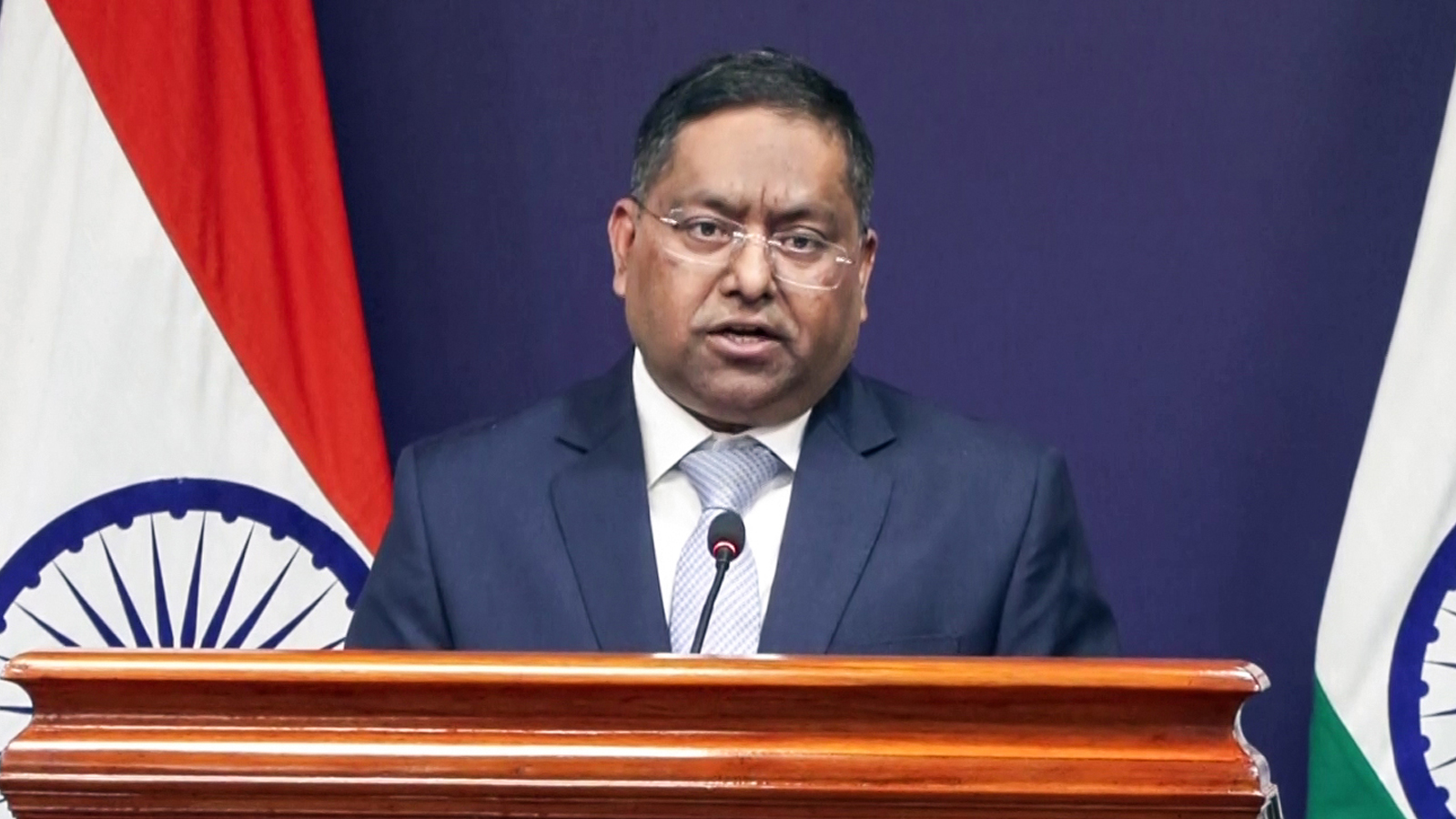
The Indian government has advised its nationals in Iran to leave the country in view of the volatile security situation, the Ministry of External Affairs (MEA) said on Friday. The ministry stressed that it is closely monitoring developments and remains “committed to doing whatever is necessary for the well-being” of Indian citizens.
MEA spokesperson Randhir Jaiswal said, “Approximately 9,000 of our citizens are currently residing in Iran. The majority of them are students. In light of the recent developments there, we have issued two or three advisories.”
He made the remarks during the weekly press briefing in the national capital.
Elaborating on the advisories, Jaiswal said, “In these advisories, we have advised our citizens in India not to travel to Iran at this time, and we have advised Indian citizens residing in Iran to leave the country by whatever means are available.”
“We are keeping a close watch on the situation there, and as far as our citizens are concerned, we are committed to doing whatever is necessary for their well-being,” he added, amid rising regional tensions linked to Tehran’s crackdown on nationwide protests that have reportedly killed hundreds.
An advisory issued by the Indian Embassy in Tehran asked Indian nationals—including students, businesspeople, pilgrims, and tourists—to depart Iran through available means of transport, including commercial flights, citing the “evolving situation.”
Separately, the MEA strongly advised Indians to avoid travel to Iran until further notice in view of ongoing developments. It reiterated an earlier advisory issued on January 5, urging Indian nationals in Iran to remain cautious and avoid participating in protests or demonstrations.
Indian citizens were also advised to keep travel and immigration documents, including passports, readily accessible. Those residing in Iran on resident visas were asked to register with the Indian Embassy.
The protests reportedly began at Tehran’s Grand Bazaar on December 28 over the Iranian rial’s sharp fall in value and later spread nationwide. The currency’s decline followed multiple crises, including severe water shortages, power outages, rising unemployment, and surging inflation.
(ANI)