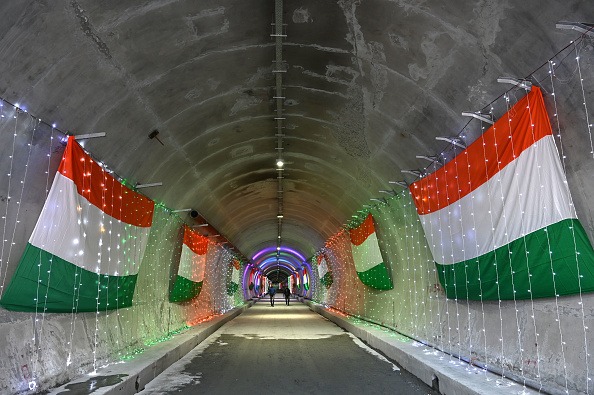
For decades, geography dictated India’s mobility. High mountain passes closed in winter, fragile roads slowed defence movement, and remote regions remained cut off for months. Reviewing India’s infrastructure transformation, Prime Minister Narendra Modi has said that modern infrastructure must overcome natural barriers and ensure that development reaches the last mile, regardless of terrain. That thinking now finds its clearest expression beneath the ground, where tunnels are quietly reshaping connectivity, security, and everyday life.
Earlier, India’s approach to tunnelling was limited and cautious. Most transport corridors relied on surface roads vulnerable to landslides, snow, and weather-related disruptions. Construction technologies were basic, execution was slow, and projects in difficult terrain often stretched across decades. Connectivity to regions such as Ladakh, parts of Jammu and Kashmir, the Northeast, and Uttarakhand remained seasonal, affecting civilian movement, economic activity, and strategic preparedness.
That picture has changed decisively over the last decade. Tunnels have moved from being engineering exceptions to becoming a core infrastructure solution across highways, railways, and urban transport. Projects such as the Atal Tunnel under the Pir Panjal range demonstrated that India could deliver complex, high-altitude tunnels that function reliably year-round. By bypassing Rohtang Pass, the tunnel cut distance and travel time sharply while ensuring uninterrupted access to Lahaul-Spiti and strengthening defence logistics.
The expansion has been both strategic and technological. Modern Indian tunnels are now designed as fully integrated transport systems, equipped with ventilation, fire safety, CCTV surveillance, emergency exits, and centralised control rooms. Advanced methods such as the New Austrian Tunnelling Method and tunnel boring machines are being deployed to handle fragile Himalayan geology and dense urban environments alike. This shift has allowed engineers to construct longer, deeper, and safer tunnels with far greater predictability.
Nowhere is this more evident than in Jammu and Kashmir and the border states. The Sonamarg Tunnel and the upcoming Zojila Tunnel together promise all-weather connectivity between Srinagar and Ladakh, reducing travel time, improving access to healthcare and supplies, and significantly enhancing military mobility. Similarly, the Sela Tunnel on the Tezpur–Tawang route ensures year-round access to a strategically sensitive region while also opening new economic opportunities for local communities.
Rail infrastructure has witnessed a parallel transformation. Tunnel T50, stretching 12.77 km under the Udhampur–Srinagar–Baramulla Rail Link project, stands among India’s longest transport tunnels and forms a critical link between the Kashmir Valley and the rest of the country. Built through complex rock formations and high water ingress zones, it reflects how sustained monitoring, modern engineering, and safety-first design have redefined rail connectivity in difficult terrain.
Urban India is also seeing the impact of this underground shift. Kolkata’s underwater metro tunnel beneath the Hooghly River, operational since 2024, marked a historic milestone in Indian engineering. By carving a transit corridor beneath a major river, it has eased congestion in one of the country’s busiest metropolitan regions and showcased India’s growing capability in complex subsurface construction.
Looking ahead, the benefits extend well beyond transport speed. Tunnels reduce fuel consumption, cut emissions by enabling smoother travel, and improve reliability for businesses dependent on just-in-time logistics. For border regions, they strengthen national security by ensuring uninterrupted access in all seasons. For citizens, they translate into safer travel, shorter journeys, and dependable connectivity. As projects such as the Zojila Tunnel, high-speed rail tunnels, and Himalayan railway corridors near completion, India’s tunnel infrastructure signals a future where terrain is no longer a constraint but a challenge already engineered away.