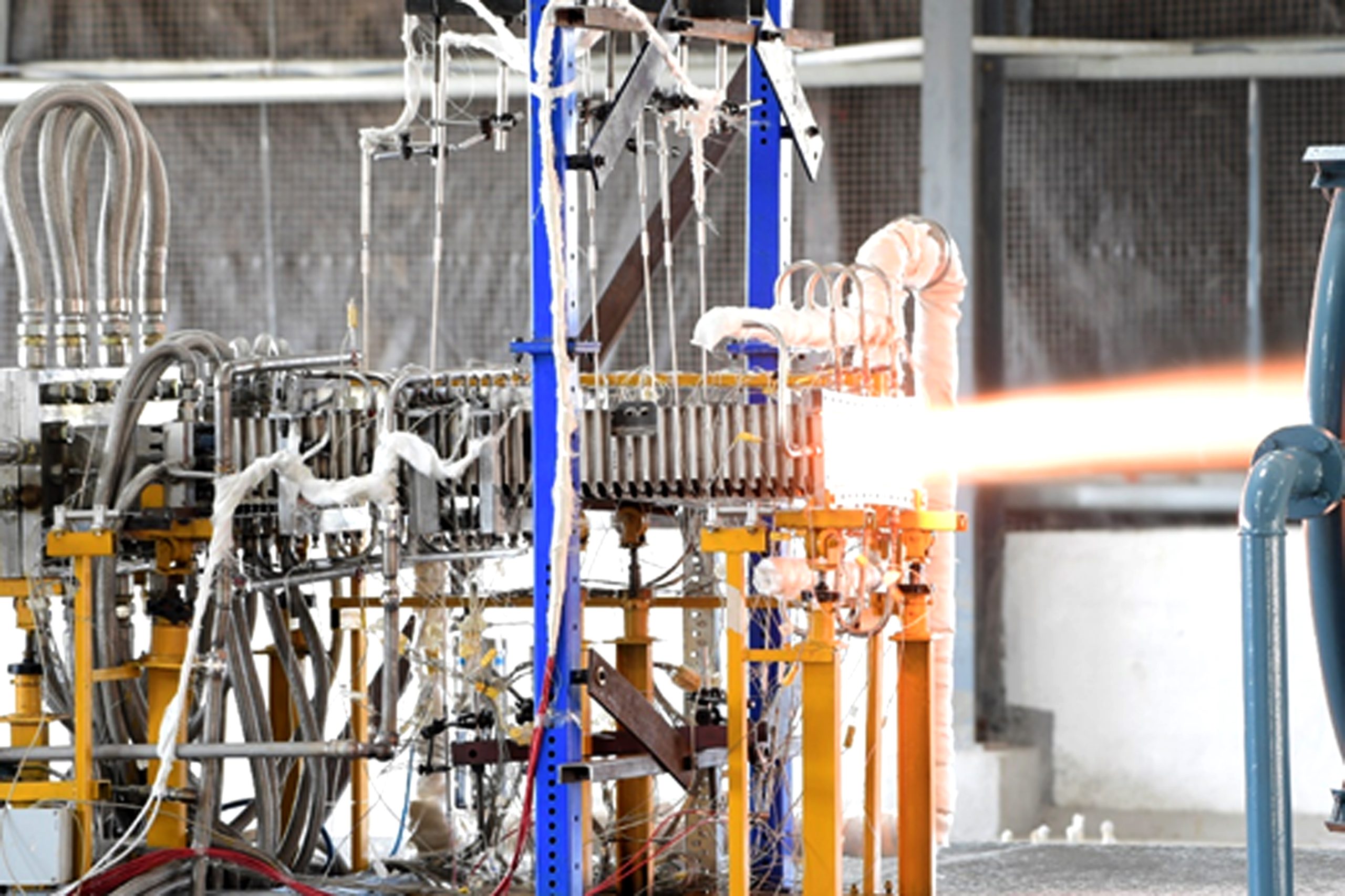
India marked a major advance in hypersonic weapons development as the Defence Research and Development Organisation (DRDO) successfully conducted a long-duration ground test of an actively cooled, full-scale scramjet engine. The test, held at the Scramjet Connect Pipe Test (SCPT) facility of the Defence Research & Development Laboratory (DRDL) in Hyderabad, achieved a runtime of over 12 minutes.
The achievement builds on a sub-scale long-duration test conducted on April 25, 2025, and is seen as a critical step in the country’s Hypersonic Cruise Missile programme. Both the combustor and the test facility were designed and developed by DRDL and realised with support from industry partners.
According to officials, the successful run positions India among a small group of nations with advanced hypersonic capabilities. Hypersonic cruise missiles are designed to sustain speeds exceeding Mach 5 — more than 6,100 km/hr — using air-breathing engines that rely on supersonic combustion to maintain extended flight durations. The latest tests have validated the combustor design and showcased the capabilities of the SCPT facility.
Defence Minister Rajnath Singh congratulated DRDO, industry partners and academia for the breakthrough, describing it as a “solid foundation” for India’s hypersonic missile ambitions. DRDO Chairman and Secretary of Defence R&D Dr Samir V. Kamat also commended the teams involved in the test.