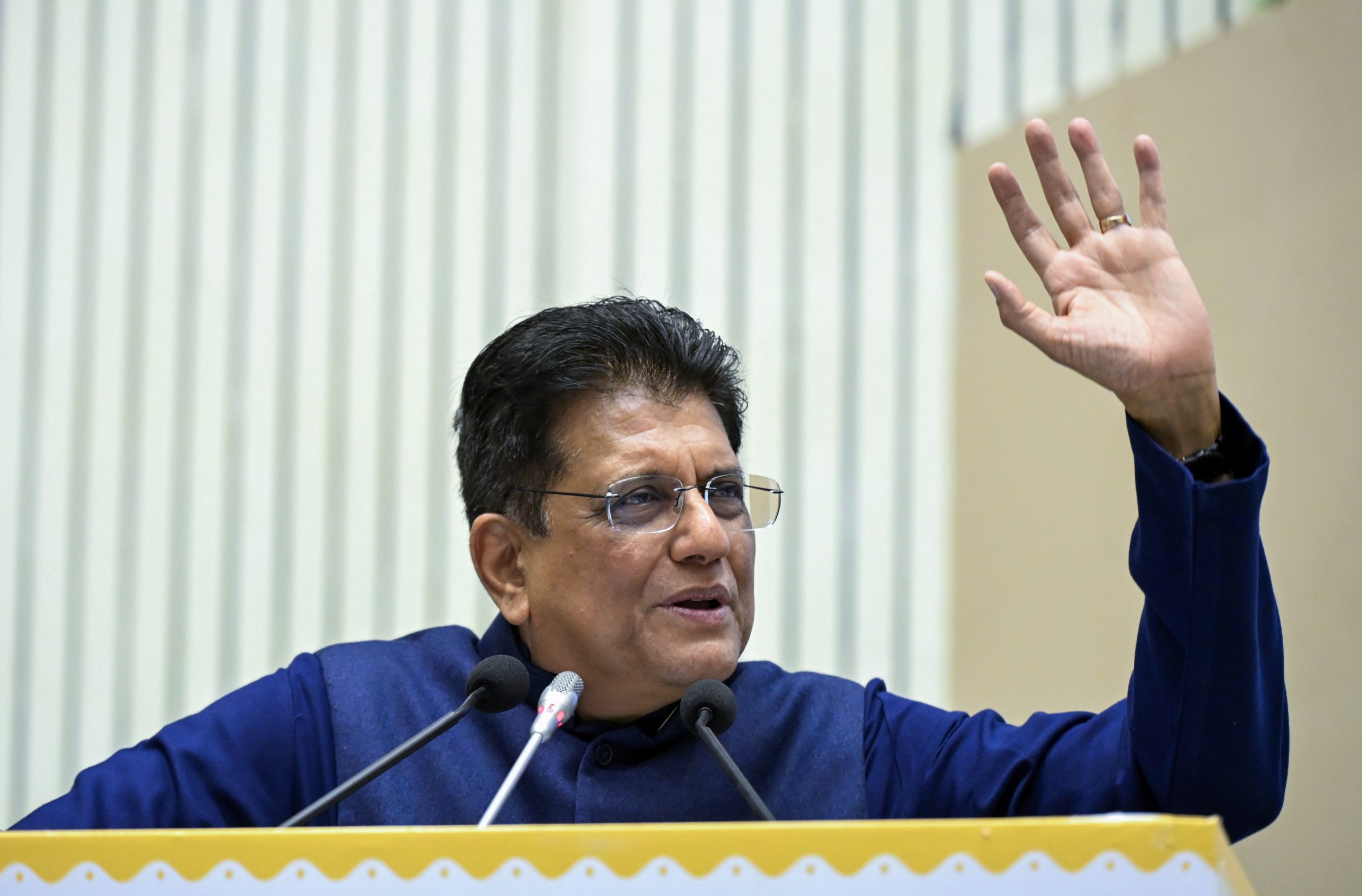
Union Minister of Commerce and Industry Piyush Goyal on Tuesday said that the fight against malnutrition must evolve into a collective national movement involving the government, corporates, communities and individuals, stressing that eliminating malnutrition is essential for building a Viksit Bharat.
Addressing a CSR Conclave on Nutrition organised by the National Dairy Development Board (NDDB) in New Delhi, the Minister said that malnutrition poses a long-term challenge to India’s social and economic future and requires coordinated action across sectors.
Goyal said Corporate Social Responsibility (CSR) offers a powerful platform to align business goals with social impact, particularly in addressing nutrition-related challenges. While companies are mandated to spend two per cent of their net profits on CSR, he said this should be viewed as a minimum benchmark rather than a ceiling.
He underlined that CSR should not be seen as a burden but as an opportunity to contribute meaningfully to nation-building, noting that India’s tradition of service has long encouraged individuals and organisations to voluntarily support social causes beyond statutory requirements.
Minister of State for Cooperation Krishan Pal Gurjar, speaking at the conclave, said CSR has evolved from philanthropy into a strategic instrument for social transformation. He highlighted initiatives such as Shishu Sanjeevani and Gift Milk, stating that they demonstrate how cooperative institutions can convert CSR resources into measurable social outcomes through community participation and transparency.
He said NDDB-led initiatives are reaching aspirational districts, tribal regions, Anganwadi centres and government schools, ensuring last-mile delivery and alignment with local nutritional needs. Supporting institutional platforms such as the NDDB Foundation for Nutrition, he added, contributes to inclusive development in the spirit of Sabka Saath, Sabka Vikas.
Emphasising the need for inter-ministerial coordination, Goyal said addressing malnutrition requires a “whole-of-government approach”. He noted that multiple ministries, including Commerce and Industry, Animal Husbandry and Fisheries, Cooperation, Panchayati Raj, and Women and Child Development, are working in synergy to address the challenge comprehensively.
He said NDDB is playing a key role as an umbrella organisation, enabling collaboration between government and industry, while the Department of Animal Husbandry and Fisheries is supporting access to nutritious food such as milk and fish at affordable prices.
The Minister highlighted the critical role of the Ministry of Women and Child Development in addressing malnutrition at its roots, stressing the importance of nutrition during pregnancy and early childhood to prevent long-term health issues such as stunting and underweight conditions.
Calling for saturation of nutrition programmes, Goyal said initiatives must reach every village and household, ensuring that corporates, cooperatives, Panchayati Raj institutions and communities play complementary roles in implementation.
He also linked the fight against malnutrition with broader goals such as farmer income enhancement through fisheries and animal husbandry, noting that a single programme can simultaneously benefit farmers, women and children.
From a policy perspective, the Minister stressed the importance of root-cause analysis and sustained interventions, beginning from pregnancy through the growing years. He also highlighted the contribution of initiatives such as Fit India, yoga, sports, and access to clean drinking water under the Jal Jeevan Mission in improving overall nutrition outcomes.
Appealing to corporates and individuals alike, Goyal said investment in nutrition is an investment in India’s future workforce and economic growth. He urged the media to highlight how CSR-driven nutrition initiatives benefit both society and businesses.