A case study by Oxford University’s Saïd Business School, supported by the Gates Foundation, has highlighted India’s PRAGATI platform as a major force in accelerating infrastructure and social development projects. The report, titled “From Gridlock to Growth: How Leadership Enables India’s PRAGATI Ecosystem to Power Progress,” underlines how the digital governance mechanism has helped fast-track more than 340 critical projects worth about $205 billion since March 2015.
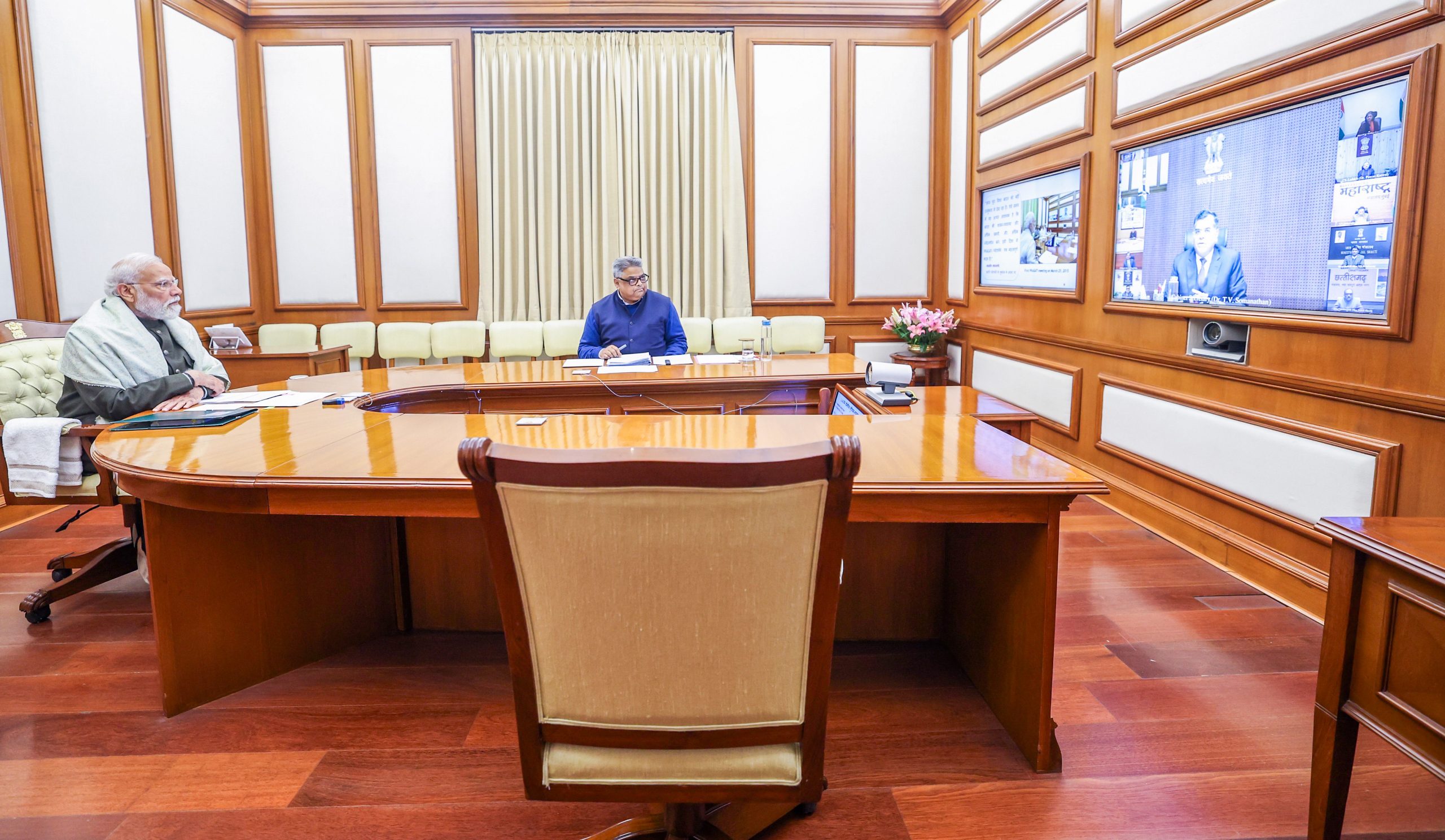
PRAGATI, which stands for Pro-Active Governance and Timely Implementation, is designed to bring together the Prime Minister’s Office, Central Ministries and State Governments on a single digital interface. Through real-time data, video conferencing and geo-spatial mapping, the Prime Minister personally reviews projects, identifies bottlenecks and pushes solutions across agencies. The platform’s architecture aims to reduce bureaucratic delays and create accountability across levels of government.
The Oxford study notes that PRAGATI has played a pivotal role in transforming India’s infrastructure landscape. By June 2023, the government had reviewed 340 high-value projects, contributing to rapid expansion of national highways, growth of airports and development of energy infrastructure. Many of these projects fall into categories considered “wicked” due to their complexity, multi-agency dependencies and land or environmental challenges. The study cites assessments by Indian institutions suggesting large economic multipliers from infrastructure spending, adding context to PRAGATI’s focus on sectors such as roads, railways and power.
One of the factors highlighted in the report is leadership from the top. The Prime Minister’s direct monitoring has revived several stalled projects, set timelines for ministries and pushed regulatory reforms. Examples cited include clearing delays in the Pakri-Barwadih coal mine in Jharkhand and introducing an electronic drawing approval system for the Railways to reduce paperwork-driven bottlenecks. In cases like the Ennore–Thiruvallur–Bengaluru gas pipeline, the platform enabled coordination across three states to resolve long-standing land issues, leading to project completion.
The report also notes that PRAGATI drives accountability by creating urgency among officials. Projects often witness progress even before they appear in meetings, as ministries prepare to avoid scrutiny. Disputes that once dragged for years—such as environmental approvals for parts of NH-48—have been settled after inter-agency engagement through PRAGATI. In some cases, ministries were empowered to restructure financing or change implementation models to break deadlocks.
PRAGATI is positioned as part of a broader digital governance ecosystem that includes platforms such as PM Gati Shakti, PARIVESH and the Project Monitoring Group portal. These systems offer satellite-based planning, automated environmental clearances and AI-enabled project tracking. For instance, PARIVESH has compressed forest and environmental clearance timelines dramatically, while Gati Shakti allows planners to adjust infrastructure routes to reduce ecological and financial costs. Together, they represent a shift from fragmented manual processes to coordinated digital planning.
Beyond physical infrastructure, the platform has accelerated the rollout of major social schemes. Its monitoring has coincided with sharp increases in rural household tap water connections under Jal Jeevan Mission, widespread electrification through Saubhagya, and improvements in sanitation via Swachh Bharat. It also pushed administrative reforms, such as reducing passport processing times after repeated grievances surfaced during reviews.
The Oxford study emphasises that PRAGATI has fostered cooperation across states and ministries, reinforcing the “Team India” approach. Video conferencing allows the Prime Minister, central secretaries and state chief secretaries to discuss inter-state matters directly, bypassing traditional bureaucratic silos. Transparency and shared data help align ministries toward common timelines and reduce disputes.
The report argues that PRAGATI offers lessons for global policymakers, particularly in developing countries: leadership-backed accountability, digital tools for real-time coordination, and inclusive decision-making can accelerate complex infrastructure and social development agendas. While the model demands cultural and administrative shifts, the study suggests that long-term gains in public trust and infrastructure reliability make it a compelling template for reform.
In summary, the Oxford study positions PRAGATI not merely as a project review mechanism, but as a transformative digital governance model that links leadership, technology and accountability to national development outcomes. Its findings highlight how India’s experiment with centralized digital monitoring may serve as a blueprint for countries seeking faster, more transparent and more coordinated development execution.