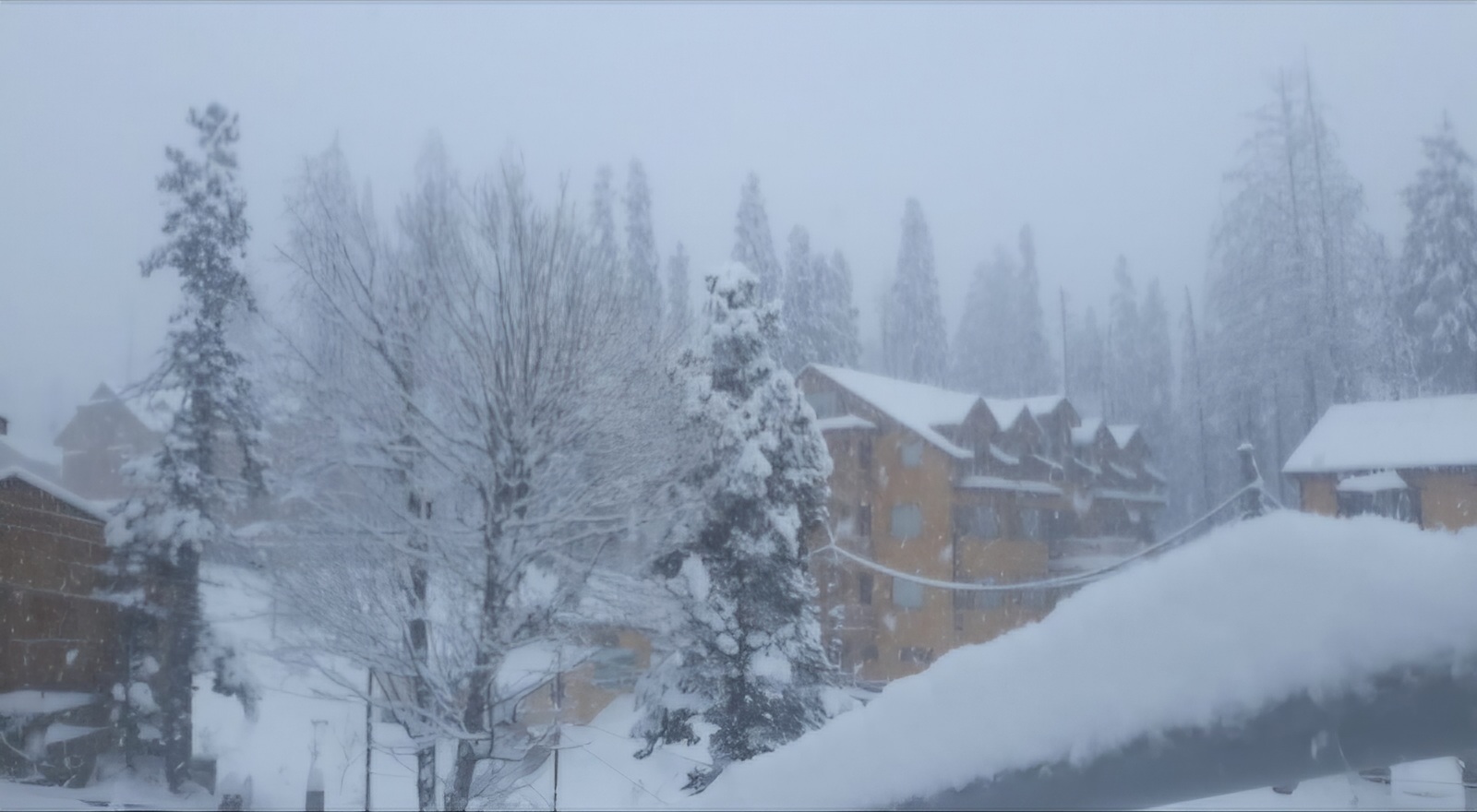
Night temperatures dropped below the freezing point in the Valley in the wee hours of Saturday, with the ski resort of Gulmarg recording the lowest temperature at minus 6.5 degrees Celsius.
However, day temperatures improved in Jammu and Kashmir after the 40-day period of harsh winter cold, locally known as ‘Chillai Kalan’, ended on January 30.
Srinagar city recorded a maximum temperature of 10 degrees Celsius, while Jammu registered 22.1 degrees Celsius on Friday.
L
On Saturday, the minimum temperature was minus 0.1 degrees Celsius in Srinagar, minus 2.6 degrees Celsius in Pahalgam and minus 6.5 degrees Celsius in Gulmarg.
Jammu city recorded a minimum temperature of 10.1 degrees Celsius, Katra town 9 degrees Celsius, Batote 4.2 degrees Celsius, Banihal 0.8 degrees Celsius and Bhaderwah 0.6 degrees Celsius.
The Meteorological Department has forecast generally cloudy weather with light to moderate rain or snow in higher reaches, along with thunder and gusty winds at many places in J&K on January 31 and February 1.
On February 2 and 3, generally cloudy weather with light rain or snow in higher reaches has been forecast.
From February 4 to the evening of February 6, partly cloudy weather is expected, while on February 7, generally cloudy weather with light rain or snow at a few places has been forecast.
Dry weather has been forecast in J&K from February 8 to 10.
An advisory has been issued for farmers to suspend agricultural activities till February 7.
People living in avalanche-prone areas have been advised to exercise caution while moving out of their homes.
Travellers and transporters have been advised to contact traffic department control rooms to know the latest status of the Srinagar-Jammu National Highway before undertaking any journey.
Despite most of the 40-day-long Chillai Kalan passing without rain or snow in J&K, heavy snowfall occurred in the higher reaches towards its end.
This late Chillai Kalan snowfall has largely addressed concerns among locals who feared that the coming summer months could witness reduced water levels in rivers, streams and springs.
Heavy snowfall during Chillai Kalan replenishes perennial water reservoirs in the mountains, which sustain various water bodies during the summer months in J&K.
— IANS