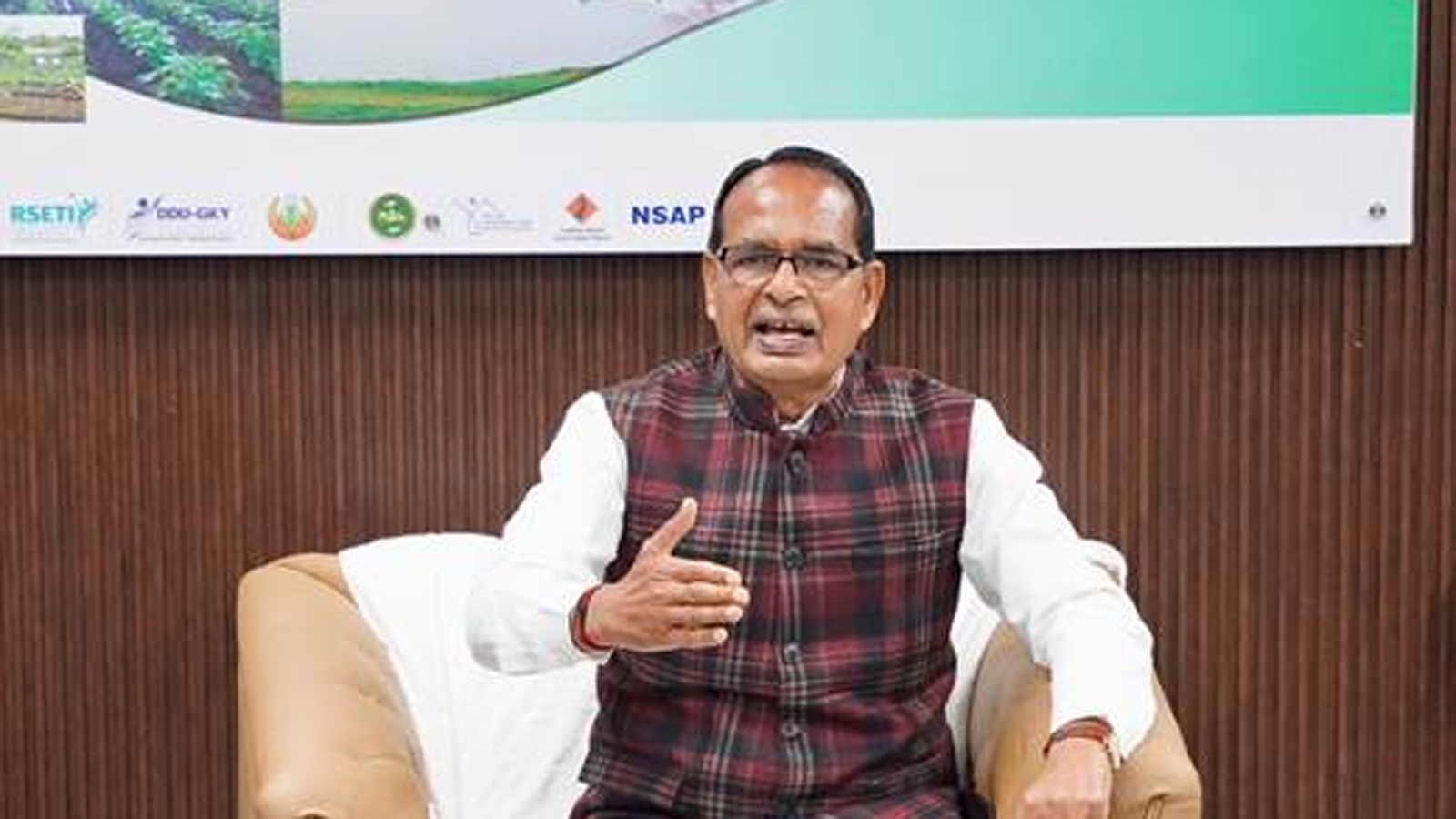
Union Minister for Agriculture and Farmers’ Welfare Shivraj Singh Chouhan on Friday said the proposed Seed Act, 2026 would bring sweeping reforms to protect farmers, eliminate fake and substandard seeds, and ensure transparency across the seed supply chain.
Briefing the media, Chouhan described the proposed legislation as a historic step aimed at safeguarding farmers’ interests through stringent quality control, traceability and accountability. He said the new law would modernise India’s seed regulation framework, replacing the decades-old Seed Act of 1966.
A key feature of the proposed law is a nationwide seed traceability system. Every seed packet will carry a QR code enabling farmers to access complete information about where the seed was produced, which dealer supplied it and who sold it. The minister said that this would allow instant identification of fake or poor-quality seeds and swift action against those responsible.
Chouhan said the government would introduce zero tolerance for the sale of substandard seeds. Penalties, which earlier were limited to nominal fines, have been proposed to be enhanced significantly, with fines of up to ₹30 lakh and imprisonment of up to three years for deliberate offences. “Those who cheat farmers will face strict punishment,” he said.
Under the new Act, registration of seed companies will be mandatory, and only authorised entities will be allowed to sell seeds. Details of registered companies will be publicly available, effectively barring unauthorised sellers and fake firms from operating in the market.
The minister also sought to dispel concerns that the law could affect traditional seed practices. He clarified that farmers would remain free to save, use and exchange traditional seeds among themselves. “The age-old system of local seed exchange will continue without any restriction,” he said.
Highlighting the role of public institutions, Chouhan said bodies such as the Indian Council of Agricultural Research, agricultural universities and Krishi Vigyan Kendras would remain central to seed development and dissemination. Imported seeds, he added, would be permitted only after rigorous testing and evaluation, ensuring that domestic farmers are not exposed to unproven or unsuitable varieties.
To ensure farmers are fully informed, the government plans a wide awareness campaign through initiatives such as the Viksit Krishi Sankalp Abhiyan. All 731 Krishi Vigyan Kendras across the country will be involved in educating farmers about seed quality, selection and grievance redressal mechanisms.
Addressing concerns over federal powers, Chouhan said agriculture would remain a state subject and that states’ rights would not be diluted. The Centre, he said, would play a coordinating role, with the law implemented in cooperation with state governments.
Summing up, the minister said the objective of the Seed Act, 2026 is to ensure that every farmer has access to reliable, high-quality seeds. “Good companies will be encouraged, and those who do wrong will face strict action,” he said, adding that the new law would strengthen trust in the seed system and help boost agricultural productivity nationwide.