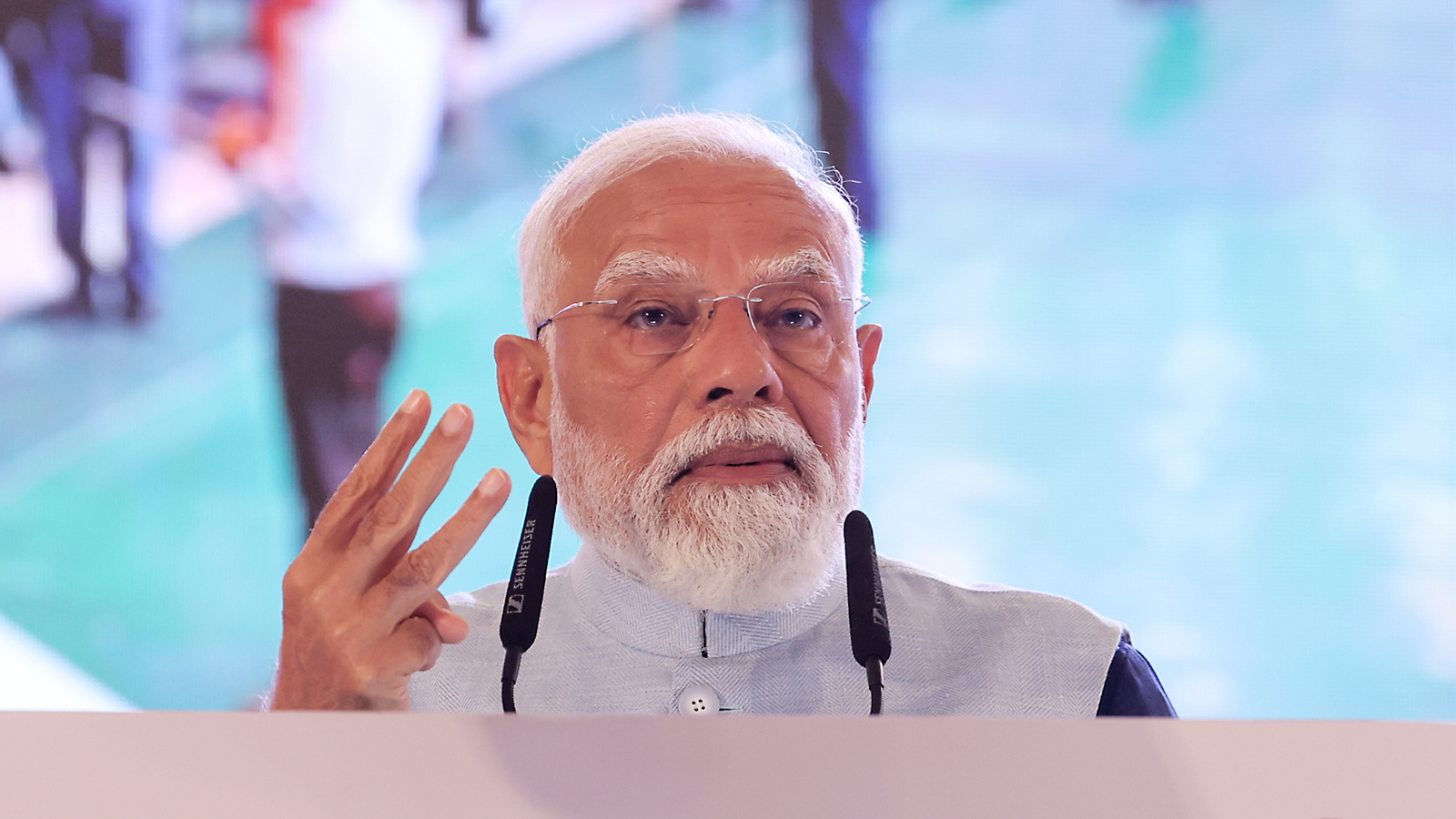
Prime Minister Narendra Modi on Wednesday underscored the need to foster an atmosphere of balance and understanding among parents, teachers and students during the ongoing examination season, cautioning against excessive academic pressure.
Sharing an article written by Union Minister of State Jayant Chaudhury on X, the Prime Minister said “Let us celebrate patience over pressure in education! Marks and assessments have their place, as guidance, not destinations. Union Minister of State Shri Jayant Chaudhury writes this piece urging the creation of an atmosphere of balance among peers and parents. A must-read in this exam season!”
Earlier, Chaudhury shared his article on X, reflecting on the broader philosophy of learning and child development. He noted that in a world that often celebrates early success, it is important to recognise that growth does not follow fixed timelines or rigid pathways. According to him, learning flourishes when curiosity is given space and exploration precedes specialisation.
In his article titled “Patience over pressure: A resolution for parents”, Chaudhury challenges the prevailing assumption that progress in education must be measured narrowly through early high scores and rapid specialisation. He argues that such expectations often create pressure on children to make life-shaping decisions before they have had the opportunity to understand their own interests and abilities.
Drawing on examples from sports and academic research, Chaudhury points to evidence suggesting that early excellence is not a reliable predictor of long-term success. He cites studies, including research published in the journal Science and ideas from author David Epstein’s book Range, which highlight that many world-class achievers followed non-linear paths, explored multiple disciplines and specialised later in life.
The article also links these findings to India’s National Education Policy (NEP) 2020, which promotes multidisciplinary learning and flexibility. Chaudhury notes that while policies can provide enabling frameworks, the daily choices made by families, schools and communities ultimately determine whether children experience education as empowering or stressful.
Emphasising that examinations and assessments remain important, he writes that their true value lies in providing feedback and direction rather than serving as final judgments of a child’s potential. Treating exams as milestones, not destinations, can help nurture learning without constraining it, he argues.
Concluding his piece, Chaudhury calls upon parents, teachers, academicians and policymakers to adopt an approach that balances ambition with patience. Instead of searching for early prodigies, he urges society to recognise the unique potential in every child and allow excellence to emerge gradually through exploration and time.