For decades, large public projects in India have been synonymous with delays, cost overruns and administrative bottlenecks. From rail lines and highways to power plants and airports, timelines often stretched by years—sometimes decades—largely due to coordination failures across ministries, between the Centre and states, and within state governments themselves.
A Chronic Problem, a Structural Solution
Large time and cost overruns in public projects were not the result of a single failure but a combination of systemic issues: horizontal coordination gaps between central ministries, vertical disconnects between the Centre, states and local governments, and inter-departmental silos within states. Recognising that piecemeal solutions would not suffice, Prime Minister Narendra Modi conceptualised PRAGATI as a comprehensive, technology-enabled governance mechanism spanning all tiers of government.
When PRAGATI (Pro-Active Governance and Timely Implementation) was launched on March 25, 2015, the Prime Minister Narendra Modi described it as a step towards making governance more efficient and responsive, at a time when the world was closely watching India’s development trajectory.
What PRAGATI Set Out to Do
At its core, PRAGATI was designed to improve Centre–Centre and Centre–State coordination with three clear objectives: fast-tracking critical infrastructure projects facing bottlenecks, improving outcomes of flagship welfare schemes showing sub-optimal performance, and resolving citizen grievances across sectors.
Unlike traditional review mechanisms, PRAGATI integrates project monitoring, grievance redressal and scheme implementation on a single digital platform. It also hosts key governance tools such as PM GatiShakti, PARIVESH and the PM Reference Portal, creating a unified ecosystem for tracking progress and resolving issues in real time.
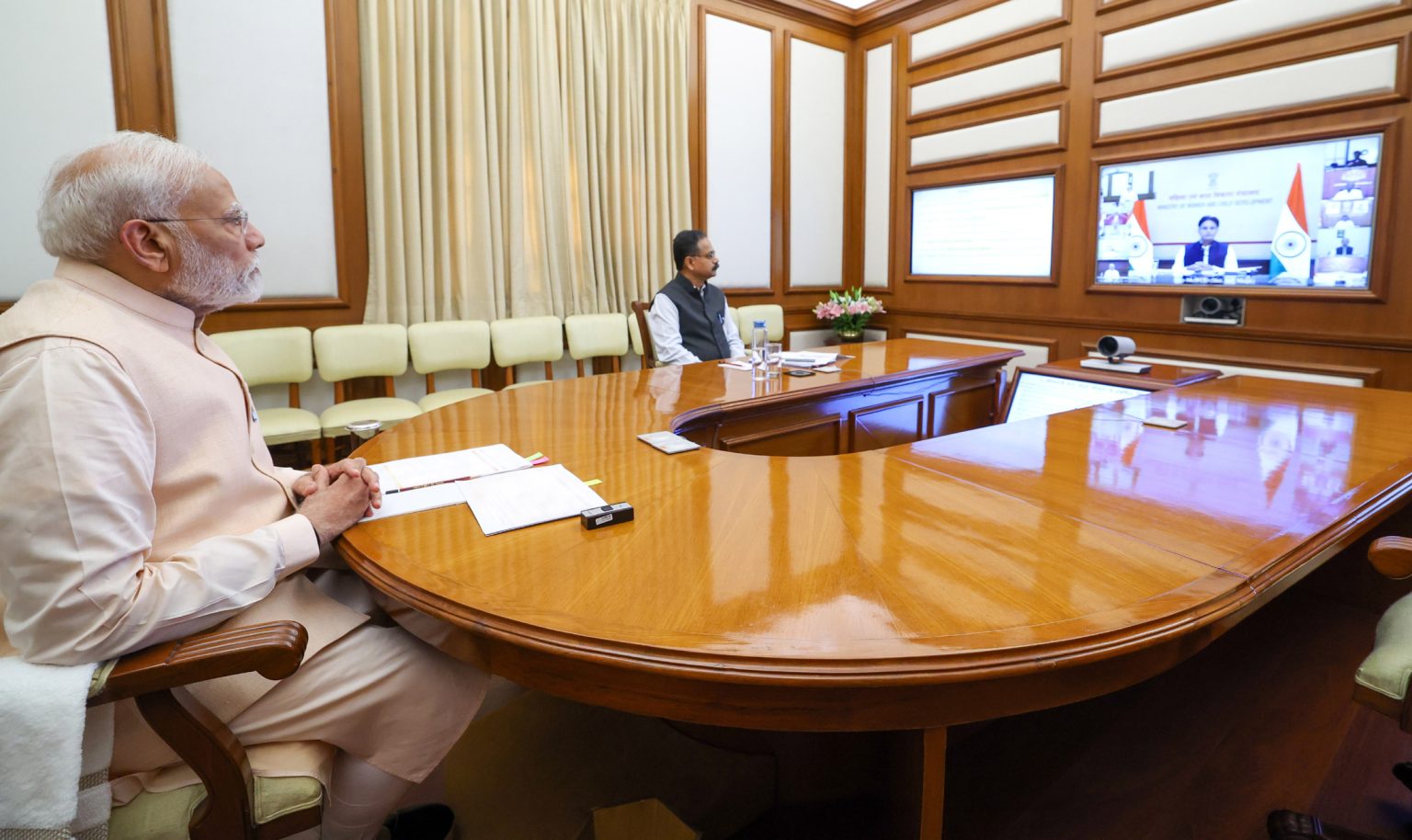
At the apex of this system, the Prime Minister personally chairs PRAGATI review meetings, engaging directly with Chief Secretaries of states and Secretaries of central ministries. Regular issues are resolved at the ministry level, while complex and critical matters are escalated through a structured, multi-tier process that culminates in PRAGATI reviews.
From Review to Resolution
What distinguishes PRAGATI from earlier monitoring frameworks is its issue-escalation and follow-up mechanism. Post-review, decisions are tracked by the Cabinet Secretariat, while schemes and grievances are monitored at the ministry level under continuous PMO oversight. This ensures that reviews translate into execution rather than remaining on paper.
The numbers reflect this shift. As per the PRAGATI and Project Monitoring Group (PMG) portal, over 3,300 projects worth more than ₹85 lakh crore have been monitored, along with 61 major government schemes and grievances across 36 sectors. Of the 7,735 issues raised, 7,156 have been resolved, indicating a resolution rate of over 90 per cent—nearly one issue resolved every working day since the platform’s inception.
Prime Minister’s Direct Reviews: A Game Changer
Among projects directly reviewed by the Prime Minister, 382 projects covering 637 packages or sections were taken up. Out of 3,187 issues raised, 2,958 have been resolved. Roads and highways, railways, power and petroleum have accounted for the largest share of projects reviewed, sectors historically plagued by land acquisition, environmental clearances and right-of-way challenges.
Sector-wise data shows that land acquisition and forest or environmental clearances account for a significant portion of resolved issues, followed by construction approvals, utility permissions, financial constraints and law-and-order challenges.
Unlocking Long-Pending Projects
PRAGATI’s impact is perhaps best illustrated through long-pending infrastructure projects that finally moved forward after years of stagnation.
The Jammu–Udhampur–Srinagar–Baramulla rail link, approved in 1994, saw multiple bottlenecks addressed through PRAGATI reviews between 2015 and 2020. The 272-km project—featuring 38 tunnels and 943 bridges, including the world’s highest railway arch bridge—was commissioned in June 2025.
Similarly, the Navi Mumbai International Airport, approved in 2007, remained stalled for years. Following PRAGATI monitoring, the project gained momentum and was commissioned in December 2025. The Bogibeel rail-cum-road bridge over the Brahmaputra, approved in 1997, was commissioned in December 2018 after key issues were resolved through PRAGATI intervention.
Recognition Beyond India
PRAGATI’s governance model has also drawn international attention. An external study by Oxford University’s Saïd Business School, published in December 2024, described PRAGATI as a transformative digital governance platform that has strengthened senior-level accountability and accelerated long-pending infrastructure and social sector projects.
The study termed PRAGATI a global benchmark and a “single source of truth” for real-time project monitoring, highlighting its role in strengthening cooperative federalism and offering a replicable model for developing economies.
The Bigger Picture
As per official data, 427 projects have been taken up under the PRAGATI–PMG ecosystem, of which 158 have been commissioned, 266 are under implementation, and three have been terminated. These projects faced 1,568 issues, with 1,437 resolved through PRAGATI-led interventions.
Beyond project delivery, the government maintains that PRAGATI has contributed to higher capital expenditure growth, improved inter-governmental coordination and enhanced public trust in governance mechanisms.
PRAGATI at 50: A Governance Institution
With 50 high-level reviews completed, PRAGATI has evolved from an innovation into an institution of governance—one that embeds accountability, transparency and timely decision-making into the administrative process. As India continues to scale up infrastructure investment and welfare delivery, PRAGATI stands as a central pillar in ensuring that ambition is matched by execution.