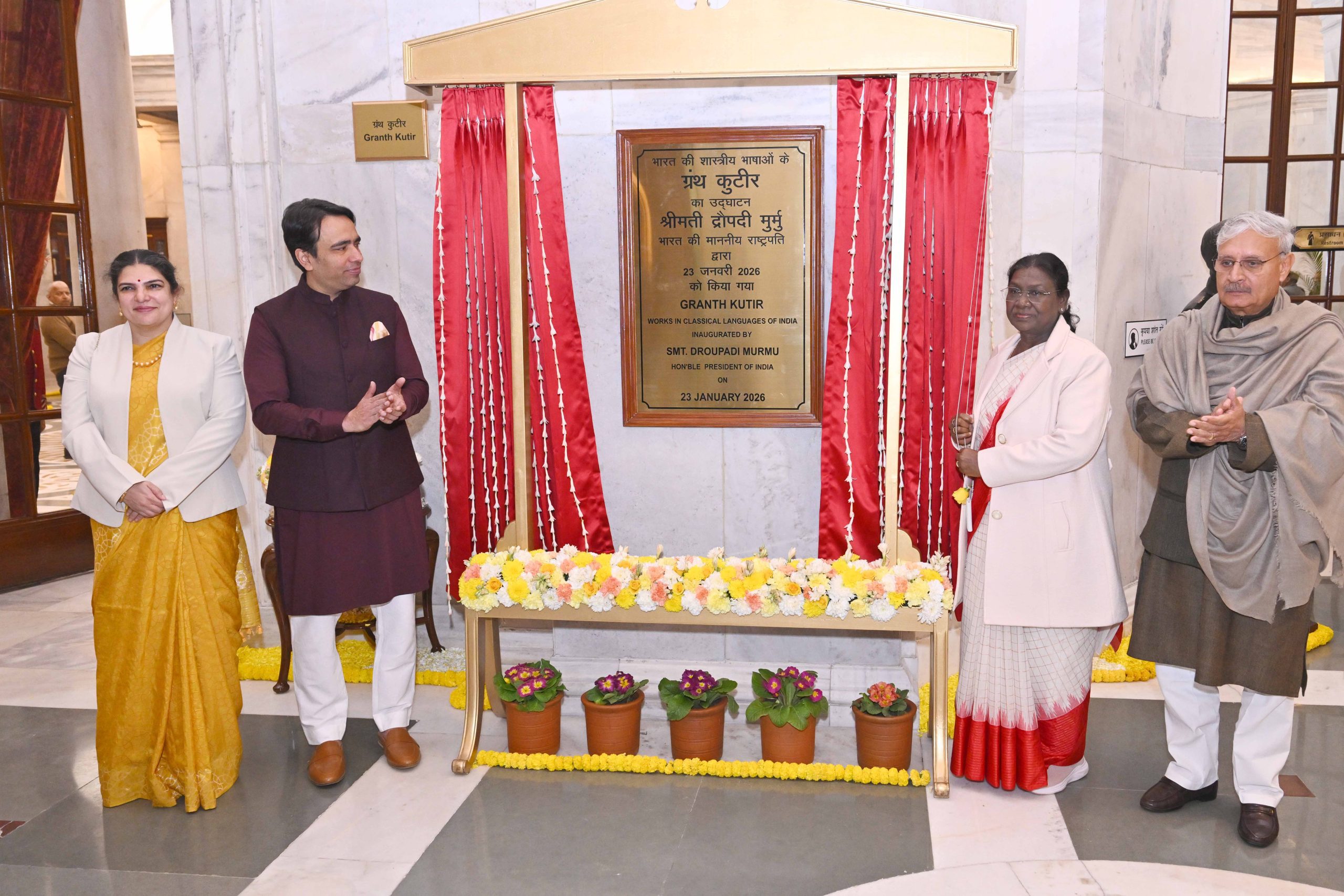
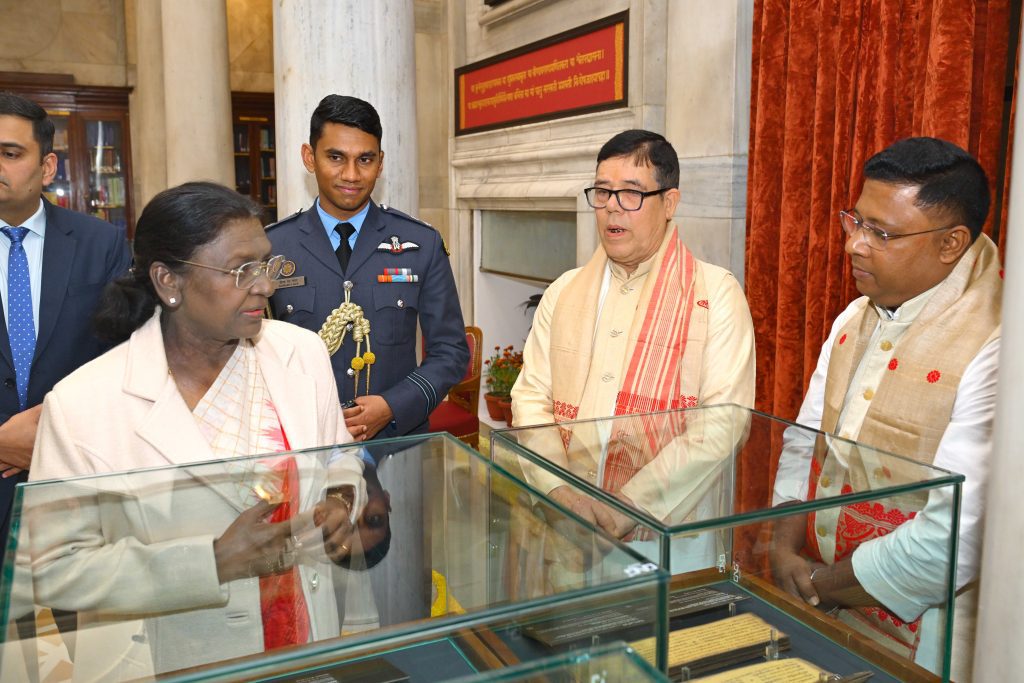
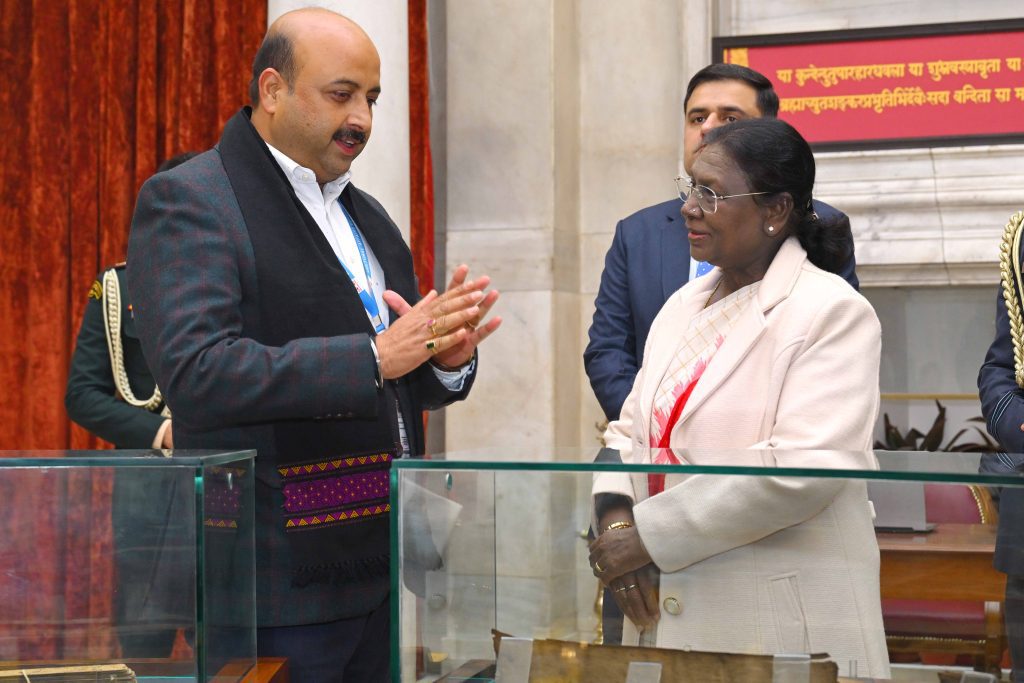
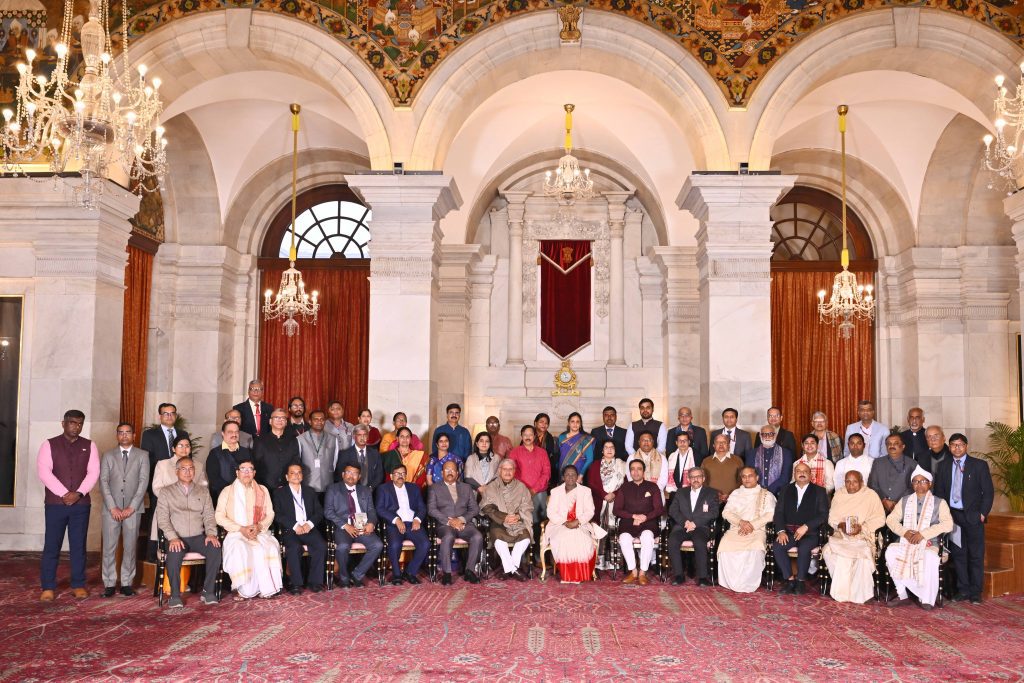
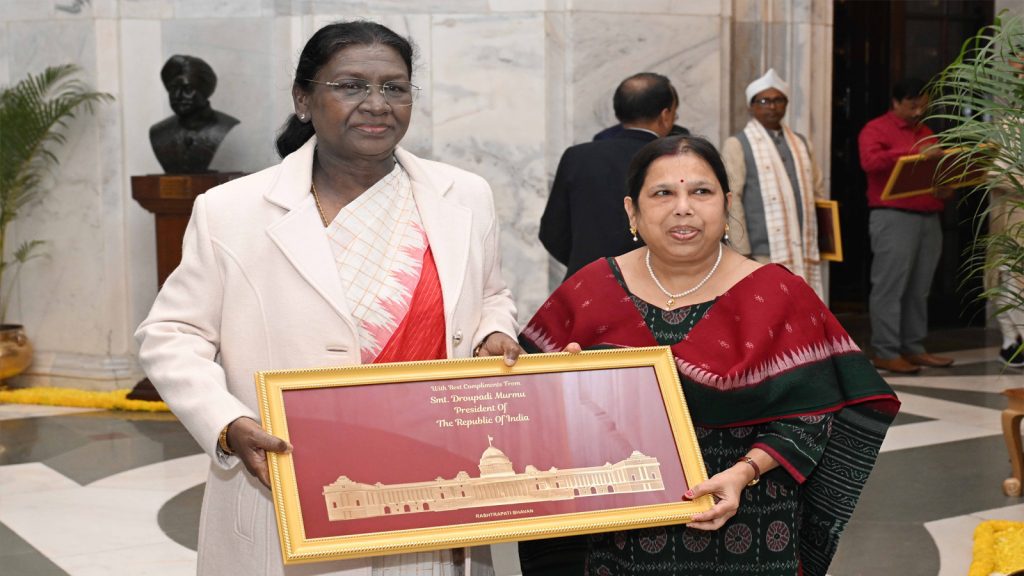
President Droupadi Murmu on Friday inaugurated Granth Kutir at Rashtrapati Bhavan, a dedicated space showcasing India’s vast literary and intellectual heritage preserved in its classical languages. The newly inaugurated Kutir houses a curated collection of around 2,300 books and manuscripts in 11 classical languages of India.
The collection spans Tamil, Sanskrit, Kannada, Telugu, Malayalam, Odia, Marathi, Pali, Prakrit, Assamese and Bengali. Five of these – Marathi, Pali, Prakrit, Assamese and Bengali – were accorded classical language status by the Government of India in October 2024, expanding the list from the earlier six.
Granth Kutir reflects India’s rich cultural, philosophical and scholarly traditions, with works covering epics, philosophy, linguistics, history, governance, science and devotional literature. The collection also includes copies of the Constitution of India in classical languages and around 50 rare manuscripts, many handwritten on traditional materials such as palm leaves, paper, bark and cloth.
The Kutir has been developed through a collaborative effort involving central and state governments, universities, research institutions, cultural organisations and individual donors. The Ministry of Education and the Ministry of Culture supported the initiative, while the Indira Gandhi National Centre for the Arts (IGNCA) is providing professional expertise in the conservation, documentation and display of manuscripts.
Earlier, colonial-era books housed at the site, including works related to Lord Curzon and Punch magazines, have been shifted to a separate archival space within the Rashtrapati Bhavan estate. These materials have been digitised and will be made available online for researchers.
Granth Kutir is aligned with the Gyan Bharatam Mission, a national initiative aimed at preserving, digitising and disseminating India’s manuscript heritage by integrating tradition with modern technology. Visitors will be able to view selected works during guided tours of Rashtrapati Bhavan’s Circuit 1, while researchers can access the collection through an online portal and apply for physical access when required.
Addressing the gathering after the inauguration, President Murmu said that India’s classical languages form the foundation of the country’s culture and civilisation. She noted that knowledge systems developed in these languages -ranging from science, mathematics and astronomy to yoga, Ayurveda and grammar – have guided the world for centuries. Citing examples such as Panini’s grammar, Aryabhata’s mathematics and the medical sciences of Charaka and Sushruta, she said these contributions continue to inspire global scholarship.
The President emphasised that the wealth of knowledge preserved in classical languages encourages Indians to learn from the past while building a brighter future. She called upon universities, libraries and citizens to promote the study of classical languages, encourage youth to learn at least one such language and expand access to classical texts.
Describing Granth Kutir as a collective effort to preserve and promote India’s linguistic heritage, President Murmu expressed confidence that the collection would continue to grow and inspire visitors, especially young people, to explore and understand the country’s classical traditions.
Minister of State for Culture Rao Inderjit Singh, Minister of State for Education Jayant Chaudhary, subject experts, donors and state representatives were among those present at the inauguration.