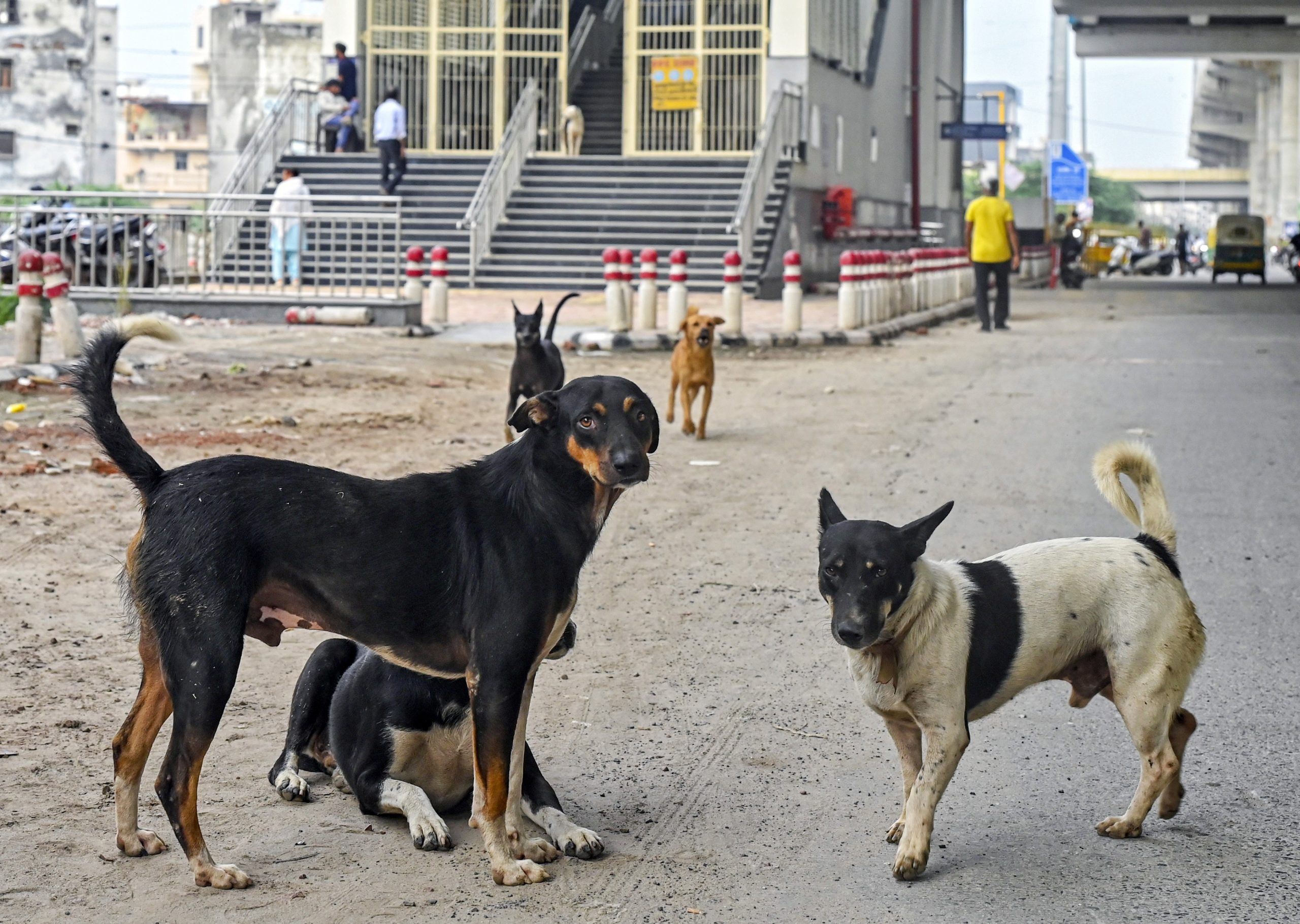
The Supreme Court of India on Thursday observed that dogs are capable of sensing fear in humans and may attack individuals who appear frightened or have had previous encounters with dog bites.
The observation was made during a hearing in a suo motu case concerning the management of stray dogs in public spaces. A Bench comprising Justices Vikram Nath, Sandeep Mehta, and N.V. Anjaria was examining applications seeking modification of its November 2025 order related to the handling of stray dogs in public institutions.
The earlier order had directed that stray dogs found within premises such as schools, hospitals, bus terminals, and institutional campuses be captured and not released at the same location after vaccination and sterilisation.
During the proceedings, when a counsel disagreed with the court’s observation that dogs tend to attack people who appear scared, the Bench noted that animals can perceive fear and react accordingly. The court remarked that dogs, including pets, are more likely to attack when they sense fear, based on personal experience.
Senior advocate C.U. Singh, appearing for an NGO, argued that stray dogs play a role in maintaining ecological balance, particularly by controlling rodent populations. He cautioned that the sudden removal of dogs could lead to an increase in disease-carrying rodents, citing past experiences in urban areas.
The court, however, questioned whether there was any established scientific correlation between the removal of stray dogs and a rise in rodent populations. In a lighter observation, the Bench remarked that cats, as natural predators of rodents, could be considered as an alternative to address such concerns.
Clarifying its position, the court stated that its November 2025 order did not mandate the removal of all stray dogs from streets, but required authorities to act strictly in accordance with the Animal Birth Control (ABC) Rules.
Senior advocate Shyam Divan, representing People for Ethical Treatment of Animals India, referred to provisions of the ABC Rules, submitting that dogs are ordinarily required to be released in the same area from where they are captured, unless advised otherwise by experts.
He also pointed out that the prescribed detention period for stray dogs is limited, and prolonged confinement in overcrowded shelters could amount to cruelty. The counsel urged the court to pause further directions on capturing dogs until local authorities are adequately prepared, and sought the formation of an expert committee to examine the issue.
The Bench, however, observed that reliance on unrelated past cases was misplaced and declined to draw direct comparisons.
The Supreme Court continues to hear submissions from all stakeholders, including animal welfare groups, civic bodies, and victims of dog bite incidents.
-IANS