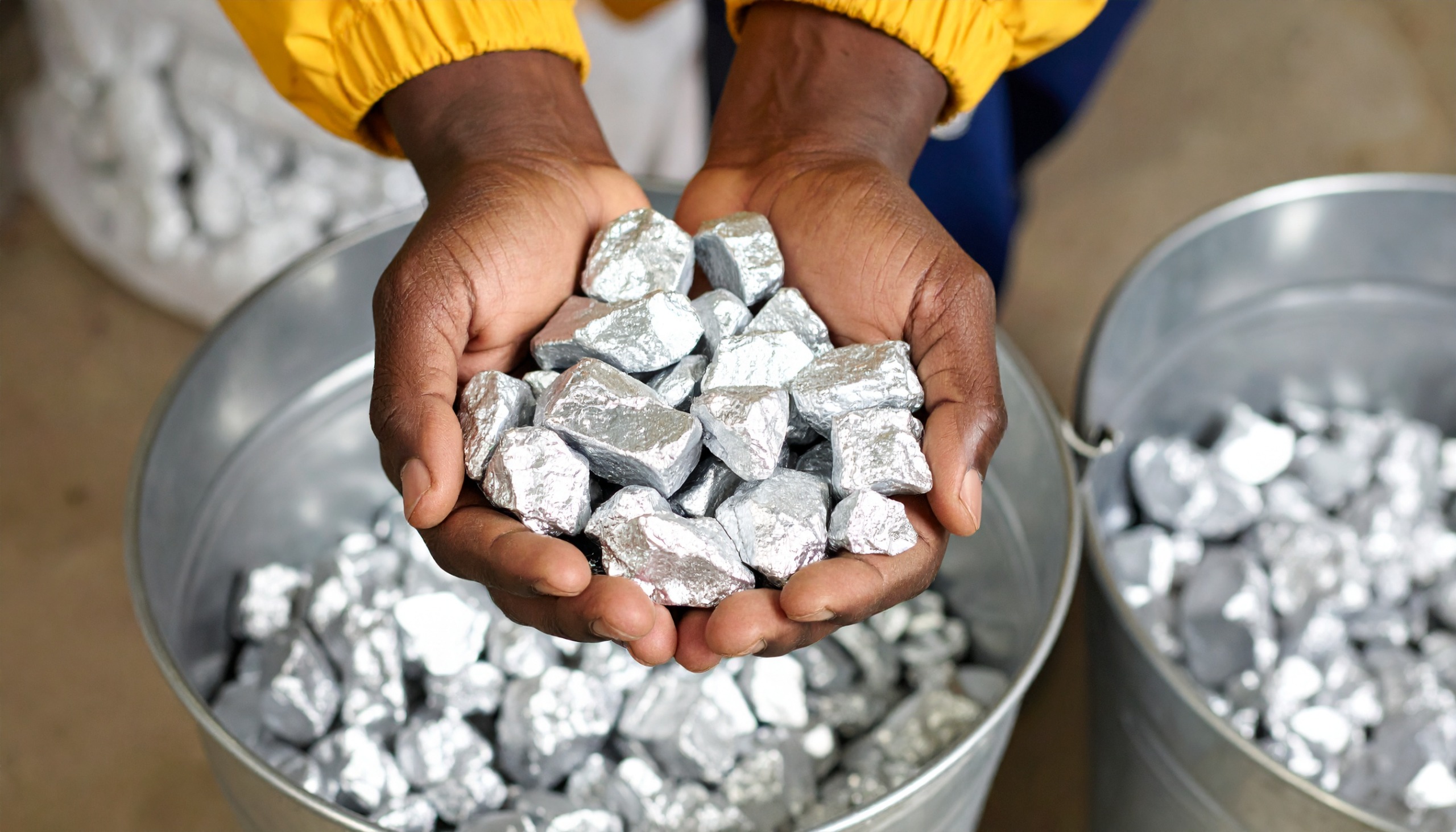
Finance Minister Nirmala Sitharaman on Sunday proposed support for mineral-rich states including Odisha, Kerala, Andhra Pradesh and Tamil Nadu to establish dedicated rare earth corridors.
Announcing the proposal while presenting the Union Budget for 2026–27 in Parliament, Sitharaman said the initiative aims to strengthen domestic capacity in rare earth processing and manufacturing.
“We now propose to support the mineral-rich states of Odisha, Kerala, Andhra Pradesh and Tamil Nadu to establish dedicated rare earth corridors,” the Finance Minister said.
The announcement builds on a scheme launched in November 2025 for rare earth permanent magnets. The government had earlier approved the Scheme to Promote Manufacturing of Sintered Rare Earth Permanent Magnet, with a financial outlay of ₹7,280 crore. The scheme aims to establish 6,000 metric tonnes per annum of integrated rare earth permanent magnet manufacturing capacity in India, covering the entire value chain from rare earth oxides to finished magnets.
To further build rare earth and advanced manufacturing capacity, Sitharaman proposed setting up high-tech tool rooms by central public sector enterprises at two locations. These facilities will function as digitally enabled automation service bureaus, locally designing, testing, and manufacturing high-precision components at scale and at lower cost.
The Finance Minister also announced that a scheme to enhance construction and infrastructure equipment will be introduced to strengthen domestic manufacturing of high-value and technologically advanced equipment.
In addition, Sitharaman proposed an allocation of ₹40,000 crore for electronics components manufacturing.
She said India’s Semiconductor Mission 1.0 has expanded the country’s semiconductor capabilities. Building on this, the government will launch Semiconductor Mission 2.0, focusing on equipment and materials production, development of full-stack Indian intellectual property, and strengthening supply chains.
Sitharaman presented her record ninth consecutive Union Budget in Parliament.
Earlier, on Thursday, she tabled the Economic Survey of India for the financial year 2025–26. Traditionally presented ahead of the Budget, the survey provides a data-backed assessment of the economy’s performance over the past year and outlines a broad roadmap for future policy direction.
According to the survey, India’s real GDP growth for 2026–27 is projected at 6.8 to 7.2 per cent, reflecting sustained medium-term growth capacity despite a challenging global environment.
The survey also noted that India recorded its lowest inflation rate since the start of the CPI series, with average headline inflation at 1.7 per cent during April–December 2025, driven by easing food and fuel prices. The inflation outlook remains benign, supported by favourable supply-side conditions and the gradual pass-through of GST rate rationalisation.
-ANI