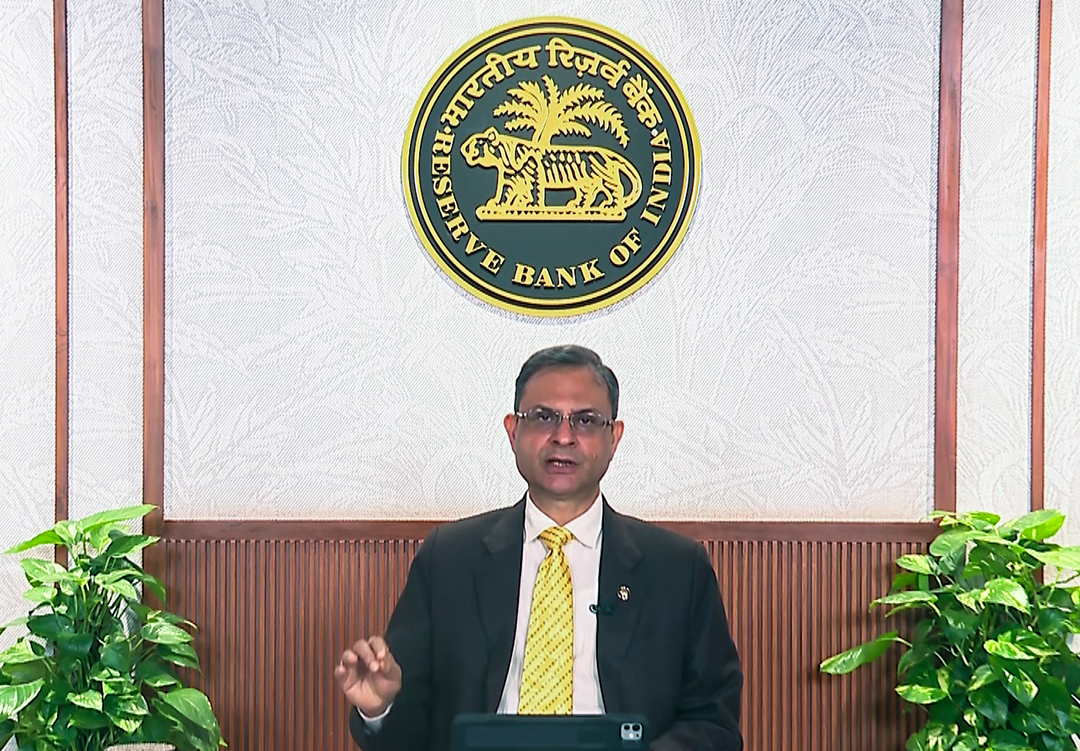
The Reserve Bank of India on Friday projected retail inflation for the current financial year 2025–26 at 2.1 per cent, while cautioning that geopolitical tensions, volatile energy prices and adverse weather events pose potential upside risks.
Presenting the Monetary Policy Statement, RBI Governor Sanjay Malhotra said headline Consumer Price Index (CPI) inflation remained low during November and December, though a marginal firming was observed. The central bank expects a change in the inflation trajectory during the final quarter of the fiscal.
While the annual average inflation is projected at 2.1 per cent, inflation in the fourth quarter (January–March 2026) is estimated at 3.2 per cent. The Governor clarified that the expected rise is largely technical in nature, driven by unfavourable base effects following a sharp decline in prices during the corresponding quarter of the previous year.
Looking ahead to the next financial year, the RBI projected inflation at 4 per cent in the first quarter and 4.2 per cent in the second quarter. The Governor noted that the recent firming of inflation was mainly due to a slower pace of deflation in food prices. Core inflation, excluding volatile components such as gold, has remained stable at around 2.6 per cent.
The central bank expressed optimism over the near-term food price outlook, citing healthy Kharif production, adequate buffer stocks of food grains and comfortable reservoir levels. The RBI said core inflation is expected to remain range-bound, barring volatility from precious metal prices. However, it warned that geopolitical uncertainty and energy price fluctuations continue to pose risks.
On the growth outlook, the RBI revised upward India’s real GDP growth projections for the first two quarters of the next financial year 2026–27. Real GDP growth for Q1 of FY27 has been revised to 6.9 per cent, while Q2 growth is now projected at 7 per cent.
In the December Monetary Policy meeting, growth was projected at 6.7 per cent and 6.8 per cent, respectively.
The Governor said projections for the full financial year 2026–27 have been deferred to the April policy meeting, as the new GDP series will be released later this month and incorporated into the assessment.
Malhotra said the Indian economy continues on a steady improvement path, with real GDP growth expected to register 7.4 per cent in the current year, higher than the previous year. He noted that private consumption and fixed investment have supported growth despite global headwinds, though net external demand remains a drag as imports outpace exports.
On the supply side, real Gross Value Added (GVA) growth is estimated at 7.3 per cent, led by strong performance in the services sector and a revival in manufacturing activity.
Looking ahead, the RBI said economic activity is expected to remain resilient. Agricultural prospects are supported by healthy reservoir levels and robust rabi sowing. Manufacturing is expected to benefit from improving corporate performance and sustained informal sector momentum, while construction activity is likely to remain firm. The services sector is expected to stay resilient, supported by strengthening domestic demand.
The Governor added that rural demand remains steady, supported by improving agricultural activity and labour market conditions, while urban consumption is expected to strengthen further, aided by GST rationalisation and monetary easing. Investment activity is also expected to gain momentum, driven by high capacity utilisation, rising bank credit, supportive financial conditions and continued government focus on infrastructure.
-ANI