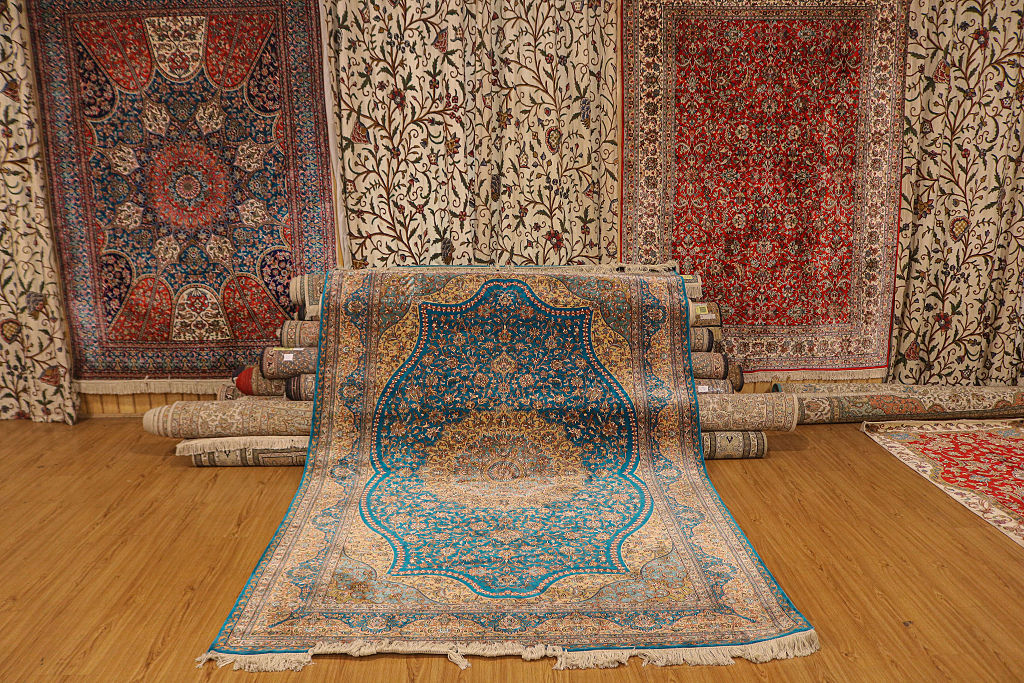
A significant boost has come for India’s carpet industry as the United States has slashed import tariffs on Indian carpets from 50 per cent to 18 per cent. The decision has brought renewed optimism among exporters in Uttar Pradesh’s Bhadohi—India’s carpet hub—and strengthened the country’s position amid stiff competition in the global market.
India exports carpets worth nearly Rs 17,000 crore annually, with the United States alone accounting for over 70 per cent of total exports. The earlier high tariff had made Indian carpets expensive for US buyers, prompting them to explore cheaper alternatives from countries such as Pakistan, Turkey, Afghanistan, and China.
Experts say the tariff reduction is expected to reverse this trend by making Indian carpets more competitively priced and restoring buyer confidence in the US market.
Welcoming the move, Imtiyaz Ahmed, Director of the Carpet Export Promotion Council (CEPC) and a leading exporter from Bhadohi, described the decision as a “lifeline” for the industry.
“This decision has come at a time when global competition was extremely intense. High tariffs had become a major obstacle for us. With the duty now reduced to 18 per cent, we will be able to lower costs and strengthen our presence in the global market with better-quality products,” Ahmed said.
Industry experts believe the tariff cut will lead to a sharp rise in demand for Indian hand-knotted carpets in the US. Earlier, steep import duties had pushed American buyers towards low-cost options from countries such as China and Pakistan. Exporters now expect prices to ease and fresh orders to flow into weaving clusters in Bhadohi, Mirzapur, and Varanasi.
The anticipated revival is expected to generate employment for thousands of weavers and artisans in Uttar Pradesh, many of whom had faced reduced work opportunities in recent months.
With the tariff barrier eased, exporters are confident that India’s carpet industry—rooted in centuries-old craftsmanship—will regain momentum and reinforce its leadership in the international market.
(IANS)