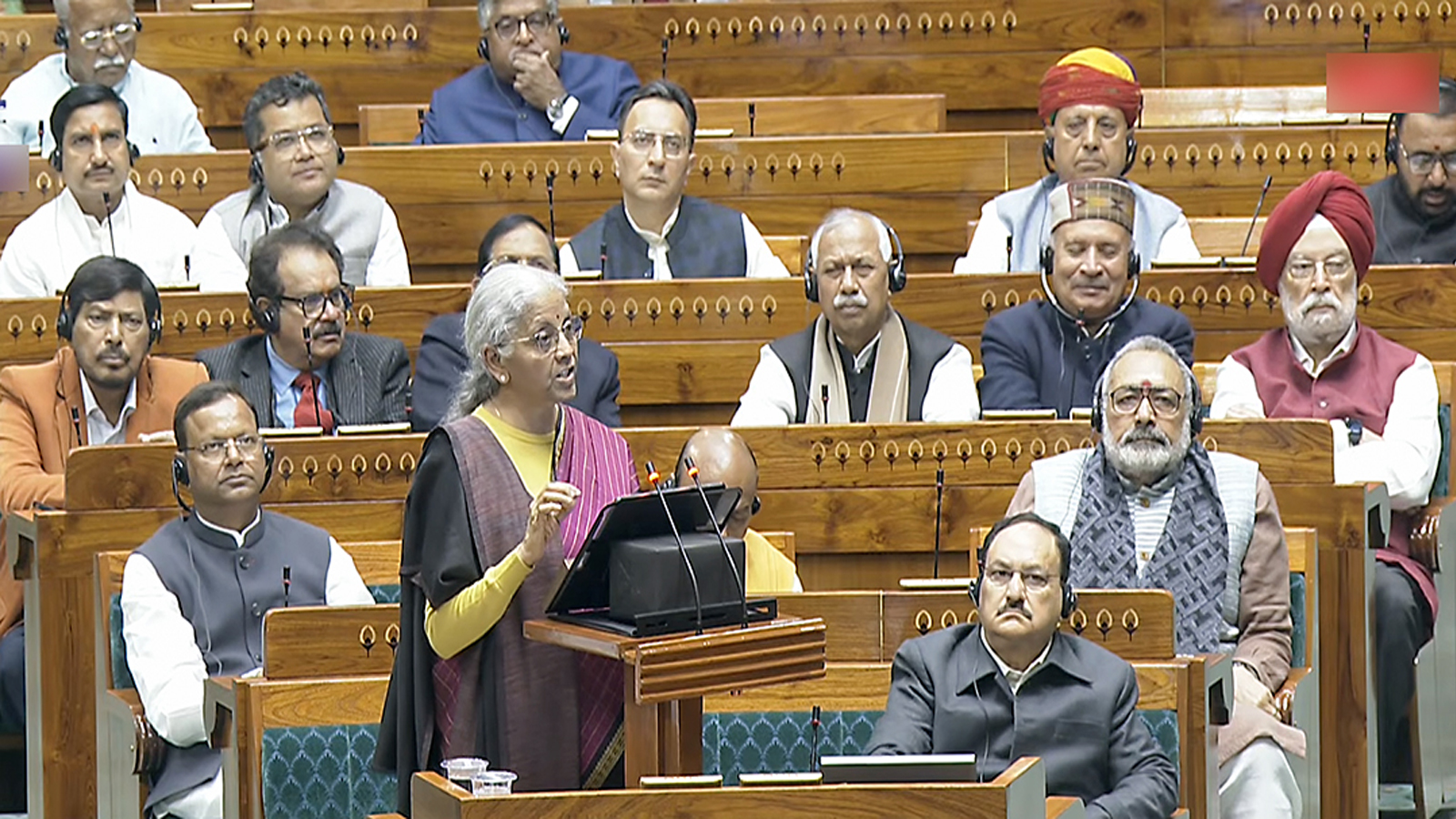
The Union Budget 2026-27, presented by Finance Minister Nirmala Sitharaman, lays out an ambitious yet fiscally disciplined roadmap for India’s next phase of development, anchored in youth empowerment, inclusive growth and economic resilience. The first Budget prepared in the newly inaugurated Kartavya Bhawan, it is inspired by three guiding principles – or Kartavya – that seek to accelerate growth, fulfil people’s aspirations and ensure equitable development under the vision of Sabka Saath, Sabka Vikas.
Describing the Budget as Yuva Shakti-driven, the Finance Minister emphasised the government’s unwavering Sankalp to uplift the poor, underprivileged and disadvantaged, even as India navigates a challenging global environment marked by disrupted supply chains, weakened multilateralism and rapid technological change.
Three Kartavya, One Vision: Viksit Bharat
The first Kartavya focuses on accelerating and sustaining economic growth by boosting productivity, competitiveness and resilience. The second Kartavya seeks to fulfil people’s aspirations and build their capacities, enabling citizens to become active partners in India’s growth journey. The third Kartavya, aligned with Sabka Saath, Sabka Vikas, aims to ensure that every region, sector and community has access to opportunities and resources.
The Finance Minister highlighted that over 350 reforms announced after the Prime Minister’s Independence Day address in 2025 – ranging from GST simplification to labour reforms and deregulation – have already been rolled out, with Centre and States working together to reduce compliance burdens.
Growth Push: Manufacturing, MSMEs and Infrastructure
Under the first Kartavya, the Budget proposes targeted interventions across six priority areas, including strategic manufacturing, MSME growth, infrastructure, energy security and city-led economic development.
A major highlight is Biopharma SHAKTI, a ₹10,000 crore initiative to position India as a global hub for biologics and biosimilars. The programme includes setting up three new NIPERs, upgrading seven existing ones, creating over 1,000 clinical trial sites and strengthening the drug regulator to global standards.
For the textile sector, a comprehensive integrated programme was announced, covering natural and man-made fibres, traditional clusters, handloom and handicrafts, sustainable textiles and skilling under Samarth 2.0.
Recognising MSMEs as engines of growth, a ₹10,000 crore SME Growth Fund was proposed to nurture future “champion” enterprises.
Public capital expenditure continues its upward trajectory, rising from ₹11.2 lakh crore in FY26 to ₹12.2 lakh crore in FY27, reinforcing the government’s commitment to infrastructure-led growth.
Connectivity and Urban Growth
* To promote environmentally sustainable transport, the Budget proposes:
* New Dedicated Freight Corridors connecting eastern and western industrial hubs
* Operationalisation of 20 National Waterways over five years
* Development of seven high-speed rail corridors as “growth connectors” between major cities
Urban development will be driven through City Economic Regions (CERs), with ₹5,000 crore per region over five years, implemented through reform-linked financing.
Building Human Capital: Education, Health, Tourism and Sports
The second Kartavya focuses on human development. The Budget notes that nearly 25 crore people have exited multidimensional poverty over the past decade.
To boost medical tourism, five Regional Medical Hubs will be developed in partnership with the private sector. Veterinary education and healthcare will be expanded to add over 20,000 professionals.
In education, AVGC Content Creator Labs will be set up in 15,000 schools and 500 colleges, while one girls’ hostel will be established in every district to support women in STEM institutions.
Tourism and hospitality receive a push through the establishment of a National Institute of Hospitality and a pilot programme to upskill 10,000 tourist guides.
Sports development will be taken to the next level through a Khelo India Mission, aimed at transforming India’s sports ecosystem over the next decade.
Inclusive Development and Regional Focus
Under the third Kartavya, the Budget announces targeted initiatives for farmers, women, Divyangjan and vulnerable groups.
A key innovation is Bharat-VISTAAR, a multilingual AI-based platform integrating AgriStack and ICAR systems to provide customised advisory services to farmers.
Mental health infrastructure will be strengthened with the establishment of NIMHANS-2 and upgrades to national institutes in Ranchi and Tezpur.
Special focus is placed on Purvodaya States and the North-East, including an East Coast Industrial Corridor, new tourism destinations, electric buses and a Buddhist Circuit development scheme.
Fiscal Prudence Maintained
Despite higher spending, fiscal consolidation remains on track. The fiscal deficit is estimated at 4.3 per cent of GDP in FY27, down from 4.4 per cent in FY26. The debt-to-GDP ratio is projected to decline to 55.6 per cent, reinforcing macroeconomic stability.
Major Tax Reforms: Simplicity, Certainty and Trust
A landmark reform is the New Income Tax Act, 2025, to be implemented from April 2026, with simplified rules and redesigned forms.
Relief measures include lower TCS rates, reduced overseas tour package tax, extended timelines for return filing, and a one-time foreign asset disclosure window for small taxpayers.
Penalty and prosecution provisions are rationalised, with decriminalisation of minor offences and integrated assessment processes to reduce litigation.
Boost for IT, Investment and Global Business
The IT sector receives a major boost with a unified safe harbour regime and higher thresholds. Foreign cloud service providers operating from India will enjoy tax holidays till 2047, while non-residents under presumptive taxation are exempted from MAT.
The Budget also proposes aligning accounting standards to eliminate dual compliance under tax and corporate laws.
Customs, Trade and Ease of Doing Business
Customs duties are rationalised to support domestic manufacturing, clean energy, aviation, defence and healthcare. Import duties on personal-use goods are halved, and several drugs and rare disease treatments are fully exempted.
Trade facilitation measures include a single digital window for cargo clearance, modernised customs systems, AI-based scanning and expanded courier export limits – boosting MSMEs and e-commerce.