The Centre has intensified monitoring of fuel supplies, maritime operations and the welfare of Indian nationals in the region amid evolving developments in West Asia. Authorities said adequate arrangements are in place to ensure uninterrupted availability of petroleum products and LPG across the country while maintaining the safety of Indian seafarers and citizens abroad.
LPG Policy Changes to Optimise Supply
To ensure better availability of LPG, the government has amended the LPG Control Order, mandating consumers who already have piped natural gas (PNG) connections to surrender their domestic LPG connections. New LPG connections will also not be issued to consumers with PNG supply.
The Ministry of Petroleum & Natural Gas said the move aims to optimise LPG distribution for households and priority sectors. Citizens have also been encouraged to shift to PNG wherever feasible, particularly in urban areas where pipeline infrastructure is available.
Authorities are promoting digital platforms for LPG bookings to streamline distribution and reduce crowding at distributors. Online bookings have increased from 84 per cent to around 87 per cent.
Adequate Fuel Stocks, No Panic Buying Needed
The Ministry said all refineries are operating at high capacity and maintaining adequate crude inventories. India remains self-sufficient in petrol and diesel production and does not require imports to meet domestic demand.
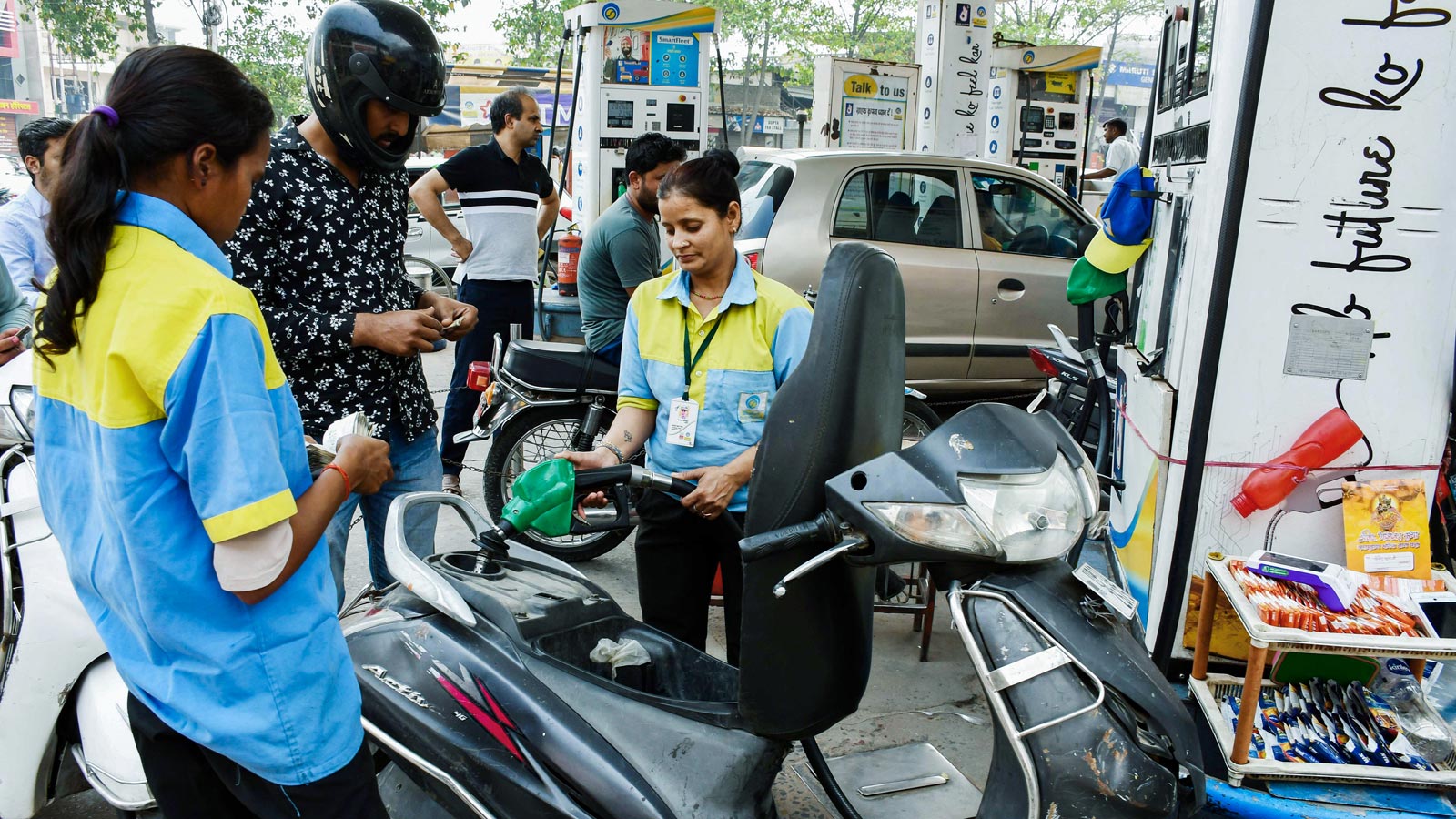
Oil Marketing Companies reported no cases of fuel shortages at retail outlets across the country. Citizens have been advised not to indulge in panic buying as sufficient stocks of petrol and diesel are available.
LPG supply continues to be monitored closely. Bookings declined to around 77 lakh on Saturday compared with 88.8 lakh bookings a day earlier, indicating easing of panic demand.
States Monitoring Supply, Action Against Hoarding
State governments and Union Territories have been actively reviewing the supply of petrol, diesel and LPG. High-level meetings have been held across several states to ensure uninterrupted distribution and prevent panic booking.
So far, 22 States and Union Territories have established control rooms to monitor the situation and coordinate supply management. Raids are being conducted in states such as Andhra Pradesh and Bihar to prevent hoarding and black marketing of LPG cylinders.
Officials of public sector Oil Marketing Companies are also carrying out surprise inspections at LPG distributorships to ensure smooth supply.
Alternative Fuels Activated
To ease pressure on LPG supplies, the government has introduced several additional measures. Domestic LPG production from refineries has been maximised, and booking intervals have been rationalised to 25 days in urban areas and up to 45 days in rural regions.
An additional allocation of 48,000 kilolitres of kerosene has been provided to states and union territories. Certain sectors such as hospitality and restaurants have been encouraged to temporarily switch to alternative fuels including kerosene and coal.
Indian Vessel Leaves Fujairah Safely After Terminal Incident
The government also reviewed maritime safety following an incident at the Fujairah oil terminal in the United Arab Emirates.
An Indian-flagged vessel, Jag Laadki, which was loading crude oil at the Fujairah Single Point Mooring when the terminal was attacked on March 14, sailed safely at 10:30 a.m. IST on Sunday carrying about 80,800 metric tonnes of Murban crude oil and is currently on its way to India. All Indian seafarers onboard are reported safe.
Two Indian-flagged LPG carriers – Shivalik and Nanda Devi – carrying around 92,712 metric tonnes of LPG are also en route to India after crossing the Strait of Hormuz on March 14. The vessels are expected to reach Mundra Port on March 16 and Kandla Port on March 17.
Shipping Operations Under Close Watch
According to the Directorate General of Shipping, 22 Indian-flagged vessels with 611 seafarers remain west of the Persian Gulf region. Authorities are monitoring the situation in coordination with ship owners and Indian missions abroad.
Since the activation of a dedicated DG Shipping control room, officials have handled 2,995 phone calls and more than 5,357 emails from seafarers, families and maritime stakeholders seeking assistance.
So far, 276 Indian seafarers have been repatriated from the Gulf region, including 23 in the past 24 hours.
Ports across India are also closely monitoring vessel movements and cargo operations to ensure uninterrupted maritime trade.
Government Assisting Indians in the Region
The Ministry of External Affairs (MEA) said the safety and welfare of Indian nationals in the region remains the government’s highest priority.
Indian missions across West Asia are operating 24×7 helplines and remain in contact with community organisations while issuing regular advisories. Missions are also assisting stranded Indians with visa support, logistics and transit arrangements.
Since February 28, about 1.94 lakh passengers have returned to India from the region.
Flight services from the UAE, Saudi Arabia and Oman to India continue to operate with revised schedules. Limited flights are also operating from Qatar, while transit through Saudi Arabia is being facilitated for Indians in Bahrain, Kuwait and Iraq where airspace remains closed.
The MEA confirmed that five Indian nationals have lost their lives in incidents related to the ongoing conflict, while one Indian citizen remains missing. Indian missions in Oman, Iraq and the UAE are coordinating with local authorities to locate the missing individual and facilitate repatriation of the mortal remains of the deceased.
The Petroleum Ministry said the government will continue to coordinate with all ministries and agencies to ensure preparedness across key sectors while safeguarding national interests.