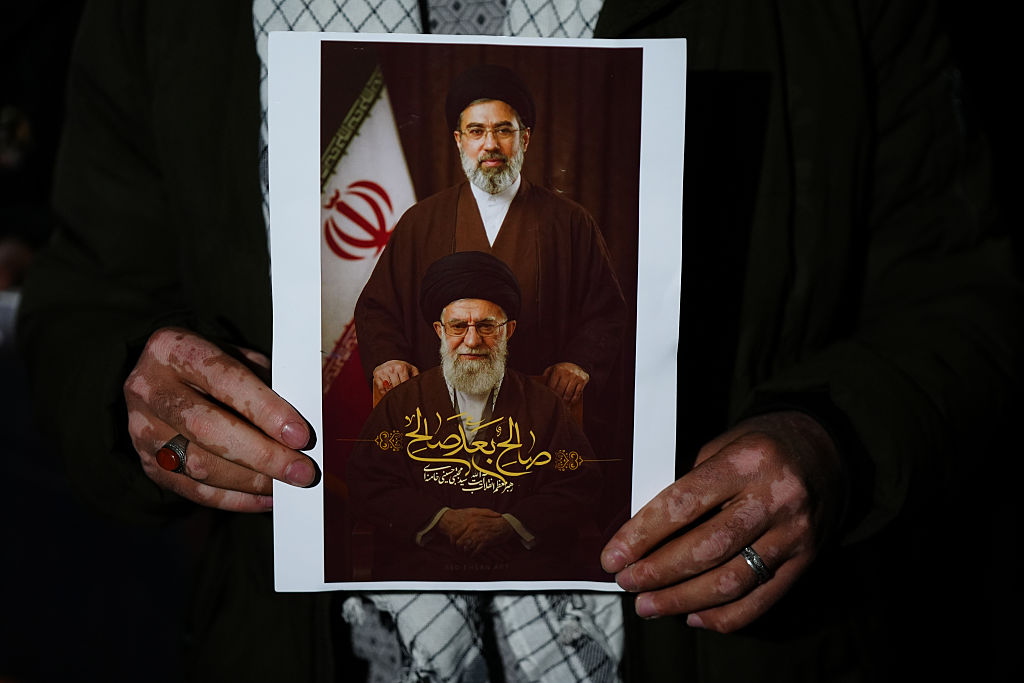
Iran’s Revolutionary Guards forced through the choice of Mojtaba Khamenei as the new supreme leader, seeing him as a more pliant version of his father who would back their hardline policies, bludgeoning aside the concerns of pragmatists, senior Iranian sources said.
Adding to the concerns of those who opposed Khamenei’s installation as supreme leader, he had still issued no statement by Tuesday evening, nearly 48 hours after his selection during a war that has killed more than a thousand Iranians.
Khamenei’s selection, engineered by the Guards, may add up to a more aggressive stance abroad and sterner internal repression, said the three senior Iranian sources, a reformist former official and another insider.
Two of them said they feared the Guards’ domination of the system would further transform the Islamic Republic into a military state with only a thin veneer of religious legitimacy,
undermining an already shrinking support base and allowing less room to address complex threats.
NEW LEADER MAY HAVE BEEN WOUNDED IN STRIKE
Though an influential backroom operator for decades spent running his father’s office, Mojtaba Khamenei remains an obscure figure to many Iranians and may have been wounded in the U.S.-Israeli strikes that killed his father.
A state television anchor appeared to confirm widespread rumours Khamenei was hurt, describing him as a “janbaz”, or “wounded veteran” of the Ramadan War, as Iran calls the current conflict. Reuters has not been able to confirm his condition.
That – and security fears after his father’s assassination on February 28 – may explain his silence since the 88-member Assembly of Experts announced late on Sunday that they had elected him as the country’s supreme leader.
Authority is most visibly held by the Guards and the supreme leader’s office, known as the beyt, which operates a parallel system of influence across the bureaucracy.
Any doubts over who was really in charge evaporated on Saturday when President Masoud Pezeshkian, part of a triumvirate mandated to rule during the gap between leaders, was forced into a climbdown after apologising to Gulf states for attacks. Senior Guards were furious at his apology, sources told Reuters.
One of the three senior sources, who said the Guards were now running Iran, said the late Ayatollah Ali Khamenei had been able to rein in the corps, balancing its views against those of political and clerical elites in the system.
But even assuming the new leader is well enough to take the helm, the Guards may now get the final say in major decisions in future, the source added.
Alex Vatanka, a senior fellow at the Middle East Institute in Washington, D.C. said: “Mojtaba owes his position to the Revolutionary Guards and as such he is not going to be as supreme as his father was.”
BLUNT GUARDS MESSAGE TO BACK KHAMENEI
The choice of leader constitutionally belongs to the Assembly of Experts, but in both elections of a new leader since the Islamic Revolution of 1979, it has been swayed by the advice of other power brokers.
When Ayatollah Ruhollah Khomeini died in 1989, the kingmaker was influential politician Ali Akbar Hashemi Rafsanjani, who told the assembly that Khomeini had whispered Khamenei’s name to him on his deathbed.
This time, the kingmakers were the Guards and they were a lot blunter in their messages, all five of the sources said. The Guards used the argument that the war required a fast process and selecting a candidate who defied the United States.
Because their hall in the seminary city of Qom was bombed, the Assembly of Experts had to gather in a different – so far undisclosed location – and some of the members could not be present or even informed of the vote, said one member, Ayatollah Mohsen Heydari, on state television.
The body reached its quorum of two-thirds, he said, without specifying how many had in fact taken part, with 85-90% of those present backing Mojtaba Khamenei.
It was not clear how many of those not present might have backed or opposed him but the figures showed less than the unanimous decision the Guards may have hoped for.
CONCERNS ABOUT HARDER LINE
A group of ayatollahs had disliked the apparent hereditary succession and feared that the choice would alienate even many supporters of the ruling system, said two of the sources.
Behind the scenes, some clerics and members of the political establishment were trying to push for an alternative in numerous discussions over the past week, one of the sources said.
However, the reformist former official said the Guards had threatened critics of Khamenei’s accession. The Islamic Republic insider said the Guards had contacted members of the assembly, prompting objections, but in the end they felt compelled to support him.
Khamenei’s appointment was originally intended to be announced on Sunday morning, but only came late in the evening as a result of the lingering opposition to his choice, all five sources said.
As head of the beyt for many years under his father, Mojtaba Khamenei had built very close ties with the Guards, particularly the second-tier commanders who have replaced the top generals killed in the war, one of the officials said.
The upshot, said the reformist former official, will be a foreign and domestic policy moving in a more radical direction with the Guards finally having what they sought for years: full control.
-Reuters