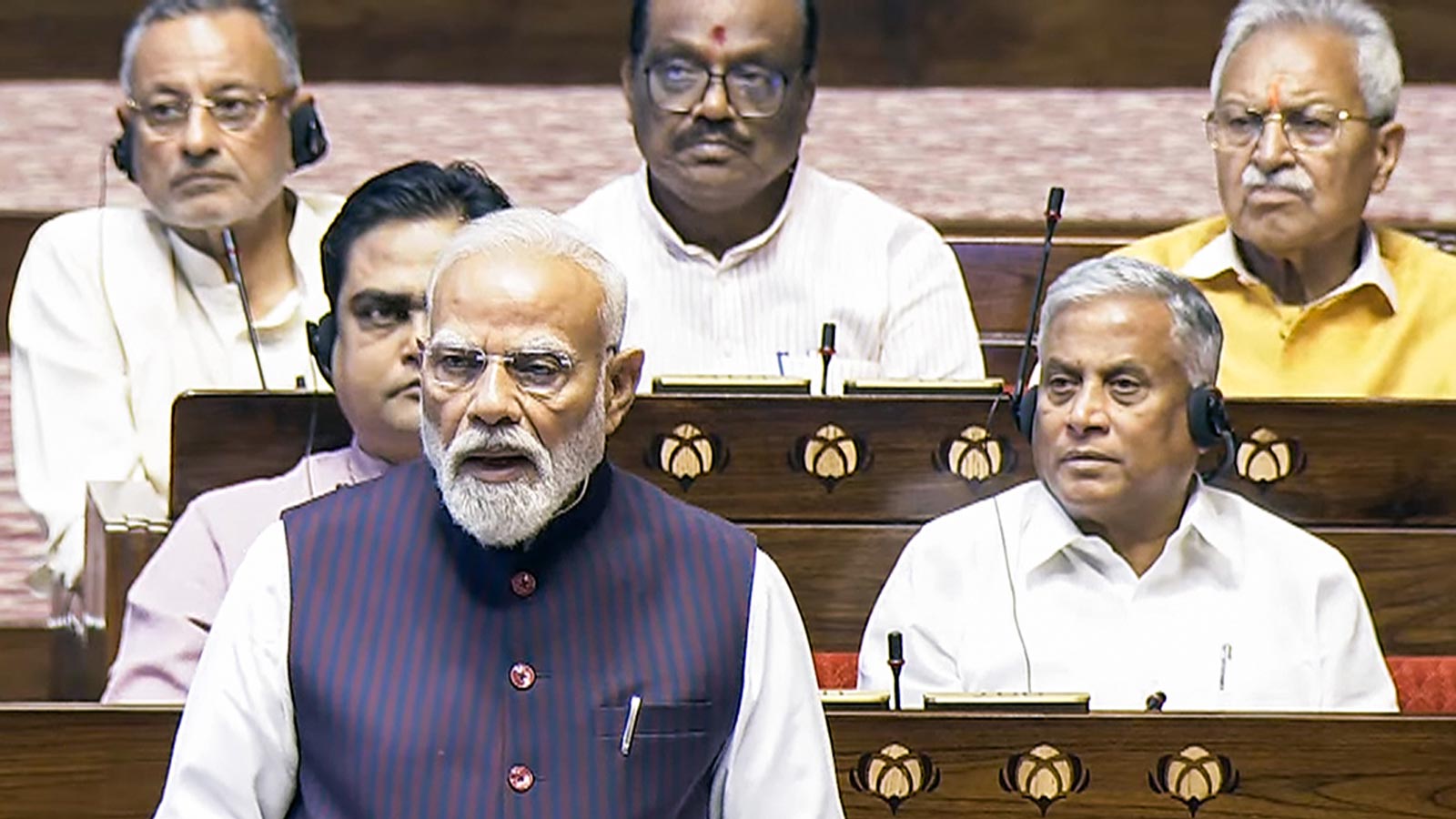
After addressing the Lok Sabha yesterday, Prime Minister Narendra Modi on Tuesday addressed the Rajya Sabha on the escalating conflict in West Asia, highlighting its far-reaching impact on global energy markets, trade routes, and the safety of Indian citizens abroad, while reaffirming India’s commitment to diplomacy and preparedness.
Noting that the war has entered its fourth week, the Prime Minister said the crisis has triggered a severe global energy disruption and posed significant challenges for India. “More than three weeks have passed since this war began in West Asia , This war has created a serious energy crisis across the entire world,” he said.
Expressing concern over disruptions in key maritime routes, he pointed to the strategic importance of the Strait of Hormuz, where several ships, including those with Indian crew members, remain stranded. “Many ships from around the world are stranded in the Strait of Hormuz, a very large number of Indian crew members are among them,This is also a major cause of concern for India,” he stated.
Calling for collective global action, the Prime Minister urged Parliament to send a strong message of peace. “In such a critical situation, it is essential that a united voice of peace and dialogue goes out to the entire world from this Upper House of India’s Parliament,” he said.
Highlighting the government’s diplomatic outreach, PM Modi said India is in constant communication with key stakeholders. “Since the start of the war, I have held two rounds of phone conversations with the heads of state of most countries in West Asia,” he noted, adding, “We are in constant touch with all the Gulf countries, We are also in contact with Iran, Israel, and the United States.”
“Our goal is to restore peace in the region through dialogue and diplomacy,” he emphasised, adding, “We have also discussed de-escalation and the reopening of the Strait of Hormuz with them.”
Reiterating India’s firm stance on international norms, the Prime Minister said, “Attacks on commercial ships and disruption of international waterways like the Strait of Hormuz is unacceptable,” and added, “India has condemned attacks on civilians, on civil infrastructure, and on energy and transport-related infrastructure.”
Addressing concerns about Indians living abroad, he said, “Around one crore Indians live and work in the Gulf countries, The safety of their lives and livelihoods is also a very big concern for India.”
The Prime Minister also underlined efforts to ensure safe passage of Indian vessels amid ongoing hostilities. “India is making continuous efforts, through diplomacy, to ensure the safe passage of Indian ships even in this atmosphere of war,” he said. “Since the war began, the movement of ships through the Strait of Hormuz has become very challenging, But despite these adverse circumstances, our government is trying to find way forward through dialogue and diplomacy.”
On energy security, PM Modi assured that the government is taking all necessary steps to maintain supplies. “The effort is to ensure that oil and gas supplies reach India from wherever possible, The country is witnessing the results of every such effort,” he said.
He further added, “In the past few days, ships carrying crude oil and LPG have arrived in India from many countries around the world, Our efforts in this direction will” continue, indicating sustained efforts to stabilise supply chains.
The Prime Minister stressed that India remains committed to protecting its citizens, maintaining economic stability, and working with global partners to de-escalate tensions. He also called for cooperation between the Centre and states, urging vigilance against hoarding and ensuring uninterrupted supply of essential commodities.
Concluding his address, PM Modi emphasised resilience and preparedness in the face of uncertainty, assuring citizens that the government remains vigilant and committed to safeguarding national interests during the evolving crisis.