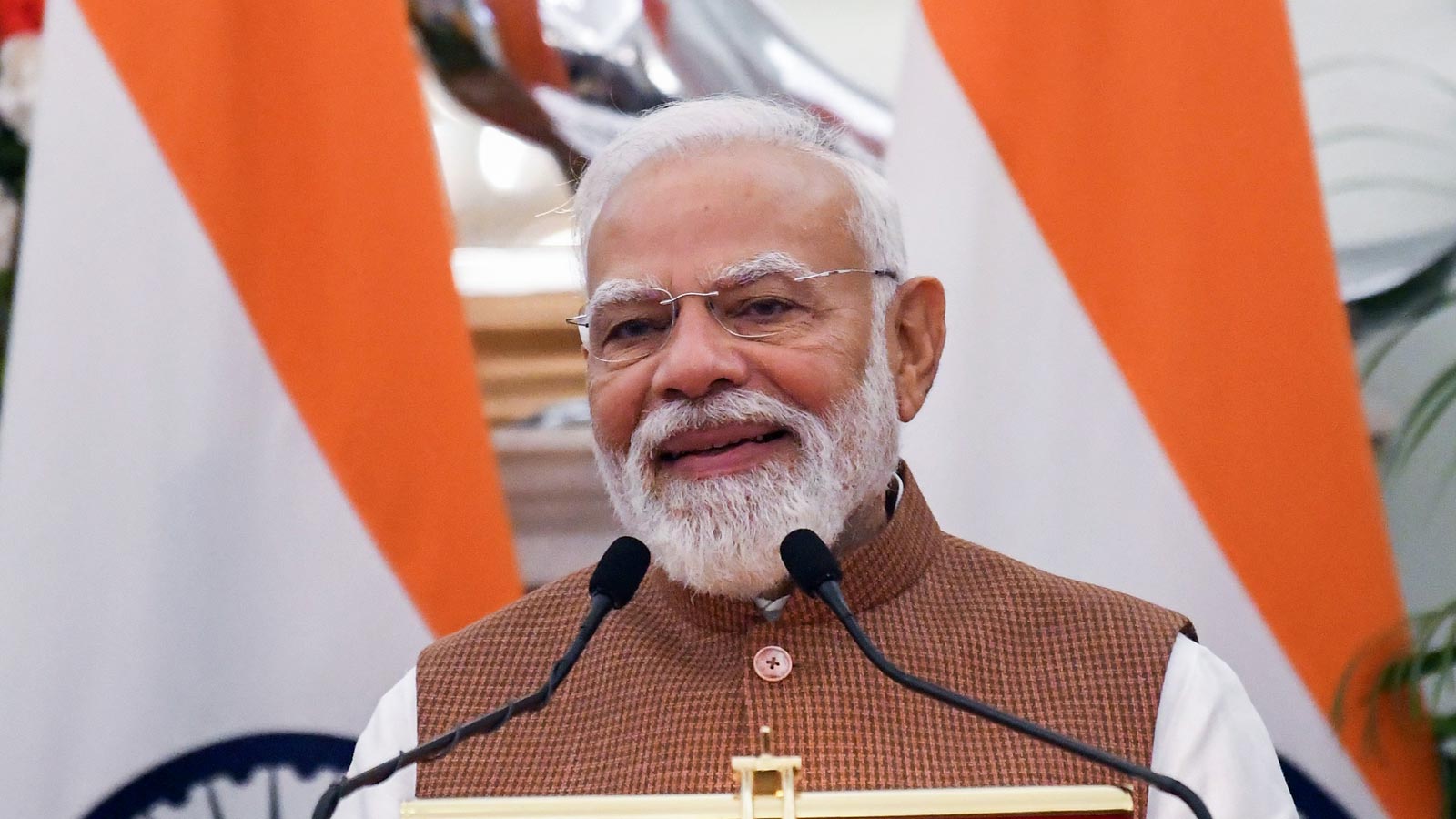
Prime Minister Narendra Modi on Monday shared an article by Union Education and Skill Development Minister Dharmendra Pradhan, highlighting India’s evolving approach to artificial intelligence (AI) and its growing role in the global innovation landscape.
In a post on X, the Prime Minister said, “Union Minister Shri Dharmendra Pradhan writes that in a new AI-driven technological era, India’s innovation story is deeply linked with global partnerships. He emphasises that India’s approach to AI, aligned with national priorities, is clear – human-centric, inclusive, interoperable and sovereign in capability.”
Pradhan’s article emphasises that India is positioning itself as a key player in the next wave of technological transformation, with initiatives such as Bharat Innovates serving as a bridge between domestic innovation and global markets. The platform aims to showcase high-potential deep-tech startups and connect them with international investors, partners, and deployment ecosystems.
Pradhan said that India’s innovation ecosystem is expanding rapidly, supported by policy initiatives like the National Education Policy 2020 and the growth of incubators, research parks, and technology hubs. With over two lakh recognised startups and increasing participation from Tier II and Tier III cities, the country is witnessing a broad-based innovation surge.
The Minister also highlights India’s digital public infrastructure, including large-scale platforms that have demonstrated the country’s ability to build affordable and scalable technological solutions. This, combined with growing global collaborations, is positioning India at the forefront of innovation for both domestic and international challenges.
Artificial intelligence is identified as a central pillar of this transformation, with projections suggesting significant economic contributions in the coming years. Pradhan notes that India is investing in building sovereign AI capabilities through initiatives like the IndiaAI Mission, focusing on strengthening compute infrastructure, datasets, and research ecosystems.
He also stresses the importance of developing multilingual and indigenous AI systems to ensure inclusivity and wider accessibility, particularly in a diverse country like India. Efforts are underway to advance AI in Indian languages and promote ethical, accountable use of technology.
Pradhan further highlights strengthening of investment frameworks, including dedicated funding support for deep-tech ventures, to accelerate innovation and support long-term research. He also points to growing India-France collaboration in emerging technologies, with the upcoming Bharat Innovates 2026 event in Nice expected to showcase India’s innovation capabilities on the global stage.
Reaffirming India’s global ambitions, Pradhan concludes that the country is not only participating in the future of innovation but actively shaping it by leveraging its scale, diversity, and technological capabilities.