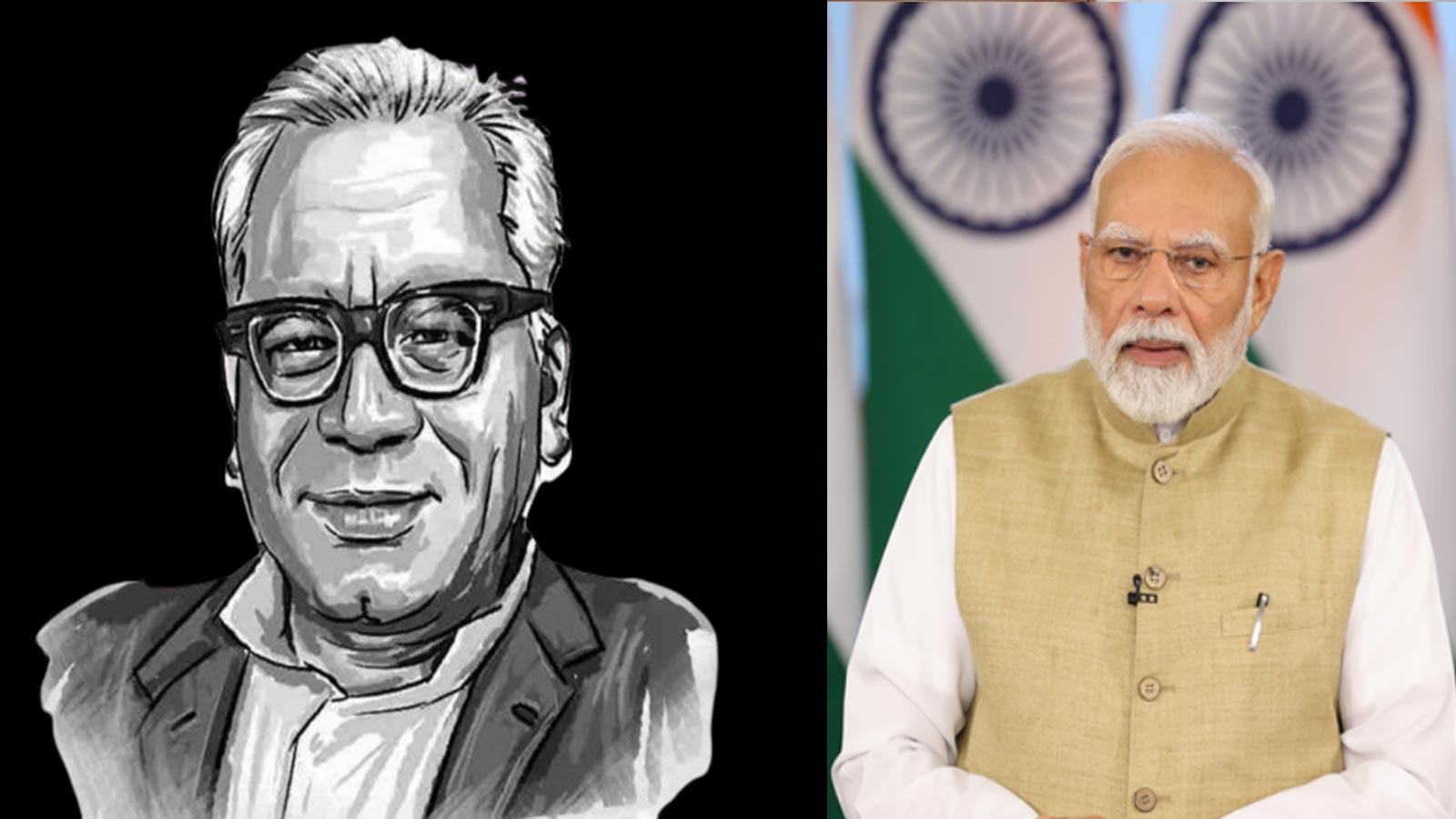
Prime Minister Narendra Modi on Monday paid rich tributes to eminent socialist leader and freedom fighter Ram Manohar Lohia on the occasion of his birth anniversary, remembering his pivotal role in India’s independence movement and his enduring contributions to social and political thought.
In a post on X, the Prime Minister said “Tributes to Dr. Ram Manohar Lohia Ji on his birth anniversary. He was a multifaceted personality who played a pivotal role in mobilising people against colonial rule and subsequently contributing to the progress of India after 1947.”
“He was an outstanding thinker and one of the foremost voices of social justice. His unwavering commitment to the cause of empowering the poor and the marginalised continues to inspire generations. Equally noteworthy are his thoughts on gender equality and participatory governance,” he added.
Union Home Minister also paid tribute to Lohia.
In a post on X, HM Shah said that Dr. Rammanohar Lohia remained dedicated throughout his life – from the freedom struggle to social reform – to the cause of the poor and the underprivileged. He said that committed to equality, education, and one’s own language, Dr. Rammanohar Lohia became an epitome of integrity in public life.
Meanwhile, Lok Sabha Speaker Om Birla paid floral tributes to Ram Manohar Lohia at the Central Hall of Samvidhan Sadan.
The commemorative event witnessed the presence of several dignitaries, including Harivansh Narayan Singh, Members of Parliament, and former MPs, who also paid homage to the eminent socialist leader. Secretary General of the Lok Sabha Utpal Kumar Singh and other officials participated in the ceremony.
During the event, a booklet highlighting the life, vision, and contributions of Lohia, published by the Lok Sabha Secretariat, was presented to the dignitaries.
Lohia, a prominent figure in India’s freedom struggle and a key advocate of socialist ideology, is remembered for his enduring contributions to nation-building and social justice.
His portrait, installed in the Central Hall of Samvidhan Sadan, was originally unveiled on May 30, 1991, by former Prime Minister Chandra Shekhar, in recognition of his remarkable service to the nation.
Born on March 23, 1910, in Akbarpur in present-day Uttar Pradesh, Lohia was deeply influenced by nationalist ideals from an early age. Inspired by leaders like Mahatma Gandhi, he joined the freedom struggle at a young age and actively participated in movements such as the Quit India Movement.
A key figure in the socialist movement, Lohia helped lay the foundation of the Congress Socialist Party in 1934 and later served as the first secretary of the All India Congress Committee. His political journey was marked by his advocacy for equality, decentralisation of power, and upliftment of farmers and disadvantaged communities.
Lohia was also a strong critic of social inequalities, including caste discrimination and economic disparity. He championed the use of Hindi as a unifying language and promoted inclusive development through grassroots participation. His ideas, including the concept of “Roti and Beti” to break caste barriers, reflected his vision of a more equitable society.
After Independence, he continued to work towards nation-building by raising issues related to poverty, inequality, and governance. He also founded initiatives such as the Hind Kisan Panchayat to address farmers’ concerns and encouraged public participation in development activities.
Lohia passed away on October 12, 1967, at the age of 57, leaving behind a lasting legacy in India’s political and social landscape. Institutions, roads, and public establishments across the country have been named in his honour, reflecting his enduring influence on generations of leaders and citizens.